



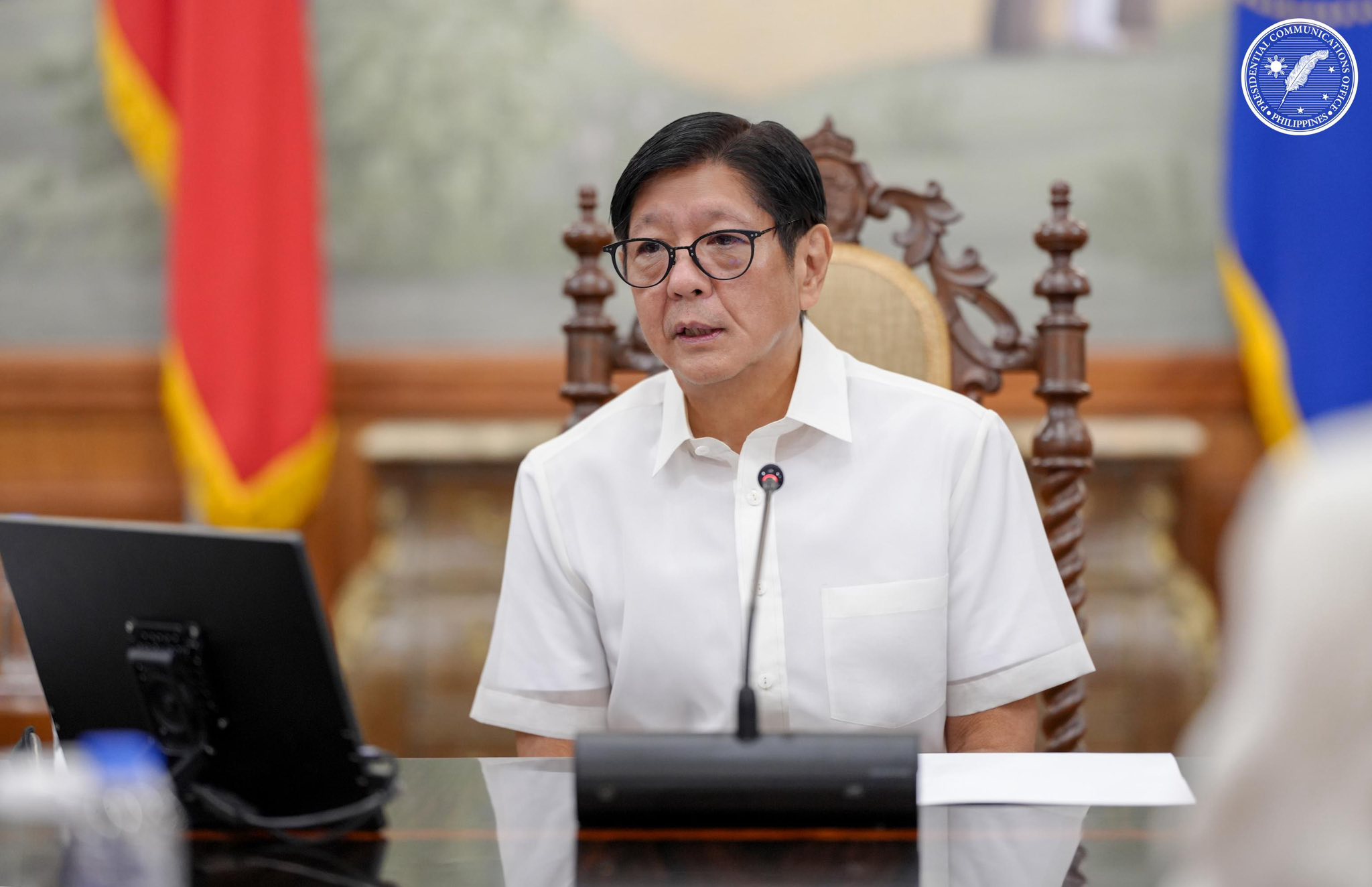

The administration is tracking currency movements as tensions abroad raise concerns over money sent home by Filipinos working overseas, President Ferdinand R. Marcos Jr. said on Tuesday.

Speaking at a press briefing in Malacañang, Marcos pointed to the peso-dollar rate as a key variable that could influence the amount families receive from relatives employed in the Middle East. He noted that developments linked to the ongoing hostilities involving the United States, Israel and Iran are being factored into government assessments.
“The other area that we look into are what will be the effect on the remittances because this is something that will affect the families of those that are remitting funds from our workers in this part of the world,” Marcos said.
He acknowledged the difficulty of projecting the precise outcome of the situation on overseas transfers, describing the environment as fluid and uncertain. A significant portion of Filipino workers abroad are deployed in Gulf countries, he said, underscoring the region’s weight in the country’s remittance flows.
“Karamihan ng remittances natin ay talaga diyan galing. Iyan ang pinakamalaking working group natin na hindi nila kasama ang pamilya nila kung hindi nagre-remit ng pera dito sa Pilipinas (Most of our remittances really come from there. That is our largest group of workers who are without their families and are remitting money to the Philippine),” he added.

Marcos said the government is reviewing how fluctuations in foreign exchange could alter the value of funds sent home. “The other statistic which will have an effect on remittances is going to be the exchange rate between the dollar and the peso. So, we will just have to watch that very, very closely to see what the effects are,” he said.
He also disclosed that authorities have run sensitivity analyses covering various scenarios, including the potential consequences of every one-dollar increase in global oil prices per barrel. According to Marcos, currency movements could produce differing results.
“That’s why tawag kong mixed bag. Halo-halo talaga. May aakyat, may bababa. Kasi kung umakyat ang peso, lumalaki ang remittance. Pero kung bababa naman, ang actual na dolyar na pinapadala dito, eh di bababa (that’s why I call it a mixed bag. It’s really varied —some will go up, some will go down. If the peso strengthens, the remittance value increases. But if it weakens, the actual dollar amount being sent here could decline),” he said.
“So, we don’t know where that balance is going to end as of now. So, we are watching it very closely.”
Government data show that cash inflows from overseas Filipinos climbed to a historic USD39.62 billion in 2025, up 3.3 percent from the previous year. The United States accounted for 39.7 percent of the total, followed by Singapore at 7.3 percent and Saudi Arabia at 6.6 percent.
