



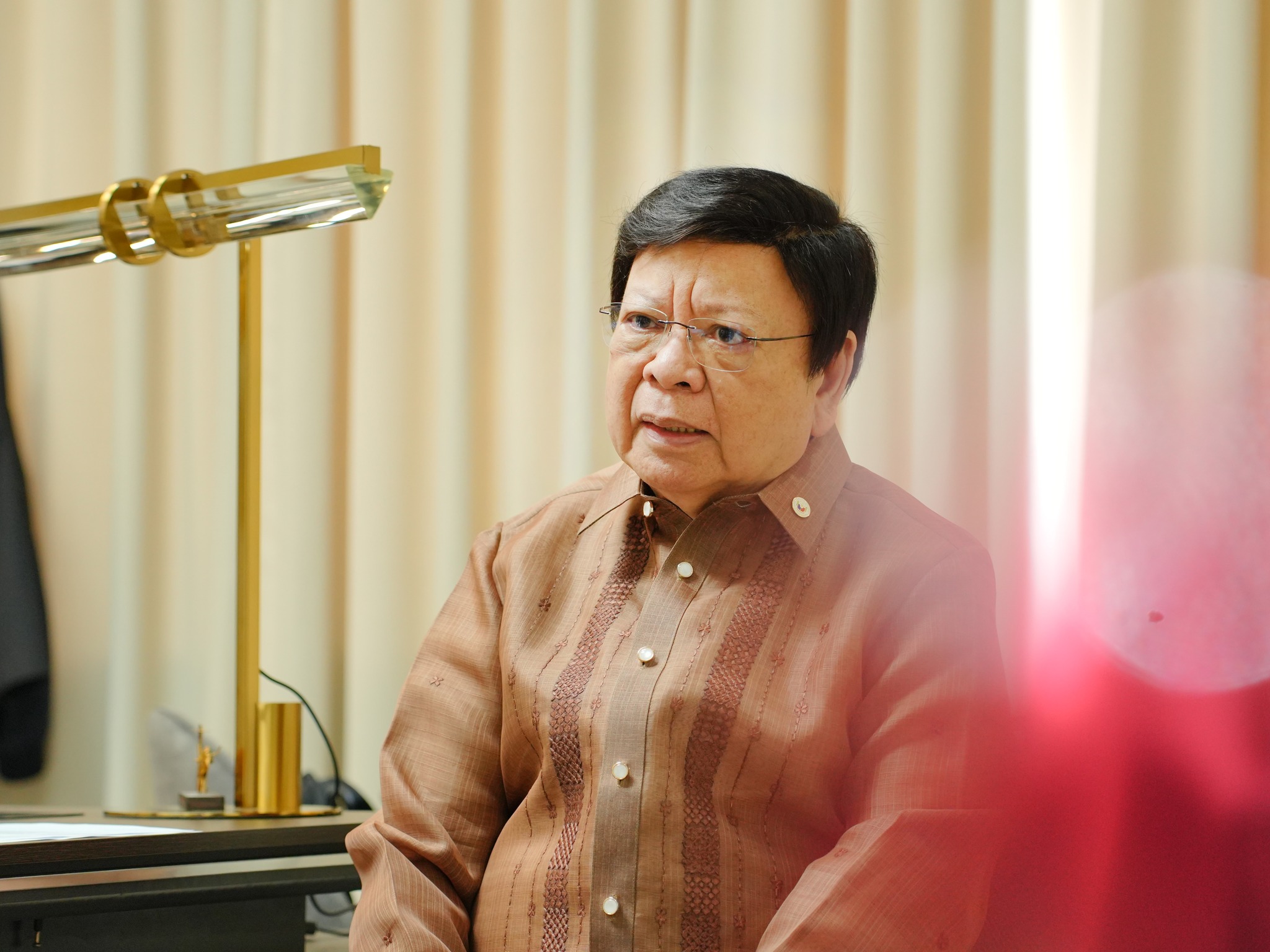

The Commission on Elections (Comelec) is scrutinizing the campaign finance reports of lawmakers, including Sen. Rodante Marcoleta, after questions surfaced about his declaration of zero campaign contributions in the recent midterm elections.

Comelec Chair George Erwin Garcia said on Thursday that the poll body’s political finance and affairs department has already begun examining the statements of contributions and expenditures (SoCEs) submitted by senators and House members. He stressed that anyone whose filings raise questions will be asked to clarify.
“If it reaches that point, yes,” Garcia said when asked if Marcoleta may be required to explain his SoCE. “It might reach that point because, of course, to also give an avenue or venue for the candidates or public officials to have a way to explain themselves. That is only proper because, as everyone should remember, we have what you call presumption of innocence.”
Marcoleta drew scrutiny after stating in an interview with NET25 that he omitted all campaign donations from his SoCE because his donors wanted anonymity. His report reflected zero contributions, despite declaring more than P112 million in campaign expenses—an amount more than double his net worth of P51.96 million listed in his latest statement of assets, liabilities, and net worth (SALN).
He explained that listing the donations would require disclosing his contributors’ identities, which they allegedly requested not to reveal.
Garcia, however, underscored that the law leaves no room for such discretion. Section 98 of the Omnibus Election Code requires contributors to be identified by their real names and prohibits the use of aliases. He pointed to Section 99 as well, which mandates that all details in a SoCE must be truthful and complete.

“It says there that all of the contributors must be detailed, all that were received must be detailed, and all expenditures must also be detailed, including the money that was donated or those that came from personal funds,” he said.
According to Garcia, violations of these provisions constitute election offenses that carry penalties of one to six years in prison. Incorrect or misleading information in a SoCE may also amount to perjury or falsification of public documents.
The Comelec will also need to compare lawmakers’ SoCEs with their SALNs to detect inconsistencies. Garcia said the poll body is determining how to lawfully secure certified copies of SALNs, noting that Comelec cannot subpoena the documents directly.
“Our only problem here is that the SALN is not certified. The court will need that certification. The Comelec does not have the power to subpoena the SALNs,” he said, adding that coordination with the Office of the Ombudsman or individual agencies may be required.
He noted that obtaining the documents may take time due to existing procedures set by the Ombudsman.
