



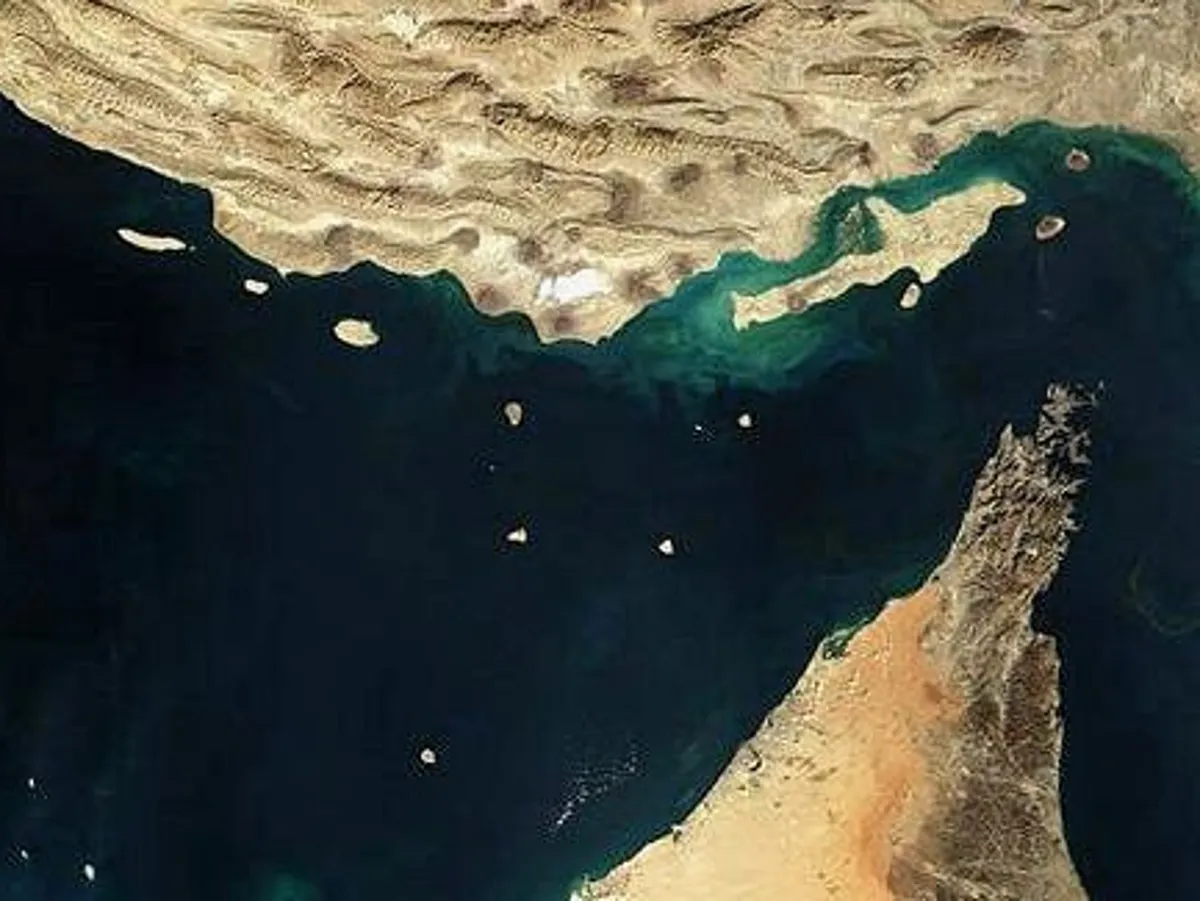

A senior Islamic Revolutionary Guard Corps commander has declared the Strait of Hormuz shut to maritime traffic, threatening to set ablaze any vessel attempting to transit the waterway — a move that would cut off roughly a fifth of the world’s oil supply if enforced.

Brigadier General Sardar Ebrahim Jabari, a senior adviser to the Guards’ commander-in-chief, issued the warning through Iranian state media. “The strait (of Hormuz) is closed. If anyone tries to pass, the heroes of the Revolutionary Guards and the regular navy will set those ships ablaze,” he said.
US Central Command, however, pushed back on the declaration, saying the strait remains open — a position also reported by Reuters citing Fox News.

The standoff comes in the wake of a joint US-Israeli strike that killed Supreme Leader Ayatollah Ali Khamenei, a development that has dramatically accelerated hostilities across the region. Iran has since launched successive missile barrages at Gulf states hosting American military installations, targeting Qatar, Kuwait, Bahrain, the UAE, Saudi Arabia, and Oman. An estimated 500 people have been killed in the escalating conflict, among them at least six US service members.
At its narrowest, the strait spans roughly 33 kilometres, connecting the Persian Gulf to the Gulf of Oman. Supertankers carrying oil and liquefied natural gas from Saudi Arabia, Kuwait, Iraq, Qatar, Bahrain, the UAE, and Iran pass through the chokepoint daily, with much of that supply heading to Asian markets, particularly China. The US Energy Information Administration has assessed that no viable alternative export route exists for most of the energy volume that moves through Hormuz, though Saudi Arabia and the UAE do maintain limited bypass pipelines.
Iran has repeatedly threatened to close the passage during past crises but has not done so fully since the 1980s tanker war, when both Iran and Iraq targeted commercial vessels and seeded the waters with naval mines. As recently as February, Tehran restricted parts of the strait during military exercises, briefly pushing oil prices up about 6 per cent.
