



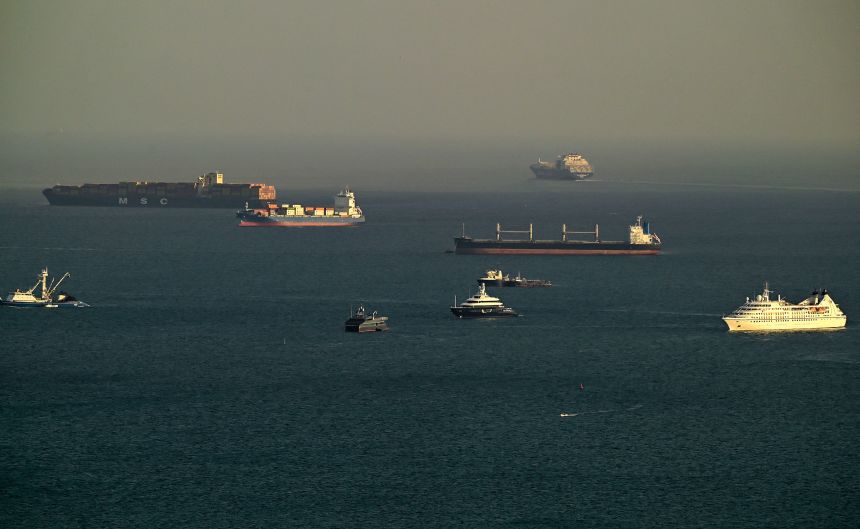

Iranian Foreign Minister Abbas Araghchi pushed back Saturday against characterizations of a broad maritime closure, insisting that the Strait of Hormuz remains open to most of the world’s commercial traffic.

“There are many tankers and ships that are passing through the Strait of Hormuz,” Araghchi said in an interview with MS NOW, drawing a clear distinction between general navigation rights and restrictions he said apply specifically to American and Israeli vessels.
He acknowledged that some shipping operators have chosen to avoid the waterway, but attributed that reluctance to “security concerns” he said were unrelated to Iranian action.
The clarification comes after US President Donald Trump posted on Truth Social that Washington and a coalition of affected nations would be deploying warships to the area. Trump named China, France, Japan, South Korea, and the United Kingdom as countries impacted by what he described as Iran’s attempted closure of the strait, expressing hope each would contribute naval assets to keep the passage “open and safe.”

Araghchi also addressed questions about the condition of Iran’s new Supreme Leader, Mojtaba Khamenei, after US Defense Secretary Pete Hegseth claimed Khamenei had been wounded and was likely disfigured. The foreign minister dismissed those assertions directly.
“There is no problem with the Supreme Leader,” Araghchi said, adding that Khamenei had already communicated publicly and was carrying out his constitutional responsibilities. “He sent his message yesterday and will perform his duties – he is performing his duties according to the constitution and will continue to do that.”
Araghchi further argued that the Islamic Republic’s institutional structure was designed to function regardless of what happens to any individual within it, suggesting the system could absorb any personnel losses without destabilization. “Everything is under control,” he said.
Hours later, Trump escalated his statements on the matter, telling NBC News he was receiving reports that Mojtaba Khamenei may no longer be alive — and that if the Supreme Leader had survived, his only rational course of action was to “surrender.”
