



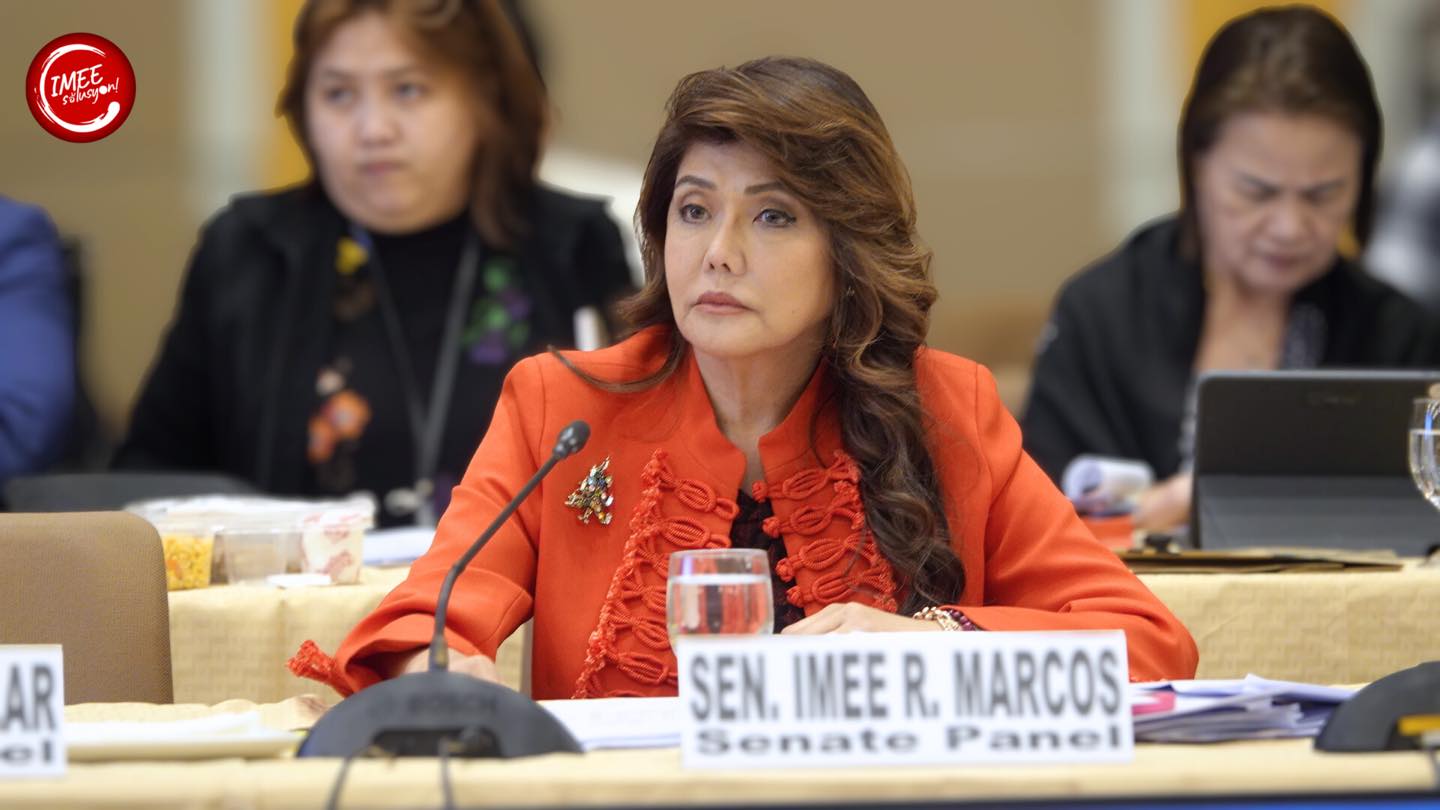

Sen. Imee Marcos disputed assertions that President Ferdinand Marcos Jr. struck down funded projects in the P6.793-trillion 2026 national budget, saying the items affected were limited to unprogrammed appropriations that have no guaranteed financing yet.

Speaking on ANC on Tuesday, Jan. 6, and cited by One News PH, Marcos said descriptions of the 2026 General Appropriations Act as the “cleanest” budget were misleading. According to her, no allocations under the regular, programmed budget were removed, even as large items she described as pork barrel allocations remained intact.
“The truth is, nothing was vetoed,” Marcos said in Filipino, explaining that unprogrammed appropriations only become available when excess revenues, savings, or new funding sources emerge. She stressed that projects with existing funding were untouched.
She argued that questionable allocations were not eliminated but instead broken up and distributed across multiple line items. “In other words, the pork was chopped, broken into parts and spread out. But even after being ground up, it’s still pork,” she said.
Marcos also questioned the sharp increase in certain budget lines, including farm-to-market roads, and raised concerns about the expansion of government aid and medical assistance programs ahead of elections. She criticized the structure of medical assistance under the Department of Health, saying support should go directly to hospitals rather than through lawmakers. “Does a Filipino really have to bow to a politician just to get treated or admitted to a hospital?” she asked.

She further flagged the late addition of a P10-billion Presidential Assistance to Farmers and Fisherfolk allocation during bicameral deliberations, warning that overlapping aid programs could create confusion over eligibility.
President Marcos Jr. reportedly vetoed P92.5 billion from the P243.4-billion unprogrammed appropriations, leaving P150.905 billion largely for foreign-assisted projects, the revised Armed Forces modernization program, and risk management initiatives.
The move drew criticism from groups such as the Alliance of Concerned Teachers Philippines, which said the removal of funds affected salaries, hiring, and benefits for government workers, including teachers and personnel in state universities. Sen. Sherwin Gatchalian also raised concerns over specific standby funds, particularly for the Comprehensive Automotive Resurgence Strategy program, while supporting the decision not to touch regular appropriations and announcing plans for congressional oversight on spending.
In contrast, Bagong Henerasyon party-list Rep. Robert Nazal described the partial veto as progress toward fiscal discipline, calling it a meaningful step for transparency and accountability in public spending.
