



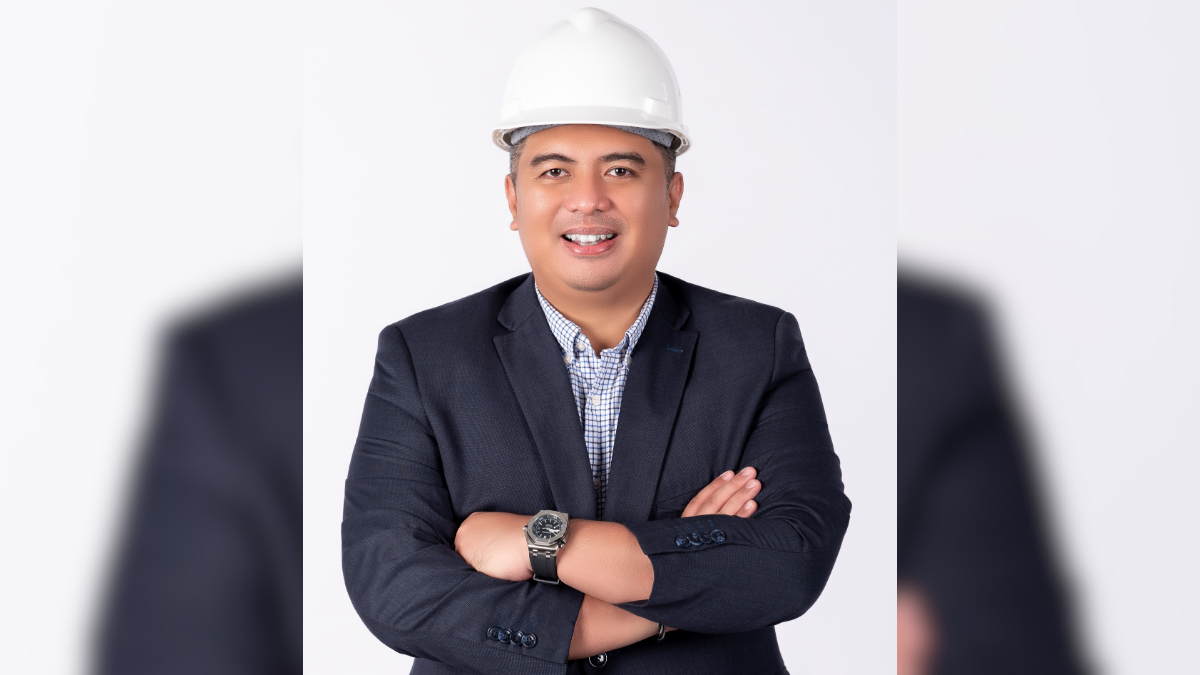

It’s easy to think that success happens in a straight line—study hard, get the job, climb the ladder—until life quietly proves that the most meaningful progress is built through pressure, reinvention, and years of choosing discipline over comfort. Engr. Christopher Mendoza Vitug knows that story well, not because he read it somewhere, but because he lived it—project by project, country by country, and standard by standard.

Today, Vitug is based in Singapore, where he serves as Department Head and Senior Commercial Engineering Manager at Chye Joo Construction Pte Ltd, leading the commercial and engineering direction of complex building and infrastructure projects. It is the kind of role that demands technical sharpness, financial rigor, and leadership maturity all at once. Yet behind the title is a Filipino civil engineer who built his credibility the slow, hard way—through consistency, competence, and an insistence on doing things properly, even when nobody was watching.
“I currently serve as a Department Head and Senior Commercial Engineering Manager at Chye Joo Construction Pte Ltd in Singapore, where I lead commercial strategy, engineering coordination, and digital delivery for complex infrastructure and building projects,” he shares with TGFM. His responsibilities go beyond numbers and drawings; he is tasked with integrating cost management, planning, engineering, and digital systems while ensuring compliance with Singapore’s strict regulatory requirements.
In an industry where deadlines are unforgiving and mistakes can carry serious consequences, Singapore is not a place where reputations are handed out. They are earned.
And for a foreign professional, that truth becomes even sharper.
“Working in Singapore is both a privilege and a responsibility,” Vitug reflects. “It is an environment where standards are uncompromising and where professional trust, particularly for foreign practitioners, is earned only through sustained performance, discipline, and accountability over time.”
That mindset—trust is earned, not assumed—has become a defining theme of his career. It is also what separates him from many who chase opportunities abroad, expecting talent alone to be enough. Vitug’s journey suggests otherwise: that talent is only the entry point, but discipline is what keeps you standing in the room.
The early years that shaped his resilience
Vitug’s career began in the Philippines, rooted in the fundamentals of civil engineering and strengthened by values formed early in life. He describes his beginnings as grounded—built on what he learned from family, educators, and mentors who taught him that competence is not a personality trait, but a responsibility.
“My professional journey began in the Philippines, grounded in strong civil engineering fundamentals and guided by values instilled by family, educators, and early mentors,” he shares.
But it was his first overseas posting that introduced him to the realities of working on a global stage. From 2005 to 2007, he worked in the Kingdom of Saudi Arabia, where he encountered a different kind of pressure: large-scale projects, multicultural teams, and the intensity of delivering results in environments where the pace rarely slows down.
“My first overseas assignment took me to the Kingdom of Saudi Arabia from 2005 to 2007, where I was immersed in large-scale, high-pressure projects delivered within diverse, multicultural teams,” he recalls.
That experience, he says, demanded resilience and forced him to become adaptable. It also introduced him to international standards and professional discipline—concepts that would later become central to his identity as an engineer.
“That experience demanded resilience, sharpened my adaptability, and instilled a deep respect for international standards and professional discipline, principles that have remained foundational throughout my career,” he adds.
For many professionals, the first years abroad are survival mode—learning the culture, navigating workplace expectations, proving you belong. For Vitug, it became the training ground that prepared him for a bigger test.
Singapore.
Why Singapore became more than just a destination
When Vitug moved to Singapore, he did so with full awareness of its reputation. In engineering and construction, Singapore is known as one of the most demanding environments in the world, with strict governance, rigorous compliance, and little room for mediocrity.
“I later moved to Singapore with a clear understanding of its reputation as one of the most exacting engineering and project delivery environments in the world, particularly for foreign professionals,” he says.
What stood out was not only the technical standards, but the culture of merit. Recognition, he realized, is never automatic. It must be proven repeatedly through consistent delivery.
“Here, recognition is never assumed; it is earned through consistent delivery, strict regulatory compliance, and sustained professional credibility,” Vitug explains.
Instead of simply trying to “fit in,” he chose to level up—deliberately, strategically, and continuously. He pursued training and professional credentials that aligned with Singapore’s high standards, ensuring he would not only survive in the system, but thrive within it.
“To remain relevant and trusted, I made a deliberate commitment to continuous learning and formal professional recognition,” he says.
That commitment led him to advanced training in Virtual Design and Construction at Stanford University, specialist diplomas in BIM and Computational BIM at BCA Academy, and regional professional credentials such as ASEAN Chartered Professional Engineer (ACPE) and inclusion in the ASEAN Engineer Register (AER). He also earned the SPM Certified Project Manager (CPM) credential through Singapore Project Management.
It was not just about collecting titles. It was about aligning himself with global expectations—proof that he could operate at the level required by one of the most competitive engineering ecosystems in the world.
“Through perseverance, discipline, and a willingness to be continuously challenged, Singapore became not just a place of work, but a professional home,” Vitug says.
And then he adds the line that best captures why he stayed: “one where merit, integrity, and contribution are genuinely valued.”
In a world where professionals often feel invisible, that kind of environment can be rare. For Vitug, it became the foundation of a long-term career built not on shortcuts, but on credibility.
A career defined by recognition and responsibility
Over the years, Vitug has earned a track record that reflects both technical mastery and leadership influence. Among his key achievements are awards and recognitions that place him in rare territory, especially as a Filipino professional working abroad.
He became an awardee of the Outstanding Society of Project Manager of Singapore Innovator Merit Award, the first and only Filipino to receive the honor. He was also recognized internationally with the BIM Hero Award at the BIM Coordinator Summit in Dublin, Ireland in 2024.
Perhaps one of the most significant milestones in his professional life came when he was nominated and elected as the first Filipino Board Director of the Singapore Institute of Building Limited (SIBL) for the term 2024 to 2026—an achievement that speaks not only to competence but to trust.
His leadership influence extends strongly into the Philippine engineering community as well, where he has served the Philippine Institute of Civil Engineers (PICE) in multiple capacities. His leadership history includes roles such as PICE Singapore Business Manager (2016), PICE Singapore President (2017), and International Regional Coordinator (2019).
He continues to hold national leadership roles in PICE, serving as part of key committees such as the Awards Committee, Chapter Affairs Committee, PMCE Specialist Committee, and others.
He is also the recipient of the Philippine Institute of Civil Engineers President’s Awardee 2024 at the national level, as well as the Outstanding Alumni Award from Angeles University Foundation in 2020.
Still, when asked which recognition has mattered most to him, Vitug does not hesitate.
“While I am grateful for all recognitions, the SPM Outstanding Project Manager Merit Award (Innovator) has been the most meaningful,” he says.
For him, the weight of the award came from where it was given—and what it represented. Being recognized in Singapore is already significant. Being recognized as an innovator, by a non-Filipino organization, carries even deeper meaning.
“What made this honor especially humbling was being recognized for innovation by a non-Filipino professional organization, becoming the first Filipino to receive the award,” he shares.
The moment became even more powerful when the award was presented by the President of Singapore Project Management together with Indranee Rajah, Minister in the Prime Minister’s Office and Second Minister for Finance and National Development.
“It was a quiet but powerful affirmation that Filipino professionals can earn trust, drive meaningful innovation, and be acknowledged at the highest professional level,” Vitug says.
For a Filipino engineer who started his overseas career in Saudi Arabia, that recognition was more than a personal win. It was proof that Filipino excellence can stand shoulder-to-shoulder with the best in the world—without needing to beg for validation.
Making BIM and digital transformation personal
Vitug is widely recognized for his work in Building Information Modeling (BIM) and digital transformation, a field that continues to reshape the global construction industry. But his approach to digitalization is not about sounding futuristic or trendy. He talks about it in a way that makes sense even to those outside the technical world.

“I explain BIM and digital transformation in simple terms: they help engineers think ahead and solve problems before they happen on site,” he says.
Then he clarifies the point many still miss: BIM is not just software.
“It is not about software alone; it is about clarity, coordination, and making better decisions earlier, when the impact is greatest and the cost of change is lowest.”
That belief is not theoretical. Vitug has actively contributed to government and public-sector stakeholders in their efforts to adopt BIM and advance digitalization. His work includes sharing practical strategies, lessons learned from real projects, and ensuring digital frameworks match actual construction workflows.
“This includes sharing practical implementation strategies, lessons learned from live projects, and helping align digital frameworks with real construction workflows rather than theory,” he says.
His influence has also extended beyond Singapore. He has conducted trainings for Filipino professionals working in the United States, Kuwait, Qatar, Bahrain, Brunei, and the UAE. He has also mentored young engineers from Hong Kong who want to understand how BIM is applied in a highly regulated environment like Singapore.
For Vitug, that is the real power of digital skills: they allow engineers to speak a common language, wherever they practice.
“They are enablers of broader industry transformation, improving productivity, safety, and sustainability,” he says, “while also creating a common professional language that allows engineers to contribute meaningfully wherever they choose to practice around the world.”
Mentorship as a long-term mission
Despite his demanding role and leadership responsibilities, Vitug consistently makes time for mentoring. It is not a side activity for him—it is part of his identity as an engineer.
“I consistently make time for mentoring because I remember clearly the gap between academic learning and real project experience,” he says.
His mentoring has been especially impactful for Civil Engineering students at the University of the Philippines Los Baños (UPLB). Over a sustained three-year initiative, he selected groups of 5 to 8 students annually for a six-week program combining theory and hands-on BIM training. Even after the program, he continued to guide them, offering career advice and professional support.
The goal, he says, is not simply producing skilled engineers. It is building professionals with judgment.
“The objective is not just technical competence, but developing responsibility, confidence, and professional judgment,” Vitug explains.
His mentorship reflects a bigger philosophy: that success is incomplete if it only benefits one person. In his world, the true measure of achievement is whether you left the profession stronger than you found it.
He has received public appreciation posts, personal messages, and professional recognition online—including a LinkedIn post from the BIM Coordinator Summit acknowledging his contribution toward making the AEC industry more productive, safer, and sustainable.
But perhaps his strongest validation comes from the people he has influenced quietly—the engineers who now carry his lessons into their own careers.
As he puts it, “Most importantly, I inspire others by showing that meaningful impact is built through consistency, humility, and long-term commitment rather than titles alone.”
A Filipino engineer, globally trusted
For someone with a packed schedule, Vitug’s professional service portfolio is almost as impressive as his project work. He balances high-level responsibilities in Singapore’s professional institutions while maintaining deep involvement in Philippine engineering organizations.
He acknowledges that balance is not accidental. It is a deliberate choice.
“Balance comes from discipline, clear priorities, and a deep sense of responsibility to the profession,” he says.
He also makes it clear: project delivery always comes first. But service is not something separate from work. It is part of what he believes an engineer should do.
“Professional service has always been an extension of that responsibility rather than a separate pursuit,” he adds.
His election as the first Filipino Director of SIBL stands out not only because it is historic, but because it happened in a place where leadership roles are given only to those who have proven themselves repeatedly.
“This role carries particular significance in an environment where leadership and trust are earned through sustained performance, professional judgment, and integrity,” Vitug says.
Alongside his work in Singapore, he has continued serving PICE through leadership roles and committee participation, strengthening professional networks for Filipino engineers across multiple regions.
He also contributes as a Social Scientist and BIM Specialist for the Mapúa–DOST BIM Roadmap, helping shape national-level digitalization efforts in the Philippines.
“This role allows me to bridge technical implementation with policy, education, and industry readiness,” he explains, “ensuring that digital strategies are practical, inclusive, and aligned with real-world project delivery.”
It is rare to see a professional who can operate effectively at the project level, institutional level, and national development level—without losing touch with the people coming behind him.
Vitug’s career is proof that it is possible.
The message he wants Filipino engineers to remember
Vitug does not romanticize working abroad. He speaks about it with honesty—about the patience required, the slow pace of building trust, and the emotional discipline needed to keep going when progress feels invisible.
“Succeeding globally as a Filipino engineer is possible, but it requires courage, patience, and consistency,” he says.
Then he adds a line that could serve as advice for anyone trying to prove themselves in a foreign land:
“In places like Singapore, recognition is not given; it is earned repeatedly through discipline, competence, and integrity.”
He encourages Filipino engineers not to obsess over titles or awards. Instead, he urges them to focus on trust and impact.
“Do not measure success only by titles or awards. Measure it by the quality of your work, the trust you build, and the impact you create for others along the way,” Vitug says.
And finally, he returns to the principle that has shaped everything he has done—from his early overseas years to his leadership roles today:
“Wherever your career takes you, carry your roots with pride and always leave space to uplift those who will come after you.”
It is not a dramatic statement. It is not packaged like a motivational quote. But it feels believable, because Vitug’s career shows he means it.
He is, after all, the kind of engineer who built success the same way he builds projects—methodically, responsibly, and with the long-term in mind.
“I am a Filipino Civil Engineer,” he says. “Being Filipino grounds my approach in staying humble, consistent, and accountable, and in giving back through mentorship and knowledge sharing.”
