



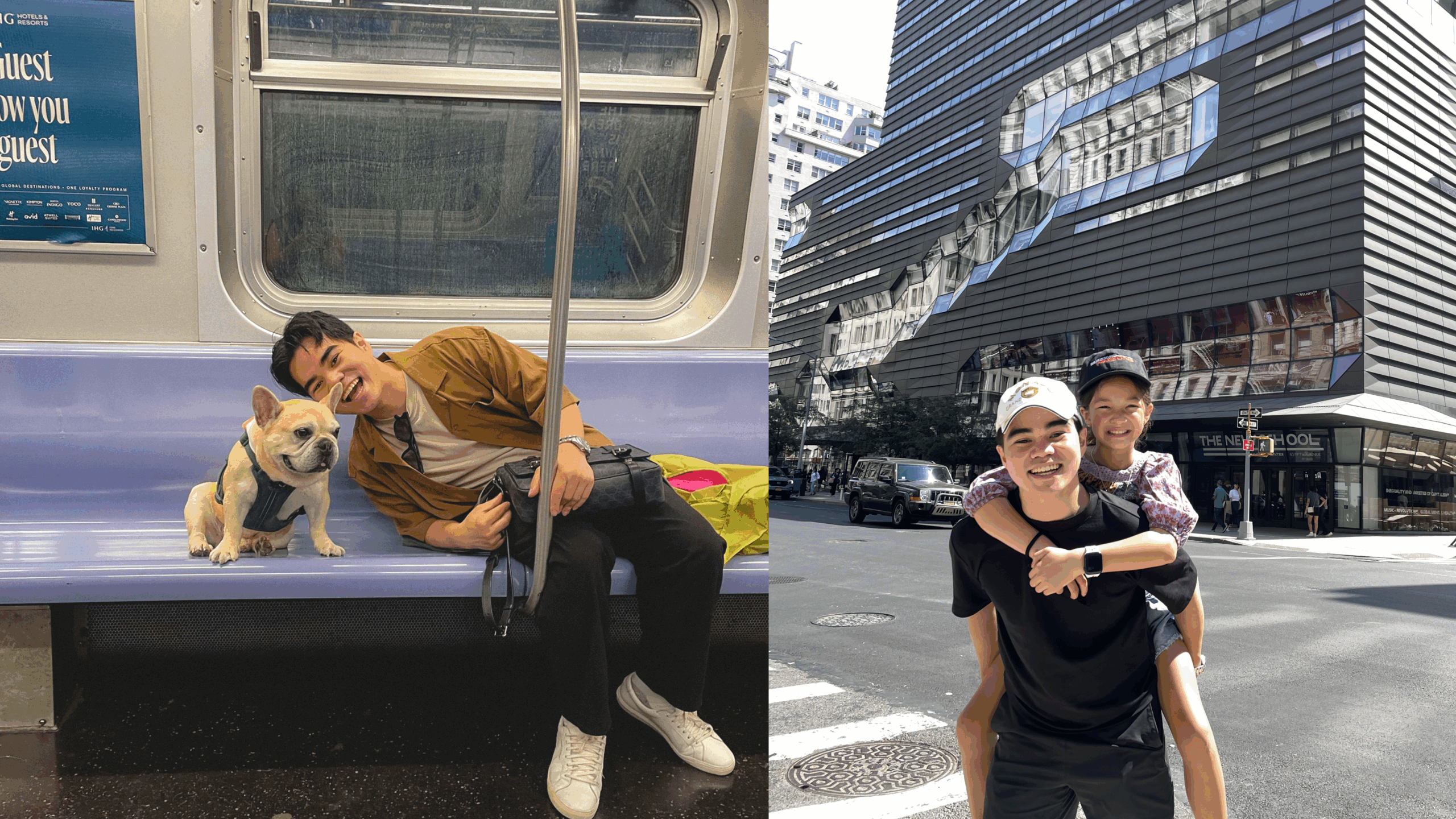

Something as small as a child fiddling with a refrigerator light doesn’t usually lead to a career in design, but for one Filipino designer, those tiny moments of curiosity were quietly steering his future long before he understood what design even was.

The boy who couldn’t resist pressing every button in sight would eventually become Andre Magracia, a Brooklyn-based Filipino product designer leading digital experiences for global brands while carrying lessons shaped by growing up in Las Piñas.
Today, Andre heads product design at JUICE Creative Group in New York, contributes to large-scale learning platforms and crypto gaming interfaces, and continues building Sneakpeak—his award-winning sneaker-release app—alongside Liit, a creative education initiative he co-founded. But the path that brought him here began long before graduate school or international awards. It started with curiosity, constraint, and the particular resourcefulness familiar to many Filipinos.
Tracing the roots of a designer
Looking back, Andre realizes his earliest training didn’t happen in a classroom. It happened at home—through everyday objects most people overlook.
“As a kid, I was the type who couldn’t stop touching things,” he says. Fidgeting with a rotary phone, clicking away on his grandfather’s typewriter even without paper, opening and closing the fridge door just to watch the light blink on—these experiences were small but revealing. They hinted at a mind drawn not only to how things looked, but how they worked, how they felt, and why they were built that way.
Cars were an early fascination. “I’d open every compartment, push every button, adjust the air conditioning, and play with the armrest until my mom would get mad at me,” he laughs. But even then, the interest went beyond childlike play. He was absorbing principles—interfaces, controls, user experience—years before those terms became meaningful to him.
Design inspirations found him in familiar objects: the click wheel of an iPod, the tactile precision of BMW’s iDrive knob, household appliances, and even airline service flows. “I realize this now, but back then I was also paying attention even to service design,” he says. “In planes, for example, I was interested in the infotainment screens, safety cards, and processes like boarding to food service.”
The storytelling power of sneakers—particularly the Jordan 3 and its visible Air unit—sparked another layer of design appreciation. It wasn’t just basketball culture that excited him; it was the intentionality behind every material choice, every stitch, every graphic.
These instincts eventually led him to study Industrial Design at De La Salle–College of Saint Benilde, where a formal design education helped articulate what he had always been drawn to: the relationship between people and products.
A shift in medium, not purpose
Andre spent his early career designing physical products in the Philippines. This experience—shaped by limited resources—taught him how to be inventive under constraint. “We are very resourceful and do more with less,” he says. When he moved to the US and saw design teams broken down into specialized roles—interaction designers, UX researchers, UI specialists—it highlighted how differently work was structured abroad.
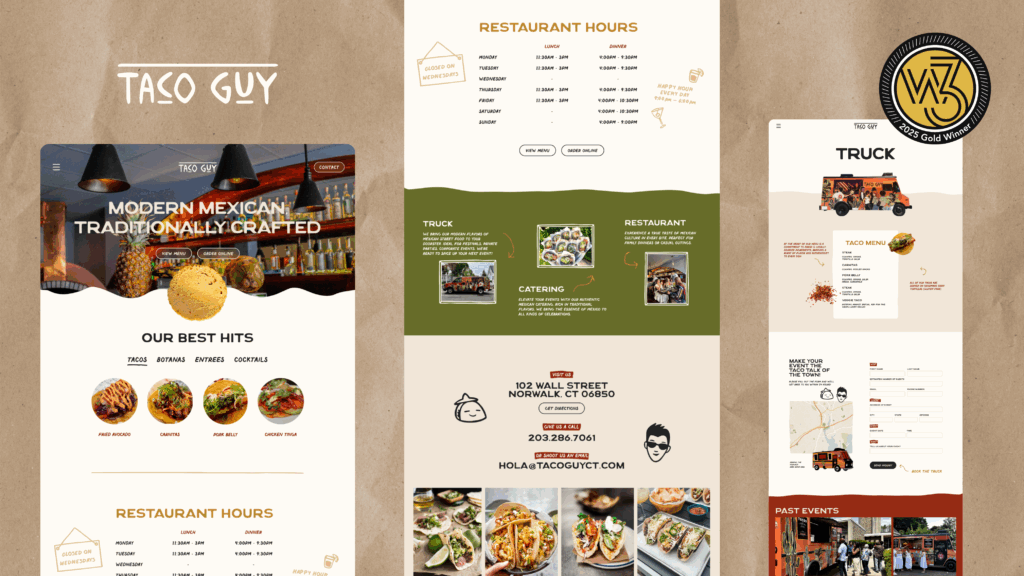
The shift from physical to digital design came during graduate school at Parsons and in the post-pandemic rise of product design roles. For Andre, the change wasn’t just about learning software; it forced him to reflect on what he enjoyed most about the discipline.
“Transitioning to digital product design, I learned more about myself,” he says. “It really highlighted that what I was passionate about was solving problems and storytelling. There’s a level of fulfillment regardless of the medium being physical or digital.”
He realized design wasn’t bound by material. What mattered was the narrative it carried, the problems it solved, and the communities it included.
Filipino culture—and Filipino realities—shapes the way Andre works today. Growing up in a country where creative fields were often misunderstood affected how he viewed his own path.
“My personal experience growing up in the Philippines was that design wasn’t visible as a career,” he says. “It was often equated with or seen as the same as art—unstable unless you were exceptionally gifted or came from wealth.”
That perception made him feel he needed to prove design was a legitimate career choice, especially compared to more traditional fields. Moving abroad intensified this. “I found myself trying to make myself fit in,” he says, “instead of leaning into what made me unique, which is actually better in a creative field.”
Constraints from his childhood became strengths in his practice. “The internet speeds were slow and I was always given the smallest, hand-me-down phone in the family,” he recalls. Today, these experiences inform how he designs for older devices, slower connections, and overlooked edge cases.
Even his family’s unofficial tech support duties—helping relatives troubleshoot across time zones—shaped his approach. Frequent interactions with users of varied ages, backgrounds, and familiarity with technology gave him an instinctive understanding of how different people struggle with interfaces.
“Empathy is very important in my field,” he says. “It’s not just about aesthetics and functionality—it’s making sure the experience works for people who don’t think, look, or interact the same way you do.”

Distance from home also gave him a deeper appreciation of Filipino visual culture. Jeepneys, once part of his everyday commute, became a source of creative inspiration. “Being removed from the Philippines I grew an appreciation for them,” he says. “The combination of hand-painted lettering, religious symbols, and pop-culture references turns transportation into a collective art form.”
He applies this perspective to digital design: modernize without erasing character.
Sneakpeak and the art of community-driven design
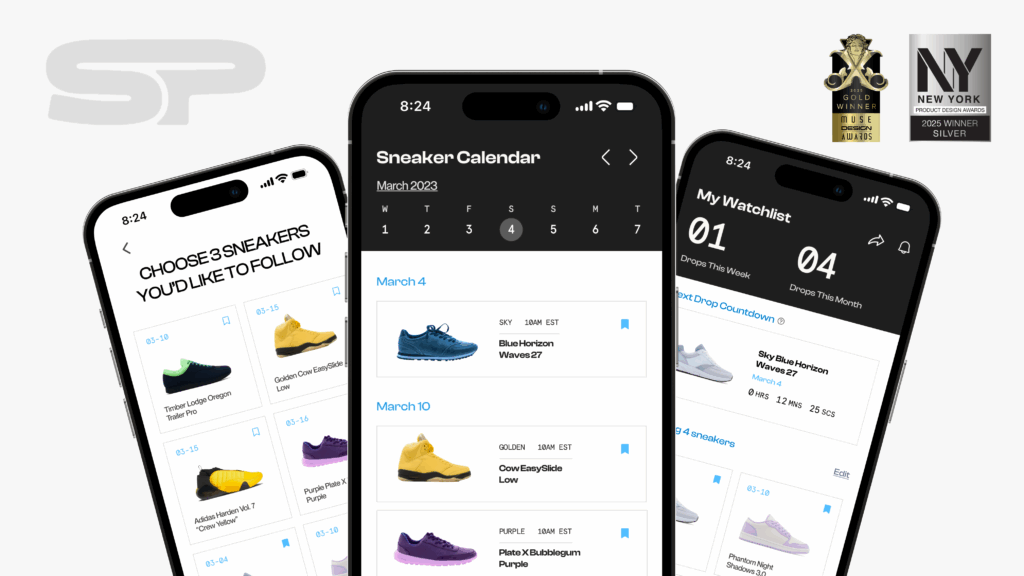
If there is one project that blends Andre’s interests—basketball, storytelling, community, and design thinking—it’s Sneakpeak.
Developed independently, the app began as a grad school idea and evolved into a long-term passion project. “As a Filipino of course I grew up loving basketball, which naturally led to a passion for sneakers,” he says. “My thesis in Benilde was about footwear for street basketball, and that stayed with me years later.”
What he noticed in the sneaker world was a fragmented experience. Information about exclusive drops was scattered everywhere, and reactions after releases were scattered across social media. “I personally found the experience in-app very anticlimactic whether it’s a win or loss,” he says.
Sneakpeak addressed that gap by creating a dedicated space for sneaker fans to track releases, receive alerts, and join conversations—all in one place. “My goal was to embrace the sneaker community and give a dedicated space for those conversations to take place.”
The app has since earned awards from A’ Design Awards, W3 Awards, Muse Design Awards, and NY Product Design Awards. One judge described it as an app that “turns product tracking into something cultural, community-driven, and design-forward.”
Even as his schedule tightens, Sneakpeak remains a project he continues to cultivate when he can. A dedicated website now houses updates for those following its progress.
Liit and the joy of learning together
Liit, the creative learning initiative he co-founded, was born out of frustration—and fun.
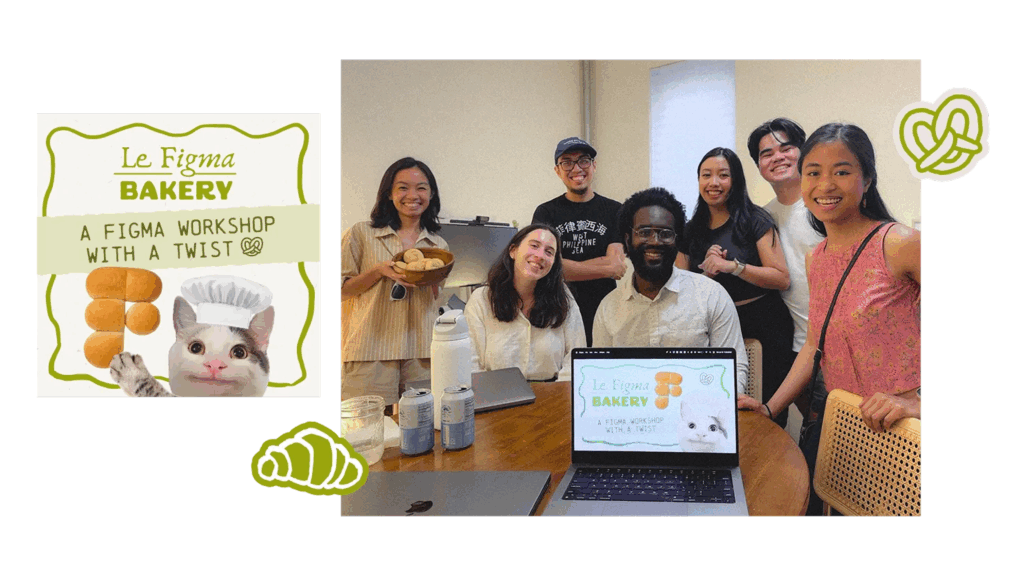
At Parsons, Andre and his partner found themselves needing to learn Figma independently. They turned self-study into communal learning, sharing what they knew with classmates between lectures and on Zoom. What began as casual help sessions evolved into structured workshops.
“It eventually turned into my partner and I hosting creative workshops with friends in our Brooklyn studio apartment,” he says.
Their signature workshop, Figma Bakery, introduces beginners to design concepts through pastry-themed, activity-based learning—menus, punch cards, stickers. It reflects the kind of learning environment they wished existed for them.
While Liit welcomes learners of all backgrounds, Andre acknowledges that Filipino values shape the way they teach: approachable, collaborative, and community-driven.
Despite living in the US for years, it was only recently that Andre found a stronger Filipino community around him. “It’s really helped me feel less homesick and more like there is a place for me here,” he says.
Seeing Filipinos thrive in different industries—sharing the same humor, references, and cultural touchstones—deepened his sense of belonging. It also expanded his creative influences, reminding him that identity is an asset, not something to mute.
Advice for Filipinos entering the global creative scene
Andre knows what it feels like to try to blend in, to quiet one’s identity for the sake of employability. His advice to young creatives comes from that experience.
“Don’t strip away your personality and identity in an effort to assimilate or appear ‘employable,’” he says. Reconnecting with his interests, heritage, and playfulness ultimately made his work stronger.
He also encourages empathy, curiosity, and seeking guidance openly. “So many more people than you think are eager to help and share what they can,” he says. “Your path doesn’t have to be linear, just keep learning and stay curious.”
