




Most people think arrival is the hard part. In reality, proving yourself—again and again—is where the real work begins. Rizaldy Apio learned this early, long before he became an Electrical Test Engineer in the UK, back when credibility had to be earned daily on factory floors thousands of kilometers away from home.

Now 40, Apio works at Schneider Electric in the UK, leading factory routine testing and customer inspections for medium-voltage switchgear. With more than 15 years spent building an engineering career across Saudi Arabia and the UK, his story is not about luck or fast breaks. It is about sustained performance in environments where standards are unforgiving, expectations are global, and mistakes are not an option.
Earning a place on the factory floor
Apio’s international journey began in Saudi Arabia in 2010, not with authority but with humility. He joined Schneider Electric as a Quality Control Technician, entering the highly technical world of medium-voltage switchgear without prior experience in the field. The work demanded precision, discipline, and a deep respect for safety—qualities that could not be improvised.
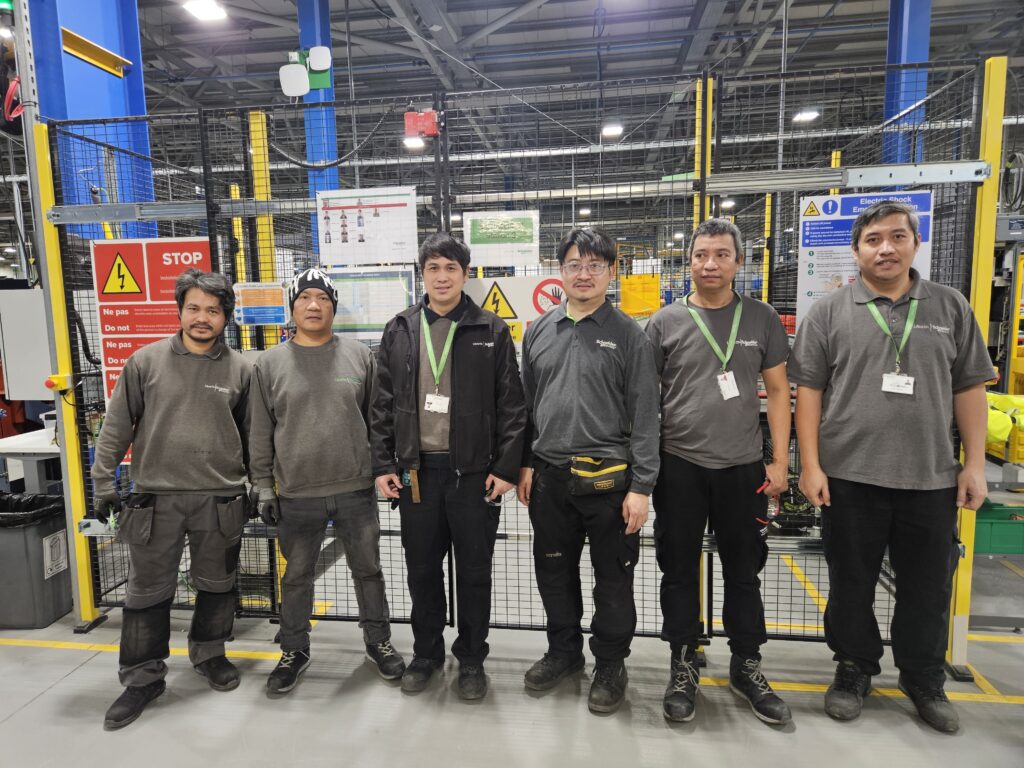
Progress came through consistency rather than shortcuts. Over time, he moved up to Quality Control Inspector, then Quality Control Engineer, absorbing not just procedures but the engineering logic behind them. The turning point arrived when leadership followed responsibility.
“The moment I realized I truly belonged on the global engineering stage was when I became Team Leader for medium-voltage switchgear factory testing at Schneider Electric in Riyadh,” he says.
In that role, Apio led a diverse team of ten engineers and technicians, managing high-voltage projects from production through customer inspections. He coordinated with international colleagues, handled demanding client requirements, and ensured that every test met the highest quality and safety standards. What mattered most was not nationality or background, but whether the work stood up to scrutiny.
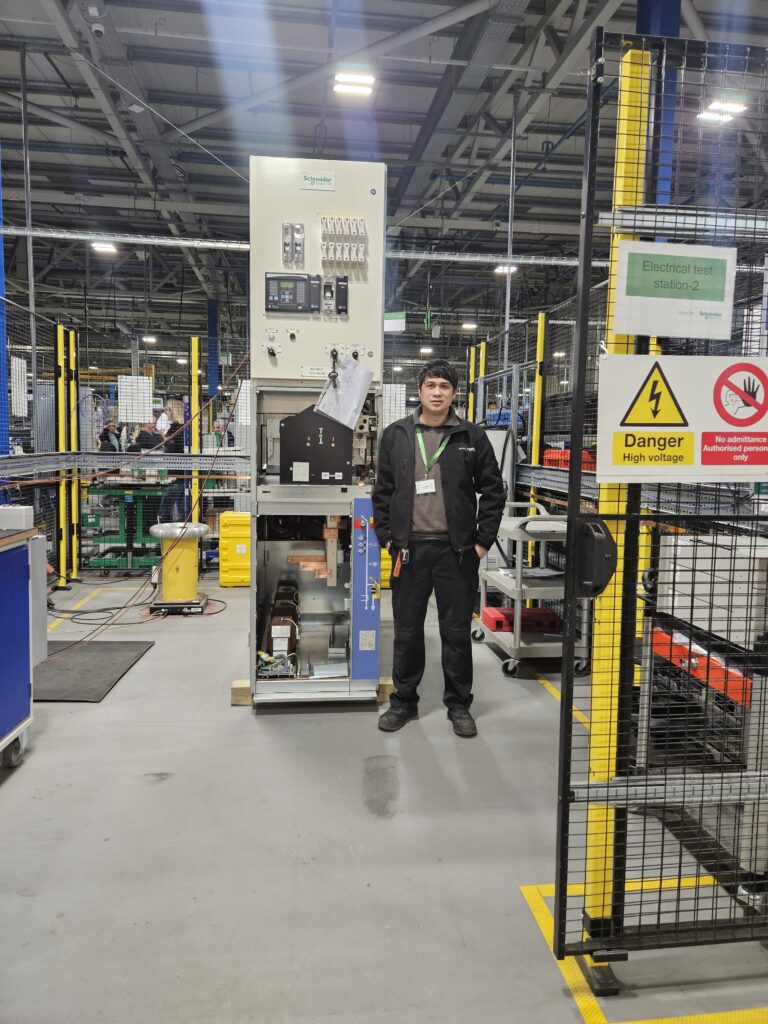
That realization was tested again in 2021, when Apio and his family relocated to the UK. Once more, he found himself starting over—this time as the only Filipino Electrical Test Engineer in the medium-voltage switchgear factory.
“Despite language barriers and differences in standards, I successfully managed full-scale projects and customer Factory Acceptance Tests from day one,” he recalls. The familiarity of technical rigor helped bridge what culture and context could not. The work spoke first.
Trust, built test by test
Medium-voltage switchgear testing is not a space where confidence can be claimed; it must be demonstrated. Errors carry financial, operational, and safety consequences, and credibility is measured in outcomes, not explanations.
“With over 15 years of expertise in medium-voltage switchgear testing, I have learned that credibility in high-risk technical environments is built through consistent performance, continuous learning, and sound engineering judgment,” Apio explains.
Rather than treating procedures as routine, he focused on understanding the engineering principles behind them—IEC standards, protection systems, and the reasoning embedded in each test sequence. When quality issues surfaced, he earned trust by staying objective: analyzing root causes, explaining findings clearly, and proposing solutions grounded in both standards and experience.
In fast-paced factory settings, where deadlines apply constant pressure, Apio became known for making evidence-based decisions. As a Filipino engineer working internationally, he also understood the unspoken need to counter assumptions.
“I addressed any potential preconceptions through professionalism, clear communication, thorough documentation, and alignment with global best practices,” he says. Over time, results did what words could not.
When excellence speaks louder than origin
One project, in particular, crystallized Apio’s belief that technical excellence transcends nationality. Assigned to an offshore project involving factory acceptance testing of medium-voltage switchgear, he encountered client procedures that went far beyond what he had previously handled.
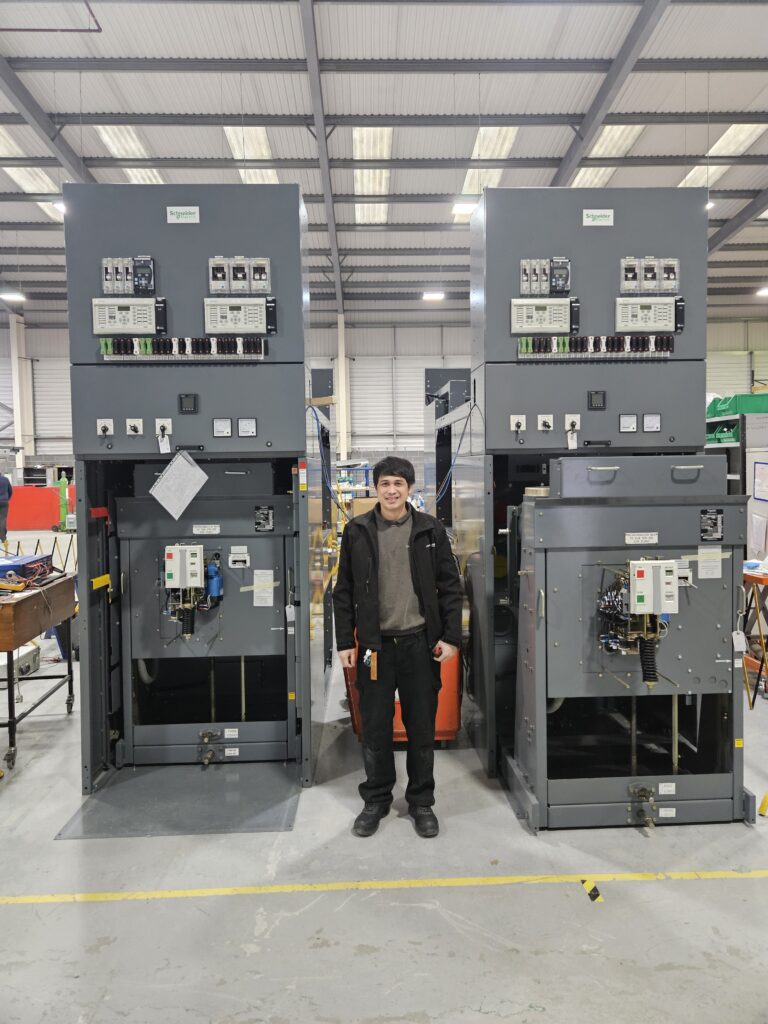
“The client’s procedures, particularly in pre-commissioning and final protection relay configuration, were unfamiliar and initially challenging,” he recalls.
Rather than retreating to comfort zones, Apio applied a structured engineering approach—following procedures carefully, analyzing test data, identifying issues, and implementing corrective actions using advanced testing equipment. He carried the project from testing through final delivery, working independently under exacting scrutiny.

“Over time, both the client and company leadership recognized the quality and dedication of my work,” he says. The takeaway was simple and lasting: excellence is not inherited. It is demonstrated.
Breaking through the credential barrier
For many Filipino engineers, working in the UK presents an additional challenge beyond technical competence—professional recognition. Degree equivalency issues, limited mentorship, and difficulty securing engineering roles often make registration feel out of reach.
One of Apio’s personal goals upon arriving in the UK was to overcome that barrier.
“Navigating the process independently was challenging and took nearly three years,” he says, referring to his journey toward Engineering Council registration as an Incorporated Engineer. The process required demonstrating all 17 competencies under the UK Standard for Professional Engineering Competence, supported by detailed project evidence, followed by a demanding professional review interview.
The effort paid off. Alongside his UK registration, Apio holds professional credentials across multiple jurisdictions: Professional Electrical Engineer and Registered Electrical Engineer in the Philippines, Electrical Engineer with the Saudi Council of Engineers, ASEAN Chartered Professional Engineer, International Engineering Technologist in the UK.
“Most importantly, I am proud of reaching this milestone,” he says. “It proves that even as an average student and a Filipino engineer, it is possible to achieve internationally recognized professional status through persistence, discipline, and hard work.”
Opening doors instead of guarding them
Career milestones matter, but Apio measures success by impact beyond himself. Over the past year, he helped seven Filipino engineers and technicians from the Philippines and Saudi Arabia secure roles alongside him at Schneider Electric in the UK.
“Mentorship is important to me because I know firsthand what it means to start from nothing and work hard to build a career abroad,” he says.
From helping candidates prepare to guiding them through unfamiliar professional environments, Apio sees mentorship as responsibility, not charity. Watching former mentees succeed has become one of his proudest achievements—a reminder that progress multiplies when shared.
Carrying Filipino values into global spaces
In multinational engineering environments, Apio’s Filipino identity quietly shapes how he works and leads. Reliability comes first. When urgent jobs arise, he stays until they are done. When new products are introduced, he studies them independently, learning not just operation but underlying principles.
“I also apply the Filipino principle of pakikisama to build trust and strong teamwork,” he says, balancing collaboration with a structured approach to problem-solving.
Faith and perseverance anchor his decisions, especially in high-pressure situations. Standards guide the process, but values guide the response.
A message for those still hesitating
For young Filipino engineers who feel constrained by geography, credentials, or self-doubt, Apio’s advice is grounded in experience rather than motivation.
“Perseverance, continuous learning, and confidence are essential,” he says. “Credentials and location may seem like barriers, but what truly matters is competence, professionalism, and a problem-solving mindset.”
