



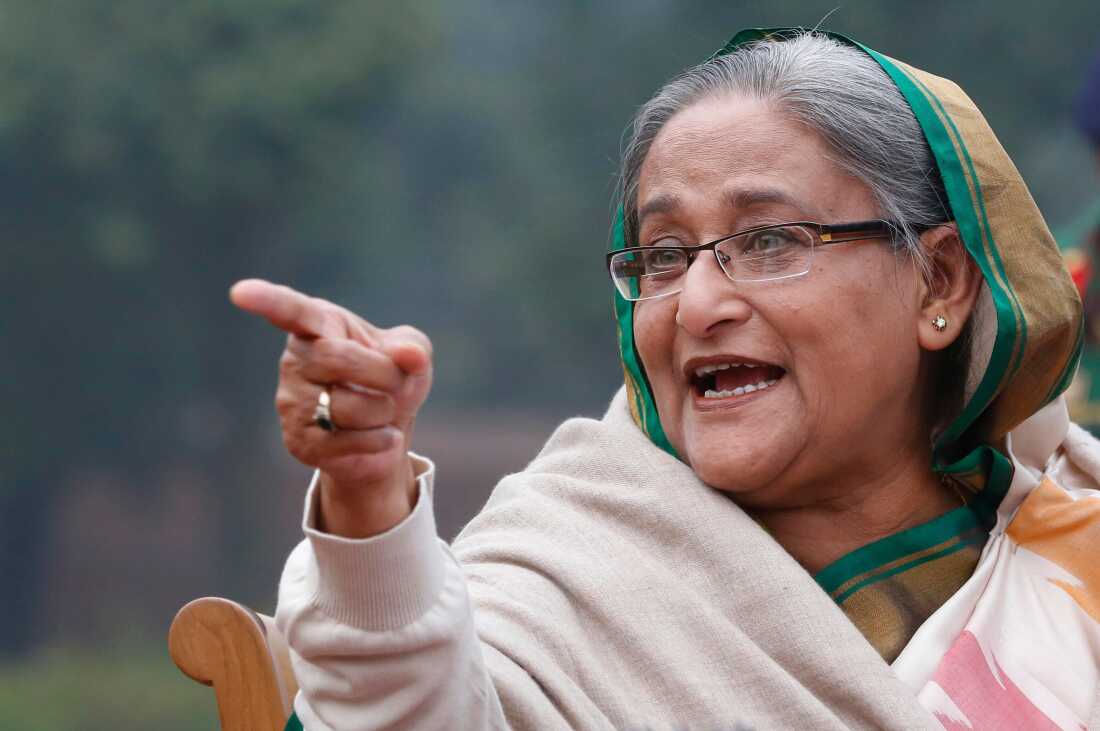

A Bangladesh court has handed former prime minister Sheikh Hasina a death sentence after finding her guilty of crimes against humanity linked to last year’s deadly crackdown on student-led protests that toppled her government. The verdict, delivered Monday in Dhaka, triggered cheers inside the courtroom and celebrations across the capital.

Judge Golam Mortuza Mozumder, reading the judgment live on national television, declared that “all the… elements constituting crimes against humanity have been fulfilled.” He said Hasina was convicted on three counts—incitement, issuing an order to kill, and failing to prevent atrocities—and that “only one sentence” would be imposed: death by hanging.
The ruling comes less than three months before Bangladesh holds its first national elections since Hasina’s removal from office in August 2024. The 78-year-old leader, who fled to India and ignored repeated summons to return, was tried in absentia with a state-appointed attorney.
From hiding, Hasina denounced the ruling as “biased and politically motivated,” saying in a statement that the outcome “was a foregone conclusion.” Her lawyer in Dhaka, Md Amir Hossain, said she may file an appeal only if she surrenders or is arrested.
The court also sentenced former interior minister Asaduzzaman Khan Kamal to death in absentia on four similar charges. Ex-police chief Chowdhury Abdullah Al-Mamun, who admitted guilt, received five years in prison—a penalty that angered some families of victims.

Shamsi Ara Zaman, whose photojournalist son Tahir Zaman Priyo died during the unrest, said she was “satisfied” with the death sentences but “dismayed” by the lighter punishment for the former police chief.
Bangladesh remains on edge as the political landscape continues to fracture. The United Nations has documented up to 1,400 deaths during the 2024 crackdown—figures that formed a core component of the prosecution’s evidence. Attorney General Md Asaduzzaman said the ruling “pays the dues to the martyrs,” while interim leader Muhammad Yunus called it a “historic verdict.”
The decision has widened diplomatic tensions with India, which hosted Hasina after her ouster and has been urged by Dhaka to extradite her. New Delhi said it had “noted” the judgment and reiterated its commitment to “the best interests of the people of Bangladesh,” without directly addressing the extradition request.
Security in Dhaka was heightened ahead of the ruling, with armored vehicles, road checkpoints, and thousands of police officers deployed across the city amid a wave of crude bomb attacks targeting government sites, Christian institutions, and public transport.
International analysts warn that the ruling could deepen Bangladesh’s political rift. The International Crisis Group said the verdict’s implications are “significant,” noting that Hasina’s chances of a political comeback “now appear very slim.” Analyst Thomas Kean added that while the trial process drew criticism—especially over its speed and in-absentia proceedings—those concerns “should not be used to downplay or deflect from Sheikh Hasina’s actions.”
