



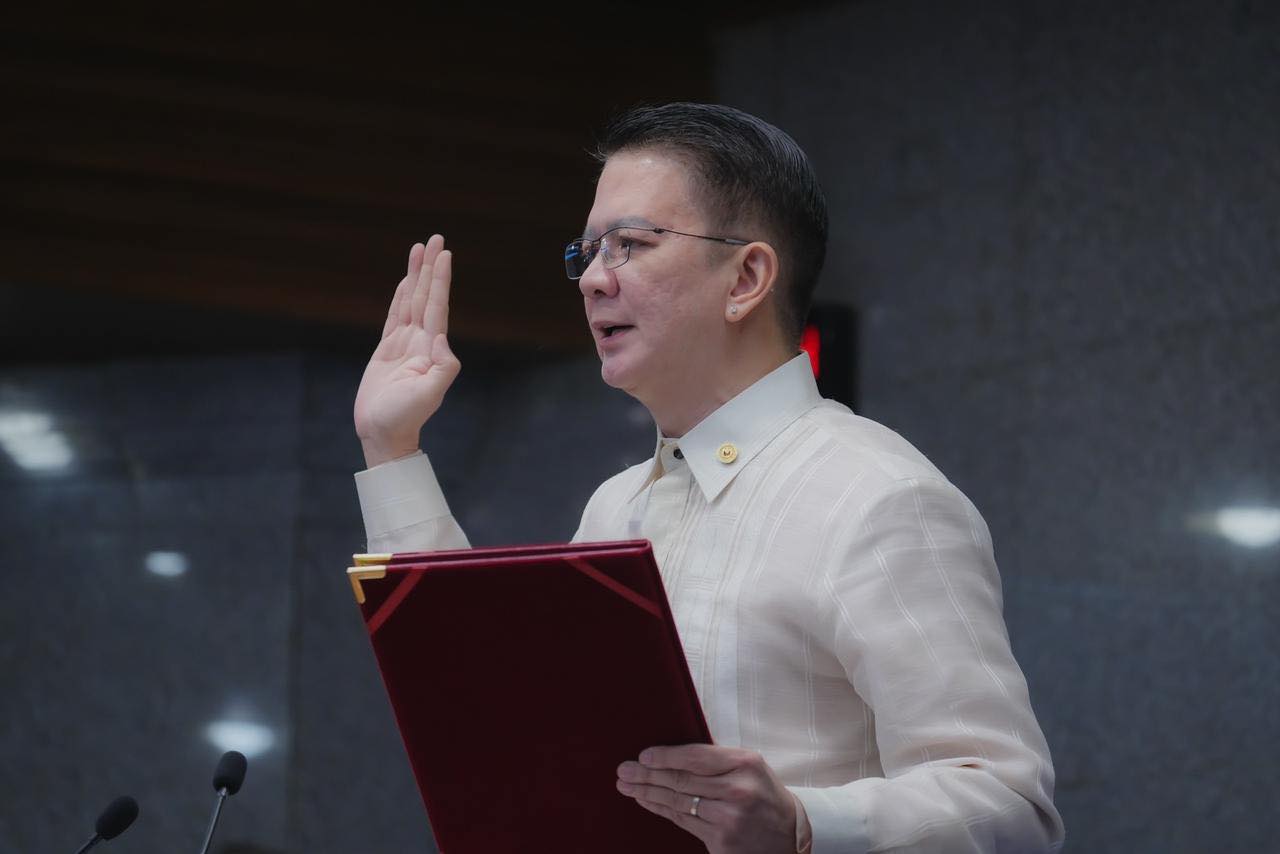

Senator Francis Escudero has moved to overhaul how government infrastructure budgets are determined, filing a bill that would mandate a strict pricing breakdown for all public works proposals in an effort to curb overpricing and misuse of funds.

Senate Bill 1467, filed as the government steps up efforts to lower construction costs and introduce transparency reforms in the Department of Public Works and Highways (DPWH), calls for a Detailed Unit Price Analysis (DUPA) for every project before it can be listed in the National Expenditure Program or receive funds.
Escudero emphasized that the bill aims to ensure public spending is anchored on facts—not estimates. Project allocations, he said, should be supported by “basis, details, and accountability” instead of guesswork.
“Government spending becomes transparent if the price of every nail, cement, and service is clear. The people are able to see where every peso [of their taxes] went,” he said in Filipino.

The proposal comes as the infrastructure budget is projected to climb to ₱1.56 trillion in 2026, accounting for nearly one-fourth of national spending. Escudero noted that recent DPWH findings showed material costs such as asphalt, steel bars, and cement inflated by as much as 50 percent, prompting concerns about favoritism in awarding contracts.
He warned that overpricing schemes “enabled an arbitrary yet systematic scheme where appropriations for infrastructure projects are allegedly being used as identifiers of projects reserved for favored contractors.”
The measure would make falsifying or omitting required pricing data an offense punishable by perpetual disqualification from public office, alongside other possible civil or criminal penalties. It also seeks to institutionalize a national pricing reference manual reviewed every three years and capacity-building programs for government engineers, budget officers, and auditors.
“By establishing this uniform and transparent method of estimating appropriations, this measure can deter unscrupulous budget practices, promote fiscal discipline, create fiscal space for other priority programs and projects, and provide technical and financial safeguards against corrupt and inefficiencies in public spending,” Escudero said.
