



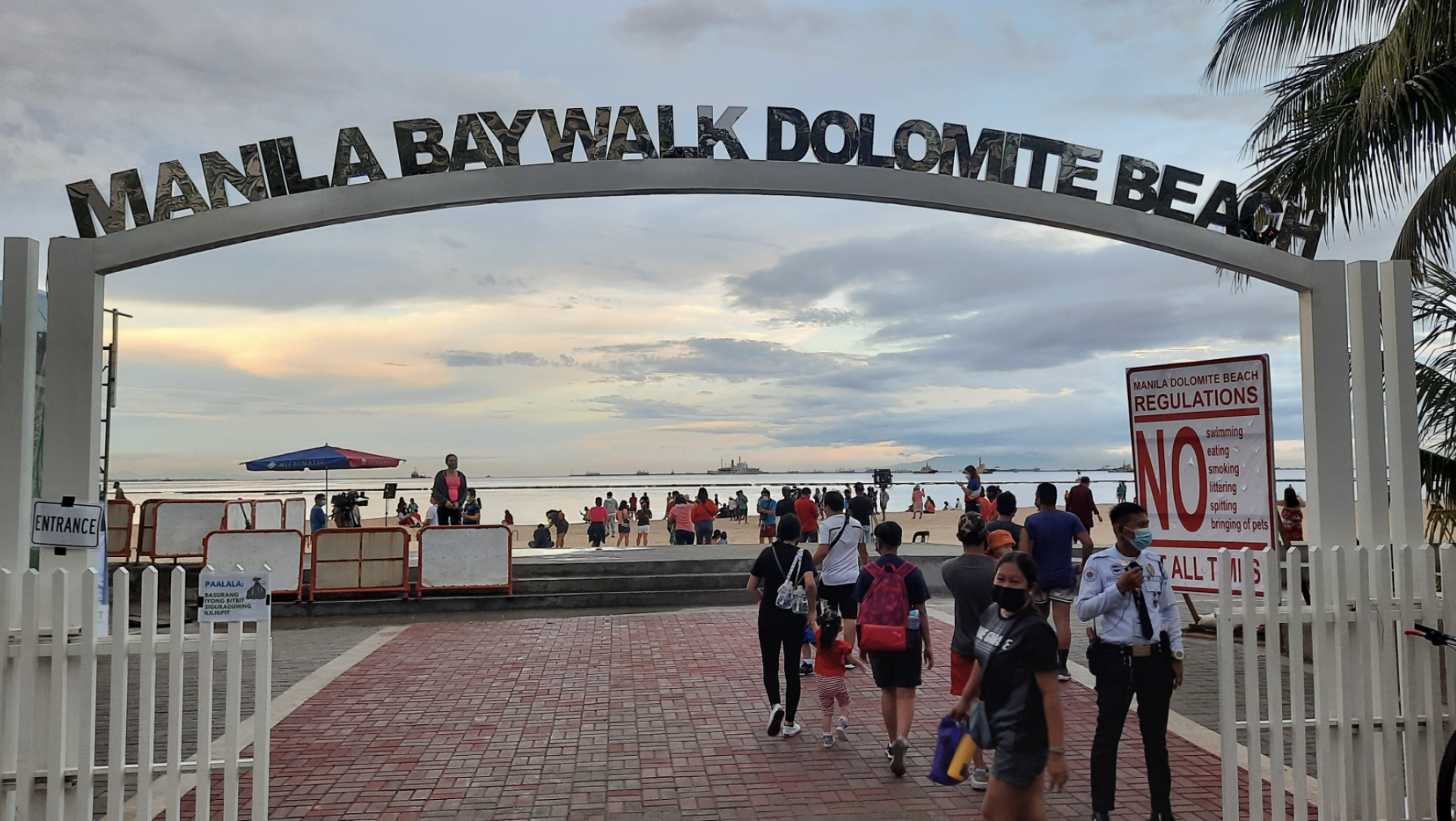

A lawmaker is pushing for a congressional investigation into the controversial Manila Bay Dolomite Beach, citing unaddressed environmental concerns and its alleged role in worsening floods in the capital.

Bicol Saro party-list Rep. Terry Ridon has filed House Resolution No. 56, urging the House of Representatives to investigate the artificial beachfront project initiated under the Duterte administration. Ridon emphasized the need to scrutinize the project’s environmental impact and cost, claiming it was never part of the official rehabilitation master plan for Manila Bay.
“The dolomite project was never envisioned to protect Manila Bay’s coastal resources nor to prevent coastal flooding, erosion, or pollution,” Ridon stated in his resolution. “It is a cosmetic project masquerading as rehabilitation, and has now proven harmful to flood mitigation efforts in Manila. It is nothing but a criminal wastage of public funds.”
Scientific institutions such as the UP Marine Science Institute and advocacy group AGHAM have repeatedly called on the Department of Environment and Natural Resources (DENR) to release environmental and fisheries impact assessments. They warned that the project could potentially disrupt sediment flow, degrade marine habitats, and harm overall water quality.
The Metropolitan Manila Development Authority (MMDA), through Chairman Don Artes, reportedly flagged the dolomite beach as a factor in worsening floods along Taft Avenue, due to blocked drainage outfalls like Faura, Remedios, and Estero de San Antonio Abad. Artes said these outlets were obstructed during construction, forcing rainwater through an overwhelmed sewage treatment plant during heavy downpours.
Ridon listed key issues for the inquiry, including whether the project was necessary to comply with the Supreme Court’s Writ of Continuing Mandamus for Manila Bay, whether a proper environmental impact assessment was conducted, and whether its implementation contributed to flooding. He also raised questions about the project’s P389 million cost and the possible criminal liability of officials involved.

Further stirring controversy is the fact that the dolomite project was never approved by the National Economic and Development Authority (NEDA) as part of the Manila Bay Rehabilitation Master Plan. This was confirmed by the DENR during congressional deliberations in 2020.
The initiative drew backlash during the height of the COVID-19 pandemic, with critics—including then Vice President Leni Robredo—questioning the timing and cost. Robredo argued that the project’s budget could have been redirected to aid 80,000 families with P5,000 in cash assistance each, amid widespread economic distress.
Adding to the environmental concerns were sightings of dead fish and discolored water along the bay after heavy monsoon rains in September 2020. While the DENR denied any link between the dolomite and the fish kill, health experts had earlier expressed worries about potential respiratory hazards tied to dolomite exposure.
“We will undertake a full congressional inquiry, determine criminal and administrative liability, and hold every government official directly involved in the origination, planning, and implementation of this project accountable,” Ridon vowed.
He warned that if the investigation uncovers grounds for plunder or graft, those responsible should face the full force of the law. “This is a project that was not in the master plan. And it now stands as a culprit in worsening floods in the heart of the nation’s capital.”
