



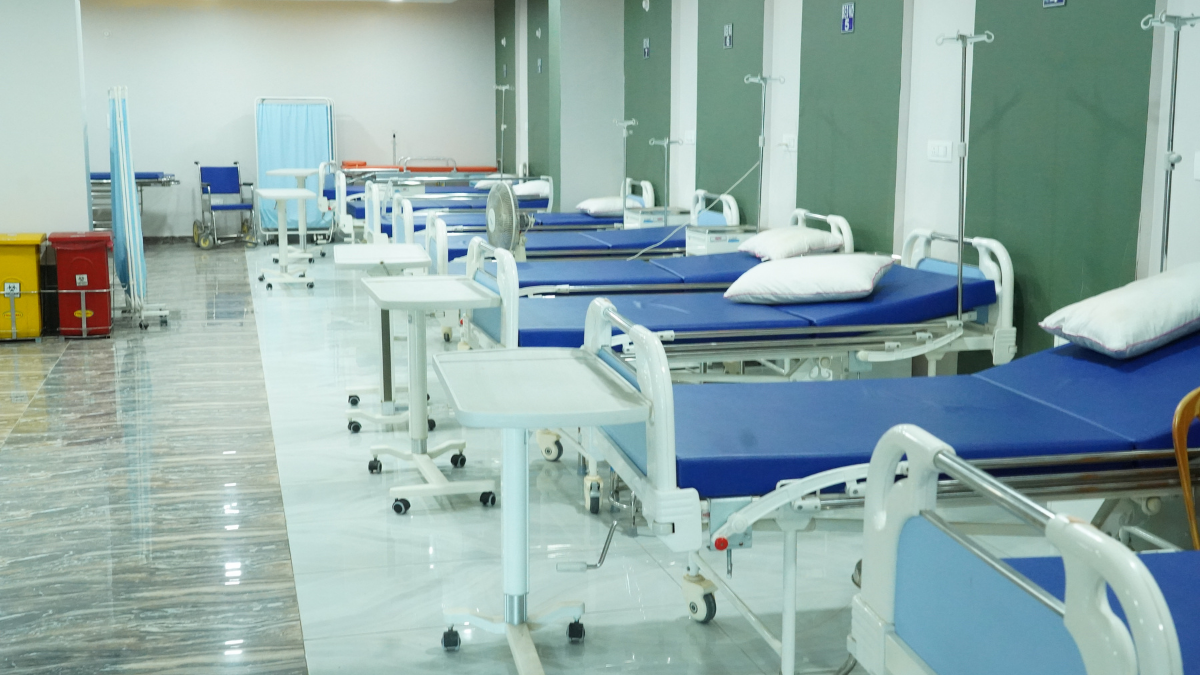

The Department of Health is reviewing whether the government’s zero-balance billing policy can be extended to cover admissions in semi-private rooms, a shift that would expand benefits beyond the current restriction to basic ward accommodations.

Health Secretary Ted Herbosa said the idea under consideration is to adjust the policy for PhilHealth direct contributors, noting that the existing setup excludes patients admitted to private or semi-private rooms. He explained that indigent and poor patients, classified as indirect members, are typically confined to wards, making the present coverage more applicable to them.
“Ngayon, kapag nagpa-admit sa private or semi-private [rooms], di ka na kasali sa zero-balance [billing],” Herbosa said in a chance interview on Friday, Dec. 17.
“Iniisip namin baguhin ito lalo sa mga nagtatrabaho, ‘yong mga direct members na nagko-contribute [sa PhilHealth], kasi ‘yong mga indirect, ‘yon yong mahihirap o indigent, talaga namang dun lang sila magpapa-admit sa ward,” he added.
Herbosa said the feasibility of the proposed expansion is being examined in light of a higher budget allocation for PhilHealth in 2026. Lawmakers raised the state insurer’s funding to P129.7 billion, which includes a P16 billion realignment from the Department of Public Works and Highways and the return of roughly P60 billion to the national treasury following a Supreme Court order.
Separately, the health chief said the government is already set to broaden the implementation of zero-balance billing to hospitals run by local government units starting next year. At present, the policy applies only to 87 hospitals directly operated by the DOH.

As part of this effort, the department earlier sought a special provision in the proposed 2026 national budget for the Medical Assistance for Indigent and Financially Incapacitated Patients program. Under the DOH proposal, 80 percent of MAIFIP funds would be used to support zero-balance billing in Level 3 hospitals managed by local governments.
Herbosa said the exact allocation remains uncertain, as three different versions of the special provision were discussed during bicameral deliberations on the 2026 budget, and the final percentage has yet to be settled.
Amid debates over funding priorities, Herbosa also addressed criticism over the decision to increase MAIFIP’s budget to P51.6 billion, more than double the amount originally proposed in the 2026 National Expenditure Program. Some lawmakers and health advocates argued that additional funds should instead be channeled to PhilHealth.
“Disagree ako dun sa nagbibigay ng panukala sa PhilHealth, kasi ang PhilHealth di ganun kabilis may delay talaga…pati private nagrereklamo sa amin na di sila binabayaran,” Herbosa said.
He also rejected claims that MAIFIP functions as a form of pork barrel, stressing that payments are released directly to hospitals rather than handed to individual patients. Herbosa said he has proposed increasing the DOH’s maintenance, operating, and personnel budgets in the 2027 National Expenditure Program to allow public hospitals to accommodate more patients.
