



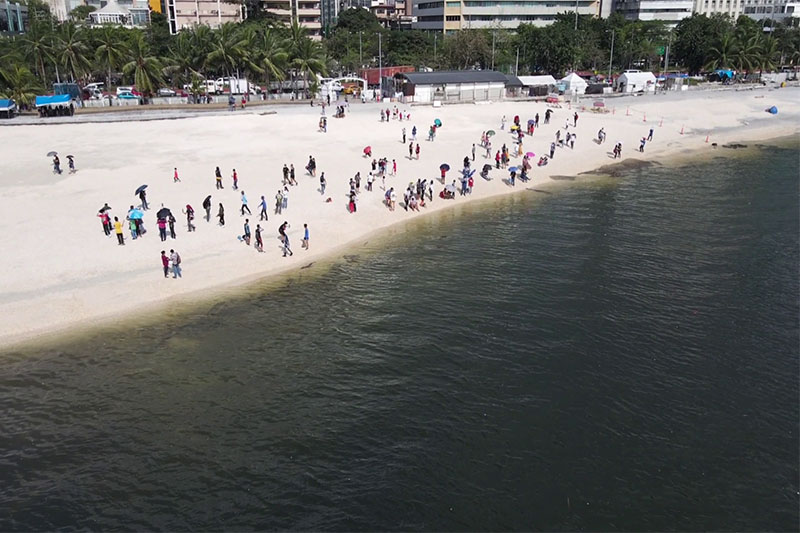

The Department of Environment and Natural Resources (DENR) is pushing for a science-driven approach to address Metro Manila’s worsening flood issues after the Metropolitan Manila Development Authority (MMDA) partly blamed the Manila Baywalk Dolomite Beach project for recent inundations in the capital.

In a statement released Thursday, the DENR stressed that identifying the root causes of flooding must be based on scientific evidence, particularly given the intensifying effects of climate change.
Citing data from the Philippine Atmospheric, Geophysical and Astronomical Services Administration (PAGASA), the agency noted that rainfall volumes have significantly increased over the last decade—overwhelming existing drainage infrastructure in urban areas like Metro Manila.
This came after MMDA Chair Romando Artes pointed to the dolomite beach project as a contributing factor to the flooding, claiming that the artificial beachfront obstructed three major drainage outfalls: Faura, Remedios, and Estero de San Antonio Abad. Artes explained that water is redirected to a sewerage treatment plant before reaching the dolomite beach, but the facility cannot cope with heavy rainfall.

While the DENR did not directly respond to the MMDA’s remarks, it acknowledged the agency’s concerns and reaffirmed its commitment to work with local governments and the public to improve flood resilience. It also urged LGUs to adopt updated flood mitigation strategies, including modern drainage designs, proper waste management, and ecosystem restoration.
Meanwhile, Bicol Saro party-list Rep. Terry Ridon has filed House Resolution No. 56, calling for a congressional probe into the dolomite project. He questioned why the initiative, which was not listed among approved projects under the Manila Bay Rehabilitation Master Plan, was implemented despite potential environmental risks.
Ridon criticized the P389-million beach nourishment project, describing it as a “cosmetic” and ineffective measure that may have worsened flooding in the area. “It is nothing but a criminal wastage of public funds,” he said, arguing that the funds could have been used instead for sustainable engineering solutions.
