



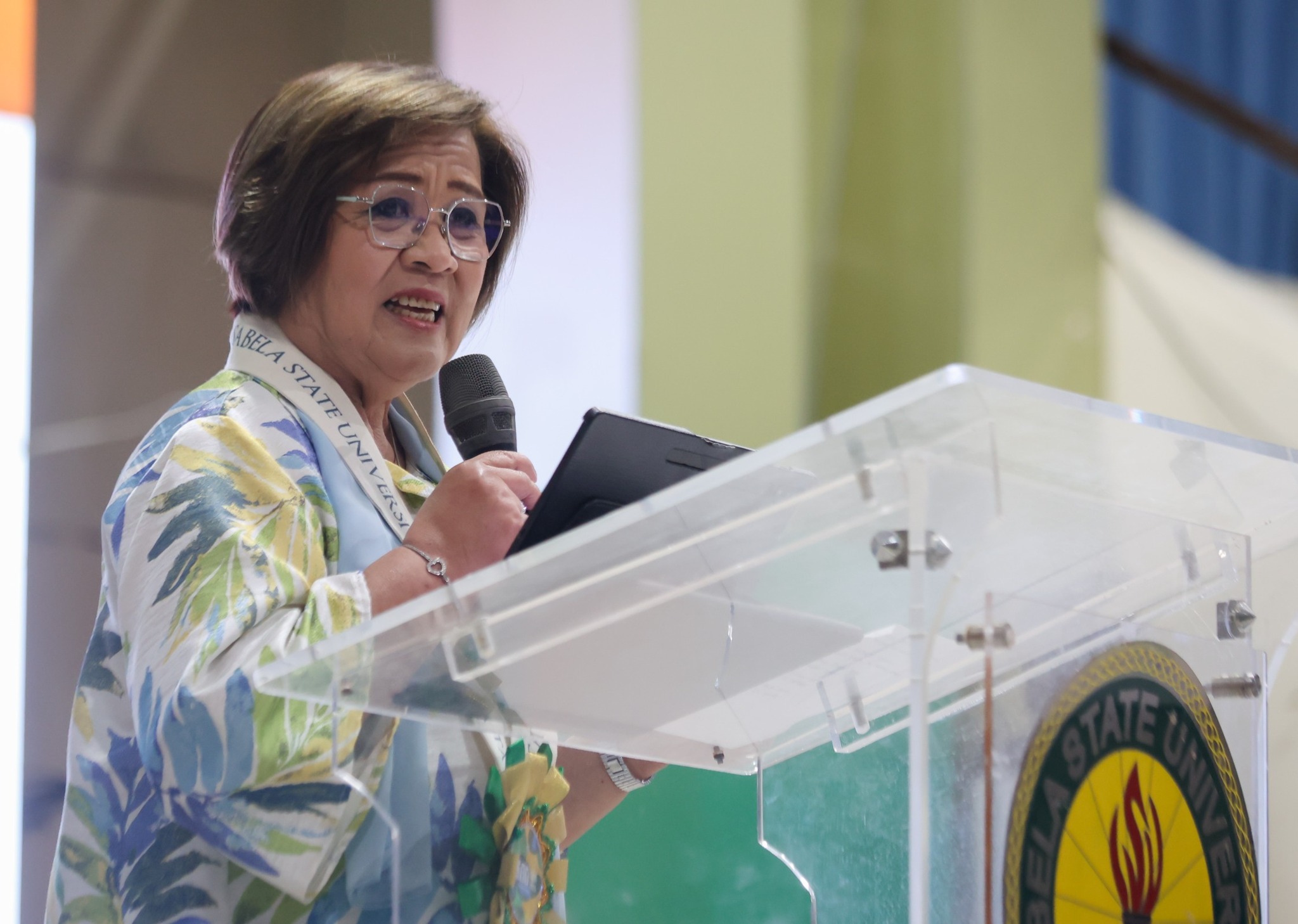

A proposal filed in the House of Representatives is pushing to recalibrate how government subsidies for higher education are distributed, after data showed a shrinking share of benefits reaching the country’s most disadvantaged students.

House Deputy Minority Leader Leila de Lima confirmed on Sunday that she has filed House Bill No. 6825, which seeks to amend Republic Act No. 10931, also known as the Universal Access to Quality Tertiary Education Act. The measure aims to tighten targeting rules and correct what she described as gaps that surfaced years after the law took effect.
“The enactment of RA 10931 is a bold and positive step toward ensuring that quality higher education is inclusive and made accessible to all Filipinos. However, eight years after the law’s enactment, several issues in the law’s implementation have emerged, thus necessitating the amendments proposed by this bill,” De Lima said in her filing.
Under the existing law, financial assistance programs such as the Tertiary Education Subsidy (TES) and the Student Loan Program for Tertiary Education cover students enrolled in state universities and colleges, local universities and colleges, private higher education institutions, and technical-vocational institutions. These programs were designed to offset tuition and other education-related expenses.
However, De Lima pointed to findings from the Second Congressional Commission on Education showing a steep decline in the share of TES grants going to the poorest households. According to the commission’s data, beneficiaries from these households fell from 74.24 percent in academic year 2018–2019 to 30.74 percent in academic year 2022–2023.

She also cited figures indicating that students from families enrolled in the Pantawid Pamilyang Pilipino Program (4Ps) have become less represented among new TES recipients. Intake of new 4Ps beneficiaries reportedly dropped to 23 students in academic year 2019–2020, down from 7,433 in the previous school year.
To address these trends, House Bill No. 6825 proposes a guarantee that all eligible 4Ps beneficiaries who finish senior high school and gain admission to institutions recognized by the Commission on Higher Education or the Technical Education and Skills Development Authority will automatically receive tertiary education subsidies.
The bill further expands the allowable uses of TES funds by including internship and related learning experience fees, which are often required for degree completion but not fully covered under the current framework.
In addition, the proposal introduces measures intended to strengthen oversight, including a mandatory monitoring and evaluation system and the creation of a grievance mechanism for students covered by the law and other financial assistance programs.
