



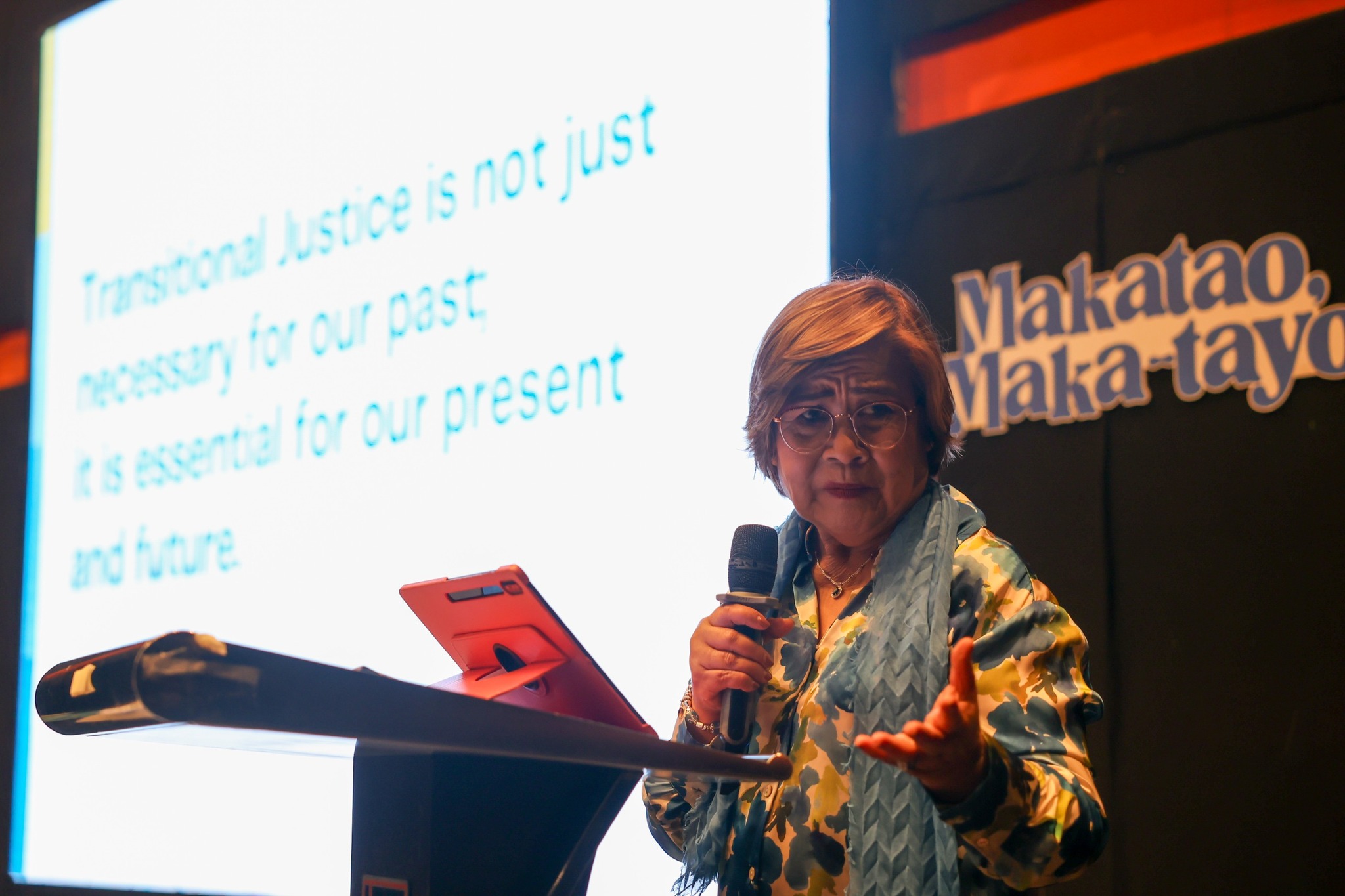

Former senator and now Mamamayang Liberal party-list Rep. Leila de Lima has filed two significant measures in the House of Representatives aiming to combat red-tagging and ensure transparency and accountability in the use of confidential and intelligence funds (CIF).

Filed as part of her second batch of priority bills, House Bill No. 1845 proposes strict limits and oversight mechanisms for CIF allocations, while HB No. 1841 seeks to officially define and criminalize red-tagging — a practice often used to associate critics of the government with communist insurgents.
“In filing our next batch of priority measures, we seek to reinforce our efforts and address the gaps in promoting human rights, social protection and environmental justice, as well as in strengthening national security and upholding accountability in using public funds,” De Lima said in a statement Monday.
Under HB 1845, CIFs cannot exceed 10% of an agency’s total annual budget unless explicitly authorized by law. Only government offices directly involved in national security, law enforcement, or intelligence work would be eligible to receive such funds. The bill explicitly bans the use of CIFs for political activities, personal spending, and public relations.
De Lima emphasized, “Let us use the intel funds correctly. Confidential does not mean unlimited.”

In a push for transparency, the bill also states that when the Commission on Audit issues a Notice of Disallowance (ND) on a CIF-related expenditure, the confidentiality status of the fund is lifted. All related documents must then be disclosed for public inquiry.
The use of CIFs came under public scrutiny in 2024 during congressional hearings involving Vice President Sara Duterte’s offices — both the Office of the Vice President and the Department of Education. Lawmakers flagged suspicious acknowledgment receipts bearing odd names like “Mary Grace Piattos” and “Kokoy Villamin,” with inconsistencies in signatures and handwriting.
De Lima’s other bill, HB 1841 or the proposed Anti-Red Tagging Act, seeks to protect human rights defenders and dissenters from being unjustly labeled as communists or enemies of the state. “Banta ang red-tagging sa ating karapatan, kaligtasan, at sa katotohanan,” she warned.
Apart from these two, De Lima also filed several other measures, including bills to protect barangay health workers, criminalize black sand mining and espionage, and expand social protection programs like 4Ps. Her Anti-Espionage Act, HB 1844, was introduced amid suspicions that dismissed Bamban, Tarlac Mayor Alice Guo was a Chinese spy.
“The revelation that dismissed Bamban Mayor Alice Guo or Guo Hua Ping is a Chinese spy is very disturbing and alarming as it showed that spies have already infiltrated the leadership of Local Government Units (LGUs),” she wrote in her explanatory note.
