



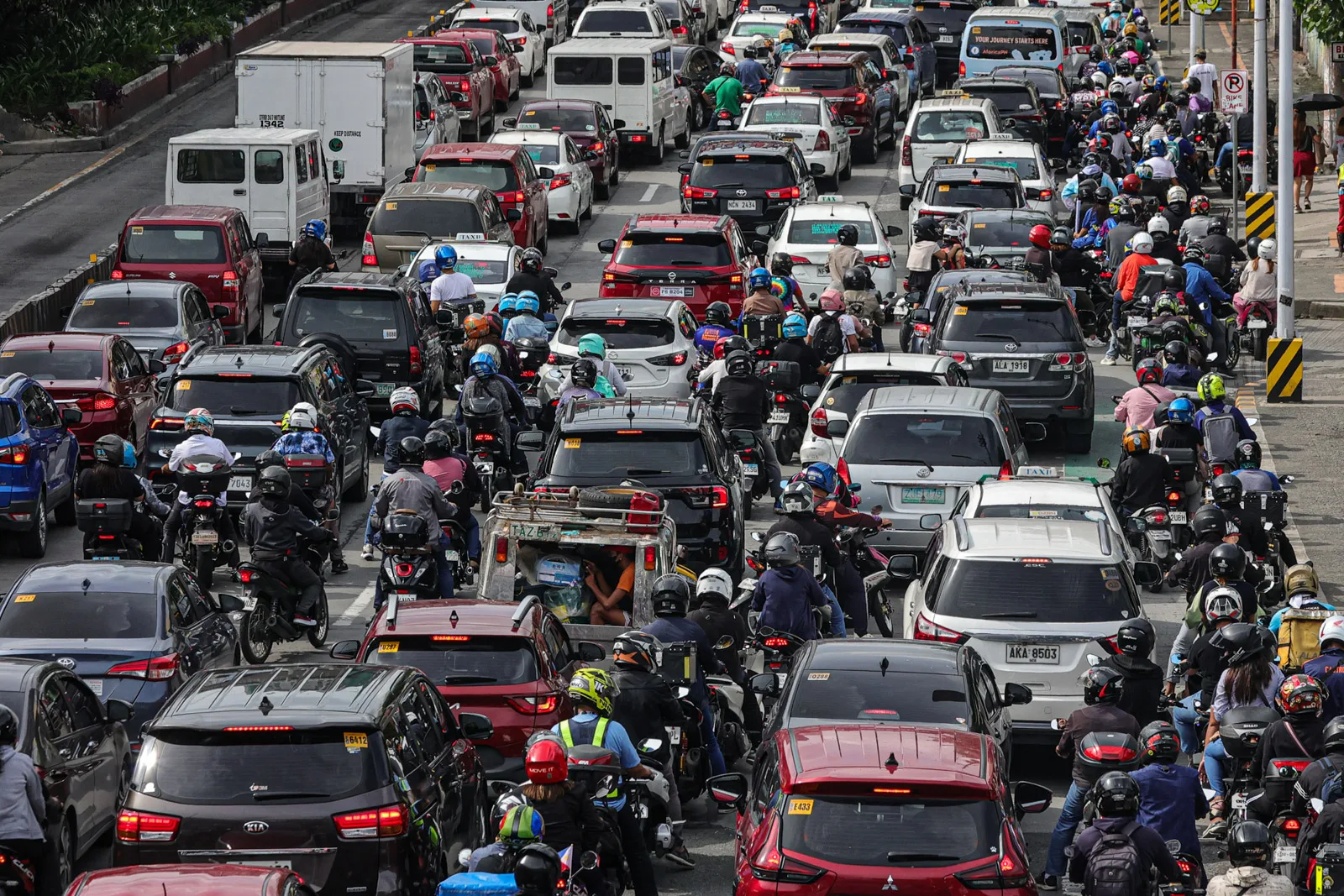

The latest 2025 TomTom Traffic Index continues to single out two Philippine cities—Davao City and Manila—as the country’s most traffic-choked urban areas, with no other local cities making the global list.

This year’s report shows a shift in Davao City’s global standing depending on how congestion is measured. When assessed by city area—defined as the densest zones accounting for 20 percent of trips—Davao fell to 12th worldwide, down from third in 2024. Using the broader metropolitan area metric, which covers regions responsible for 80 percent of trips, Davao ranked 11th. Manila placed 40th globally in city-area congestion, but climbed sharply to 14th when metropolitan traffic was considered.
Looking specifically at metropolitan congestion levels provides a clearer comparison between the two. Davao City recorded a congestion rate of 58.2 percent, slightly higher than its 2024 figure. Manila posted a marginally lower rate at 57.3 percent, an improvement from the previous year but still within the upper tier of global congestion.

On the worldwide scale, the Philippines remained outside the top 10 most congested metropolitan areas. Arequipa in Peru topped the list at 68.8 percent, followed by Bogota in Colombia and Mumbai in India. While several countries had multiple cities in the top rankings, only Davao and Manila represented the Philippines. Within Asia, however, Davao ranked fourth worst, with Manila close behind in fifth.
The index also measured the cumulative time motorists lose annually during rush hour. Davao City logged 129 hours of delay per year, tying with Medellin, Colombia, for eighth place globally. Manila followed at 123 hours, placing 11th. Arequipa remained the most affected city worldwide, with motorists losing 155 hours annually, while Lima, Peru, ranked second at 149 hours.
Traffic efficiency was further reflected in average distance traveled over a 15-minute period. Davao City averaged 5.2 kilometers, tying with cities such as Chennai and Mumbai in India, Port Said in Egypt, and Bogota in Colombia. Manila recorded a slightly higher average at 5.4 kilometers, placing 13th among the cities measured.
