



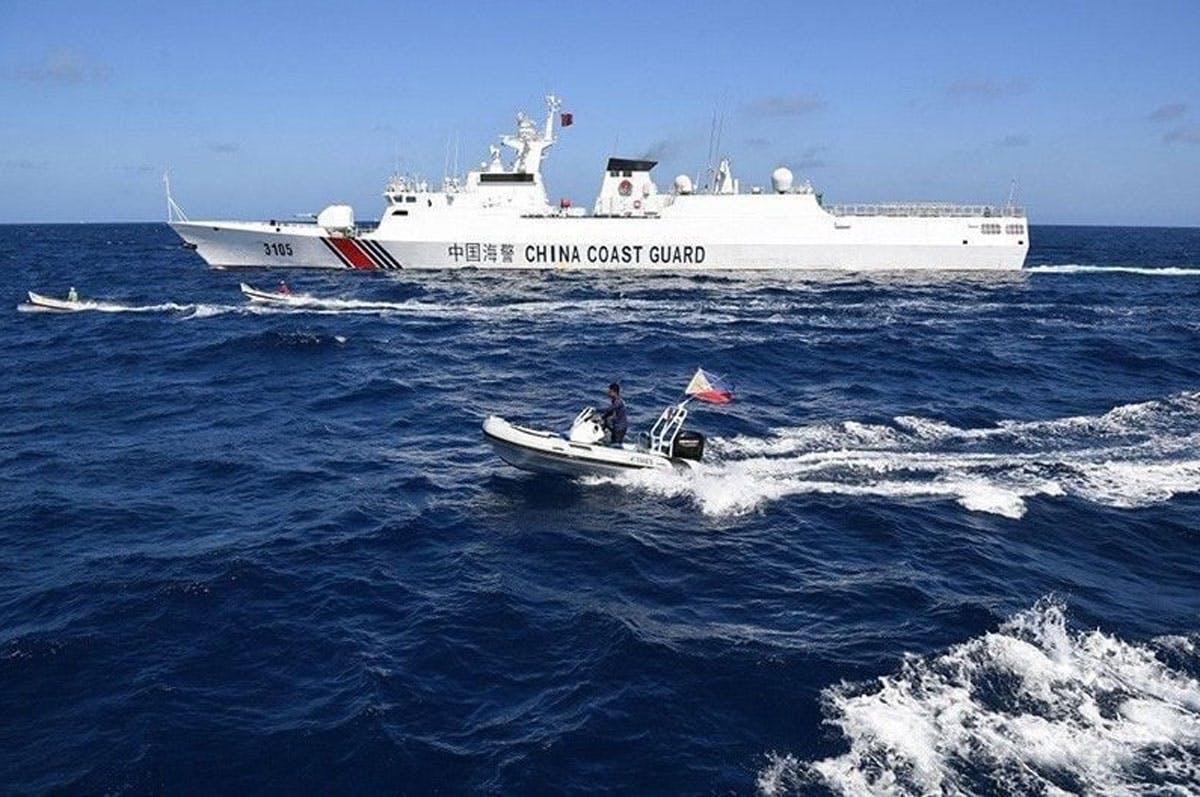

China has criticized the Philippines for what it called “courting influence from outside powers” following the recently concluded bilateral military drills with Australia in the West Philippine Sea.

Chinese defense ministry spokesperson Zhang Xiaogang said at a press briefing that Manila has “repeatedly courted influence from outside powers to make waves in this area,” a remark seen as a swipe at the Philippines’ deepening security ties with its allies.
The statement drew pushback from Philippine and Australian military officials who defended the exercises, formally called Alon 2025. Maj. Gen. Francisco Lorenzo Jr., commander of the Armed Forces of the Philippines’ Education, Training and Doctrine Command, stressed that the patrols were legitimate and carried out under agreed frameworks. “There’s nothing wrong with that,” he said after the drills’ closing ceremony at Camp Aguinaldo.
Australian Deputy Theater Commander Maj. Gen. Paul Kenny echoed this, noting that such collaborations are standard practice. “It is normal for allies and partners to train together, to build interoperability and certainly normal for allies and partners to exercise within each other’s territories,” he said.

The exercise, which ran from August 15 to 29, saw Philippine warships joined by Australian and Canadian forces in joint patrols off Palawan and the Panatag (Scarborough) Shoal. Despite the presence of Chinese vessels, Lorenzo said operations proceeded smoothly. “Fortunately, we did not experience any interference from any threat … in our West Philippine Sea area,” he added.
This year’s Alon, meaning “wave” in Filipino, marked Australia’s largest overseas troop deployment, with 1,600 personnel taking part. The drills came shortly after the August 11 collision involving Chinese vessels near Panatag Shoal, which further heightened regional tensions.
On August 22, amid the ongoing exercises, Philippine Defense Secretary Gilberto Teodoro Jr. and Australian Deputy Prime Minister Richard Marles signed a statement of intent to establish a Defense Cooperation Agreement, signaling a stronger Manila-Canberra partnership moving forward.
