



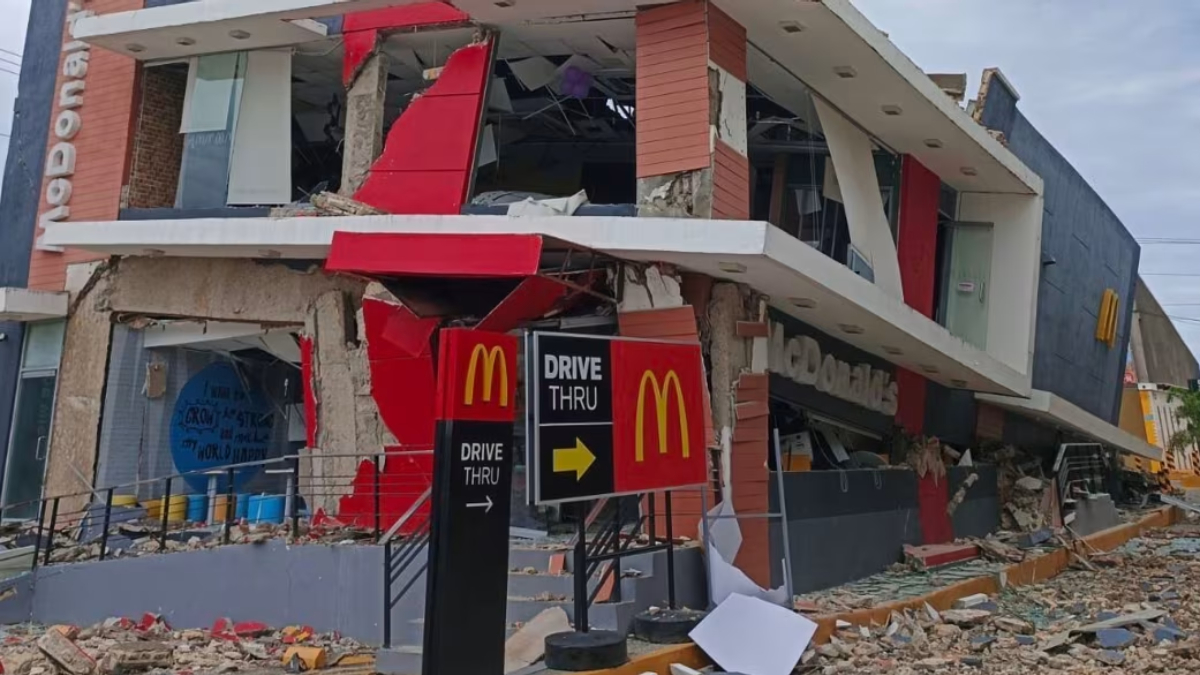

The provincial government of Cebu has placed the entire province under a state of calamity following the devastating 6.9 magnitude earthquake that struck Tuesday night, leaving dozens dead and many more injured.

In an announcement on Facebook, the Cebu government said Governor Pamela Baricuatro issued Executive Order No. 57, backed by a Provincial Board resolution, to formally declare the calamity status.
According to Baricuatro, the Cebu provincial hospital in Bogo recorded at least 25 fatalities from the city alone. “Because of the high volume of patients with serious injuries, the medical staff tended to some of them outside the hospital,” she said in a post. Rescuers also reported six more deaths elsewhere in Cebu.
The United States Geological Survey said the quake, which hit at 9:59 p.m., was shallow and centered off Cebu’s northern tip near Bogo City, home to 90,000 residents. The National Disaster Risk Reduction and Management Council (NDRRMC) listed 147 people injured across the central Visayas, with at least 22 buildings damaged.
Scenes of destruction circulated on social media, including the collapse of a historic Catholic church belfry in Bantayan island. “I heard a loud booming noise from the direction of the church then I saw rocks falling from the structure. Luckily no one got hurt,” 25-year-old resident Martham Pacilan told AFP.
Other videos showed a Cebu bridge shaking violently, forcing motorists to hold onto railings, while in Cebu City, 21-year-old Jayford Maranga described hiding under a restaurant table to avoid falling debris. “My friend and I ate at the food court near closing time, and then, bang! It was as if the Earth stopped spinning. And then the mall started shaking,” he told AFP. His companion sustained minor injuries.

The quake triggered widespread blackouts after power lines tripped, though the National Grid Corporation said electricity was restored past midnight in Cebu and neighboring islands.
Authorities said several structures collapsed, including a commercial building and a school in Bantayan and a fast-food outlet in Bogo. Roads in some villages also cracked, while aftershocks—nearly 400 recorded by the Philippine Institute of Volcanology and Seismology—hindered overnight rescue operations.
“There could be people trapped beneath collapsed buildings,” Cebu provincial rescue official Wilson Ramos told AFP, noting that teams worked through the night despite the darkness and repeated tremors.
The provincial government has appealed for medical volunteers to reinforce hospitals struggling with the influx of victims.
Agnes Merza, 65, a carer from Bantayan, recalled the terror inside her home. “It felt as though we would all fall down. It’s the first time I have experienced it. The neighbours all ran out of their homes. My two teenage assistants hid under a table because that’s what they were taught in the boy scouts,” she told AFP.
