



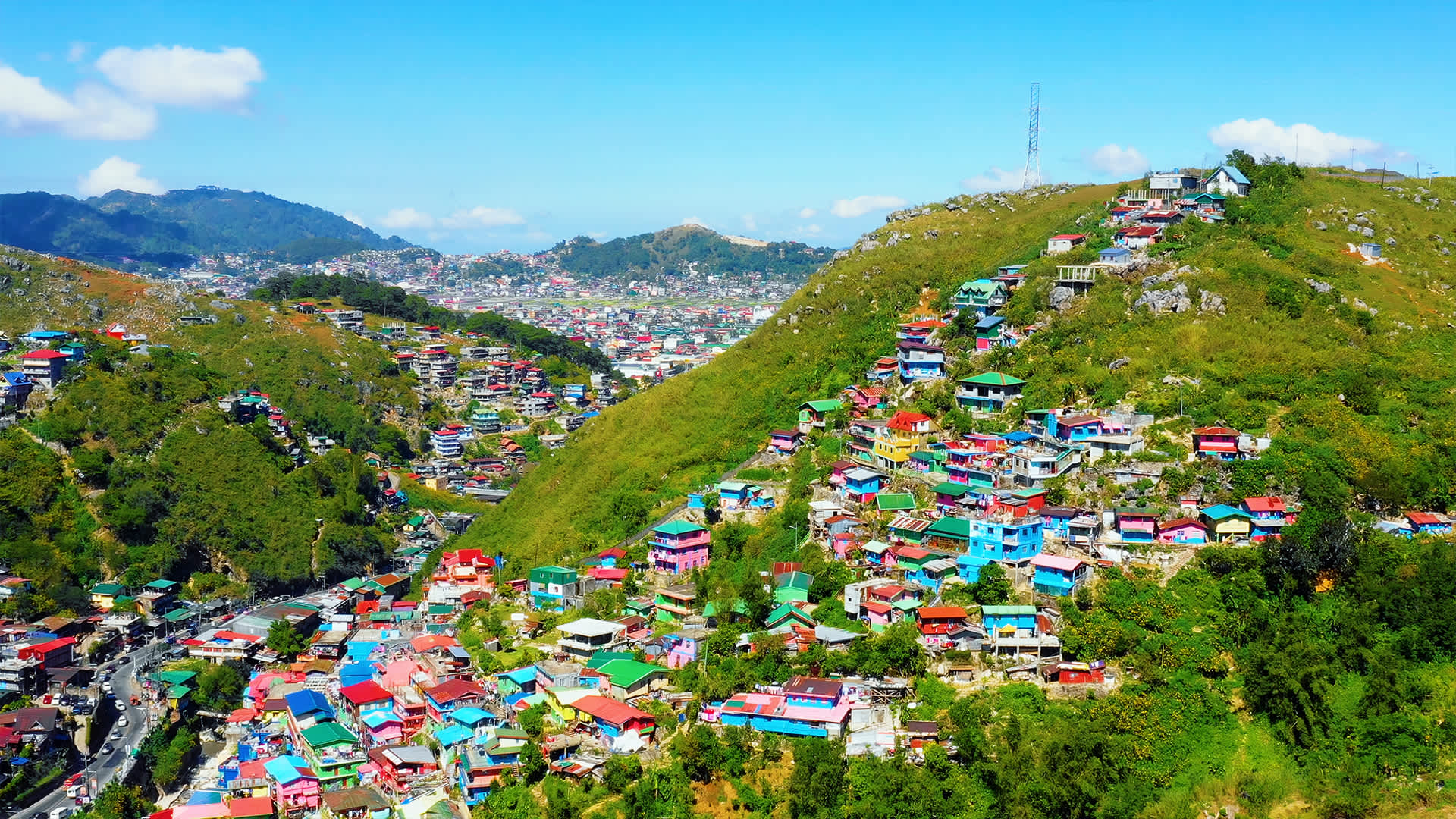

The country’s summer capital has emerged as the wealthiest city outside Metro Manila in 2024, with a per capita economic output surpassing that of seven National Capital Region (NCR) cities, according to the Philippine Statistics Authority (PSA).

PSA Cordillera chief statistician Aldrin Federico Bahit Jr. said during an economic briefing that Baguio’s gross city domestic product (GCDP) reached ₱178.85 billion in 2024, a 5.8 percent increase from ₱169.02 billion the previous year. Despite the slower pace compared to 2023’s 9 percent growth, the figure translates to ₱485,433 worth of goods and services produced per person.
Industry and services continued to power the city’s economy, with the services sector contributing ₱133.87 billion—or 5.5 percentage points—to the overall growth. Agriculture also posted gains of 3.6 percent, led by over 12,000 small farmers and Ibaloy communities on the city’s fringes, though the sector made up only 0.5 percent of Baguio’s economy.
City officials, however, noted that residents remain divided on what the city’s wealth means for daily life. City Planning Officer Architect Donna Rillera Tabangin said many locals expressed “hesitancy” when the city’s ranking was first revealed in April, citing the toll of tourism and urban congestion on Baguio’s livability.

The local government is now conducting a “quality of life” survey, expected to conclude by November, to realign development priorities toward achieving better living standards by 2040. Tabangin said this includes promoting ecotourism, protecting remaining timberlands, and transitioning toward a circular economy that emphasizes recycling and waste repurposing.
She added that these efforts, along with Baguio’s smart city transformation targeted for 2027, will shape future investments and sustainability goals.
Cordillera assistant regional director for economy, planning, and development Jose Dado described Baguio as the region’s “economic nucleus,” accounting for nearly half of the Cordillera’s ₱378.26-billion gross regional domestic product (GRDP) last year. Benguet followed with 23 percent, while other provinces like Ifugao, Kalinga, and Abra showed renewed economic activity in manufacturing, mining, and services.
Dado warned that this concentration of wealth in Baguio and Benguet—where 71 percent of industrial and 72.1 percent of service output is located—risks deepening inequality across the Cordillera.
