



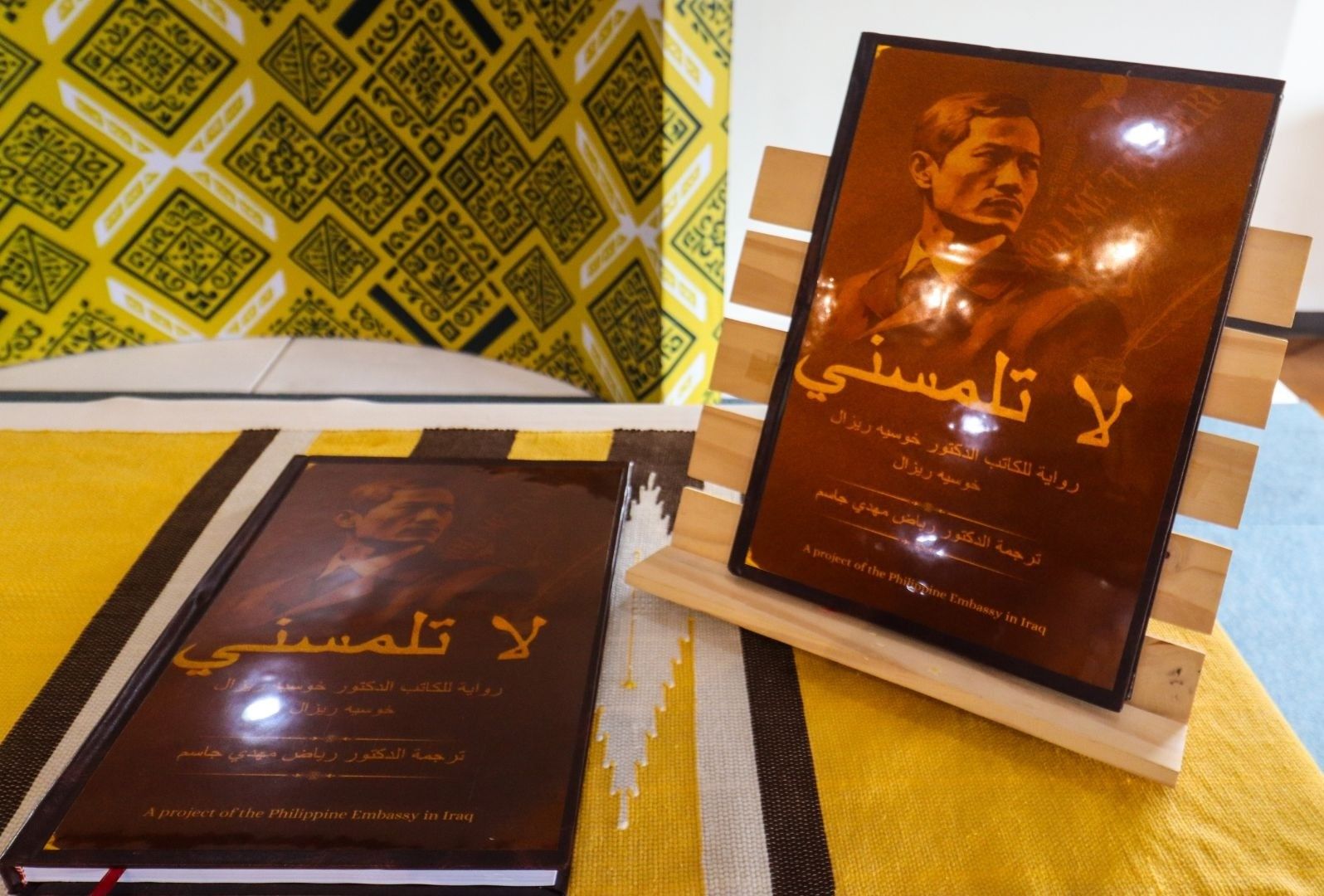

A formal initiative to produce and distribute a Modern Standard Arabic translation of Jose Rizal’s Noli Me Tangere has been launched through a newly signed memorandum of agreement involving key Philippine cultural and diplomatic agencies.

The National Commission for Culture and the Arts, the National Historical Commission of the Philippines (NHCP), and the Philippine Embassy in Baghdad entered into the agreement as part of the Noli Me Tangere Modern Standard Arabic Translation Project, aimed at expanding access to Philippine historical literature among Arabic-speaking audiences.
The memorandum was signed on February 9 at the NHCP, in collaboration with the Department of Foreign Affairs’ Office of Cultural Diplomacy. Organizers described the agreement as a step toward widening the reach of Philippine research and historical works through translation and international cultural engagement.
First published in 1887, Noli Me Tangere was originally written in Spanish and is widely regarded as a key work in Philippine literature and nationalism. The novel portrays social conditions and injustices faced by Filipinos during the Spanish colonial period, and has long been cited as a major influence in the country’s struggle for reform and national identity.
NHCP chairman Regalado Trota Jose Jr. emphasized that the translation project is intended to bring Rizal’s work closer to readers in Arabic-speaking nations.
“Although a work of fiction, Rizal’s novel powerfully captures the Philippines’ aspirations for equality and freedom during the Spanish colonial era,” Jose said during his welcome remarks at the signing.

Alongside the agreement, the NHCP also introduced a separate historical publication during the same event: the two-volume Historia Obscura: The Philippines in the 16th and 17th Century in Portuguese Sources. The work was authored and edited by Paulo Jorge de Sousa Pinto, Miguel Rodrigues Lourenço, Pedro Pinto, and Jeremy Roe.
The NHCP described the book as a collection of Portuguese archival documents that provide insights into lesser-known details of Philippine history during the 16th and 17th centuries.
Jose said the publication reflects the importance of widening access to historical references for researchers and academic communities, particularly those seeking primary-source material for study.
Both initiatives were presented as part of upcoming commemorative programs, including the “Dekada ng Kasaysayan: Year of Philippine Diplomatic History and Diaspora” scheduled later this year, and the “Year of Philippine Muslim History and Heritage” set for 2030.
International delegates from Libya, the Kingdom of Saudi Arabia, Portugal, and Qatar attended the event, along with representatives from institutions including the National Library of the Philippines, University of the Philippines Diliman, University of Santo Tomas, Far Eastern University, and the public libraries of Quezon City and Manila.
Copies of Historia Obscura were distributed to all participating institutions.
