



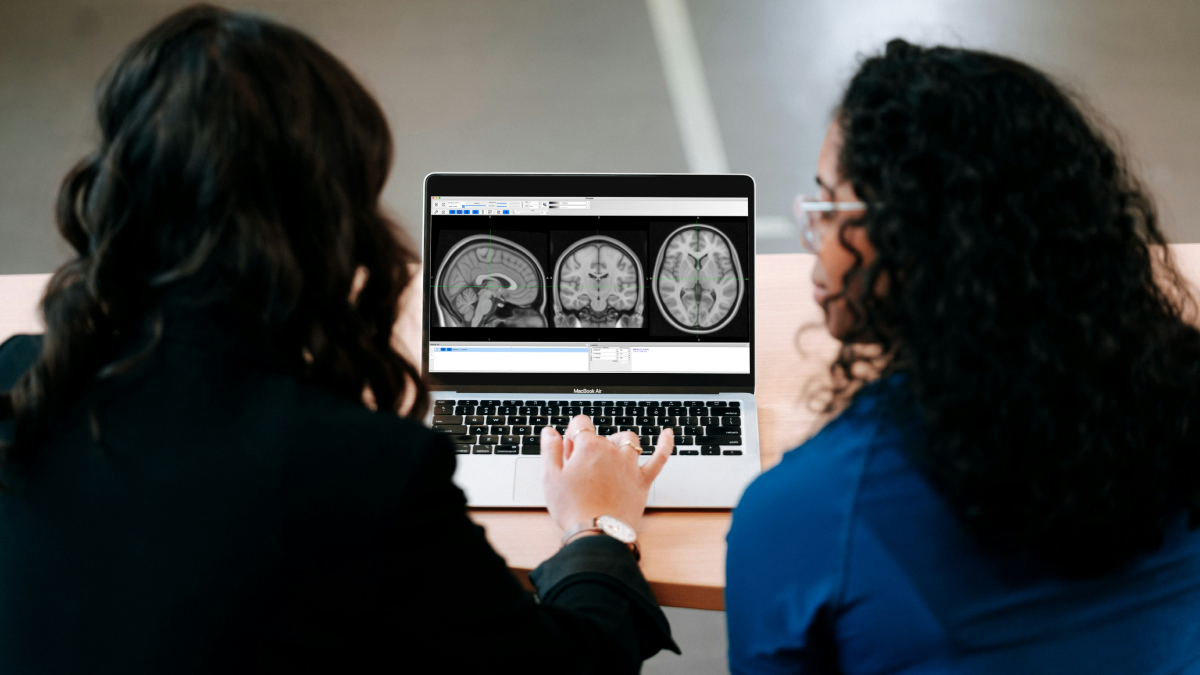

Australian researchers have developed an artificial intelligence tool capable of detecting tiny brain malformations often overlooked in children with epilepsy, raising hopes for quicker access to potentially life-saving surgery.

The system was trained to recognize minuscule lesions — some no bigger than a blueberry — that frequently go unnoticed in traditional MRI scans, according to a study published in the journal Epilepsia.
“They’re frequently missed and many children are not considered as surgical candidates,” said Emma Macdonald-Laurs, a pediatric neurologist at the Royal Children’s Hospital in Melbourne, who led the study. “The tool doesn’t replace radiologists or epilepsy doctors, but it’s like a detective that helps us put the puzzle pieces together quicker so we can offer potentially life-changing surgery.”
Epilepsy affects roughly one in 200 children, and about a third of cases do not respond to medication. Around 30 percent are linked to structural abnormalities in the brain, but these are often so subtle they evade detection on scans.
The research team, working with the Murdoch Children’s Research Institute, tested the AI tool on patients with cortical dysplasia and focal epilepsy. Among the children studied, 80 percent had earlier MRI scans that showed no abnormalities. When the AI analyzed both MRI and PET scans, it identified lesions with a 94 percent success rate in one group and 91 percent in another.

Out of 17 children in the initial group, 12 underwent surgery to remove the detected brain lesions, and 11 are now seizure-free.
“Our next plans are to test this detector in more real-life hospital settings on new undiagnosed patients,” Macdonald-Laurs said.
Experts abroad also praised the findings. “This work is really exciting as a proof of concept and the results are really impressive,” said Konrad Wagstyl, a biomedical computing specialist at King’s College London.
He noted that while the Australian team combined MRI with PET scans to achieve high accuracy, PET remains more costly and less widely available than MRI and carries radiation exposure risks similar to CT scans.
