



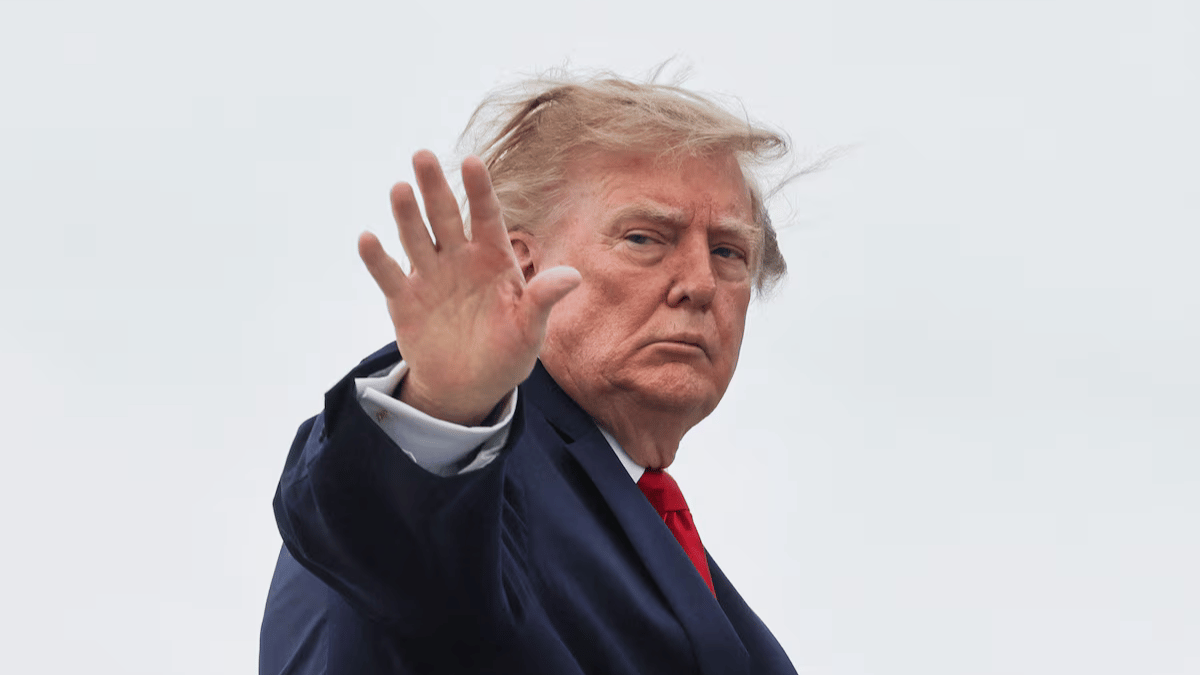

An Iranian offer to reopen the Strait of Hormuz within a week and halt fighting across the Middle East is off the table for now, after US President Donald Trump said on Saturday he had turned it down.

“I reject their proposal. … I rejected their deal,” Trump told reporters at the White House before leaving for Tennessee.
Tehran had presented the plan on the sidelines of the UN General Assembly in New York, saying Qatari mediators had relayed it to Washington. Foreign Minister Abbas Araqchi told reporters at the UN on Friday that a US yes would set off a seven-day countdown to reopening the waterway, alongside a pause in fighting across the region.
“If there is seriousness on the US side to come to a deal and reopen the Strait of Hormuz, everything is now prepared,” Araqchi said. Acceptance, he added, would let both sides move into wider negotiations “on mutually agreed subjects.”
Trump portrayed the offer as a move born of economic pressure rather than goodwill. “They want to make a deal and I think that’s fine, I like making a deal too. What they want to do is immediately open the Hormuz Strait … because they have no money coming in, because they get their money from the Hormuz Strait,” he said.
“They want to make a deal to open the Hormuz Strait immediately because they’re losing so badly,” Trump said. “We’re winning tremendously.”
Word of the rejection first surfaced in The Wall Street Journal, which cited unnamed US officials. The newspaper said Trump privately doubts Iran will meet his terms and has told his staff he sees renewed bombing as likely after the November midterm elections to Congress.

Any wider talks could touch on Iran’s nuclear program, which remains a sticking point. Trump has said Tehran must never have a nuclear bomb. A senior Iranian official told Reuters that Iran would not show flexibility on the issue even if Washington accepted the peace plan, and would concede nothing on enriching uranium or moving its highly enriched uranium out of the country.
In an interview with CBS’s “Face the Nation,” Iranian President Masoud Pezeshkian said Tehran was open to talks on its nuclear program and other issues but would not accept “bullying or coercion.”
“Iran is not seeking war, but will defend itself against pressure, threats and attacks,” Pezeshkian said, adding that Iran had already agreed that “we’re not supposed to develop nuclear weapons”.
The strait sits at the center of the standoff. Iran’s closure of the waterway has drastically cut shipping through a key oil route and weighed on the global economy. Washington has answered with an economic blockade of Iran meant to force Tehran to lift its own, though Trump again said the US had control of the strait. Iran has also held discussions over Hormuz with Saudi Arabia, its regional rival.
The conflict began on February 28 with US and Israeli attacks on Iran. Earlier diplomatic efforts have not ended it. Pauses have alternated with renewed strikes that have killed thousands, weakened Iran’s conventional forces and deepened the damage to its already fragile economy. Iran has hit US allies in the Gulf with drones and missiles, while its Houthi allies in Yemen have targeted Saudi interests.
Earlier, a US official had called the talks with Iran through mediators “positive and constructive.”
