



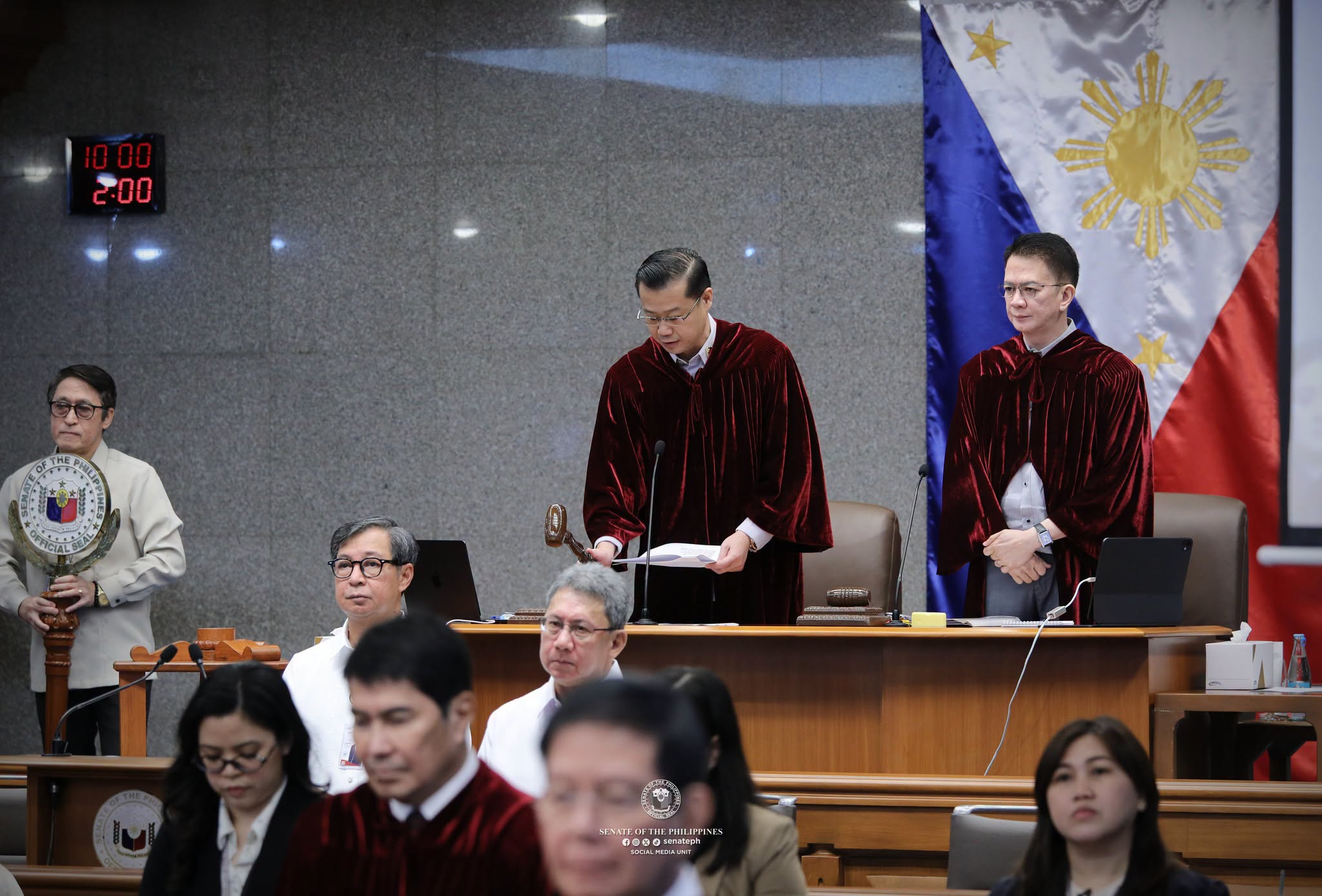

Vice President Sara Duterte could now be convicted with fewer than 16 votes, after the Senate impeachment court on Wednesday, September 23, 2026, dropped the fixed number it had been using and tied the requirement to how many senators are actually able to vote.

The Constitution still demands a two-thirds vote to convict. What has changed is the headcount that two-thirds is taken from. Instead of all 24 senators, the court will count only those who are able, both in law and in fact, to take part in the trial at the time the vote is cast. The court has not announced what the new number will be.
The change matters because four senators have been missing from the trial. Sens. Jinggoy Estrada and Rodante Marcoleta are in detention, each facing a separate plunder case. Sen. Ronald “Bato” dela Rosa went into hiding after the International Criminal Court ordered his arrest. Sen. Loren Legarda has not appeared in the court since early August, citing medical leave.
A guilty verdict would remove Duterte from the vice presidency and bar her permanently from holding any public office.

The new rule was adopted by a majority of the senator-judges after lawyers for the prosecution and the defense presented oral arguments on the question.
Twenty senator-judges are currently active in the trial. From the majority are Senate President Sherwin “Win” Gatchalian, Senate President Pro Tempore Vicente “Tito” Sotto III, Majority Leader Juan Miguel Zubiri, and Sens. Francis “Chiz” Escudero, Risa Hontiveros, Francis “Kiko” Pangilinan, JV Ejercito, Raffy Tulfo, Erwin Tulfo, Joel Villanueva, Bam Aquino, Panfilo “Ping” Lacson, and Lito Lapid. The minority is represented by Minority Leader Alan Peter Cayetano and Sens. Pia Cayetano, Mark Villar, Camille Villar, Bong Go, Robin Padilla, and Imee Marcos.
Escudero, the trial’s presiding officer, said the senators to be left out of the count include those who are detained, suspended, or otherwise legally barred from performing their duties; those wanted by authorities whose whereabouts are unknown; those with a physical or medical incapacity; those beyond the reach of the Senate’s coercive powers; and others in similar situations.
