



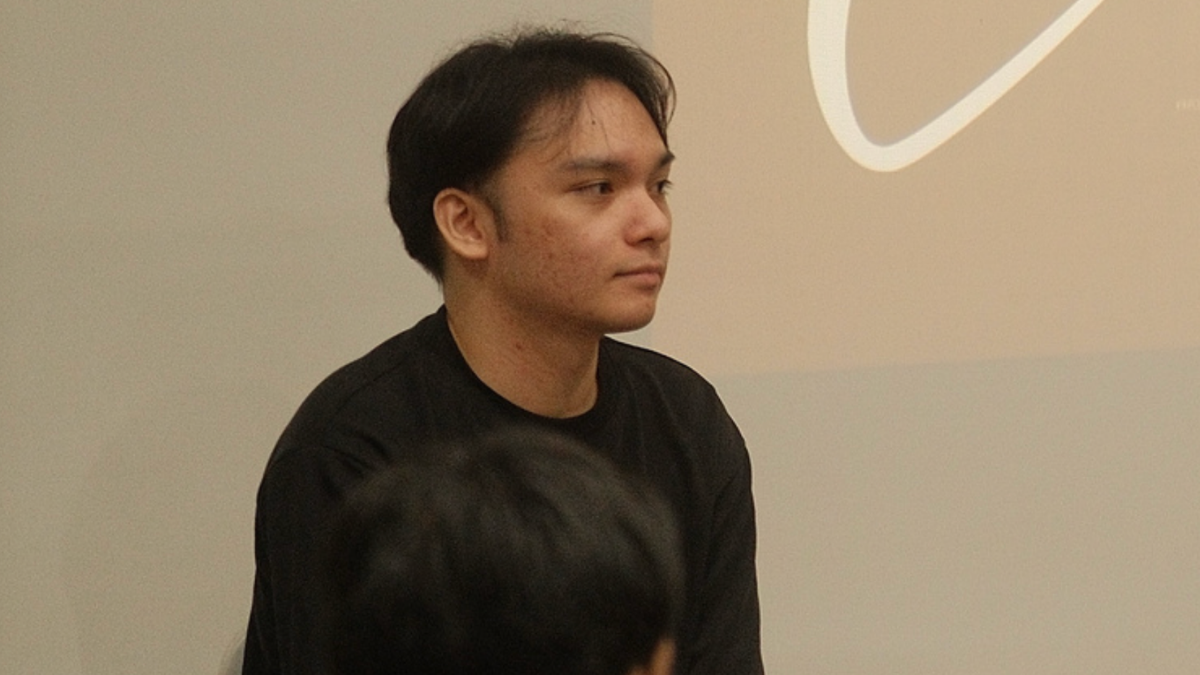

Some stories become clearer when you are far enough away to miss them. For many Filipinos living abroad, distance can turn familiar places, languages, and traditions into things worth looking at again. For Joaquin Perocillo, being in Dubai has only deepened his desire to tell stories about Cebu—and to make sure its cinematic history is not forgotten.

Finding home from a distance
Perocillo arrived in Dubai in December 2025 with his sister for a vacation. His mother was already working in the UAE, and after his work contract in the Philippines ended, he decided to look for opportunities in the country while staying on a family-sponsored visa.
The move eventually led him into marketing, a field he describes as highly competitive and one that has pushed him to continually upskill. But leaving the film industry professionally did not mean leaving filmmaking behind.
While he is not currently working for a film company, Perocillo continues to draw from his background as a filmmaker. In his spare time, he writes screenplays and manages the social media accounts and online film releases of Kuro-Kuro, a production team he helped form during his time at Mapúa University.
The distance from home, meanwhile, has given him a sharper sense of what home means.
“Being away from the Philippines made me realize it will always be home, no amount of money will change that,” he shares with TGFM.
For Perocillo, much of that connection is tied to Cebu City, where he lived for 11 years. His memories of the city are not simply nostalgic. They have become part of the reason he continues to create.
“I saw firsthand how welcoming Cebuanos are, what a great place it is to live in, and how much talent there is, from music to filmmaking, and that’s why I want to keep making films and shows about Cebu.”
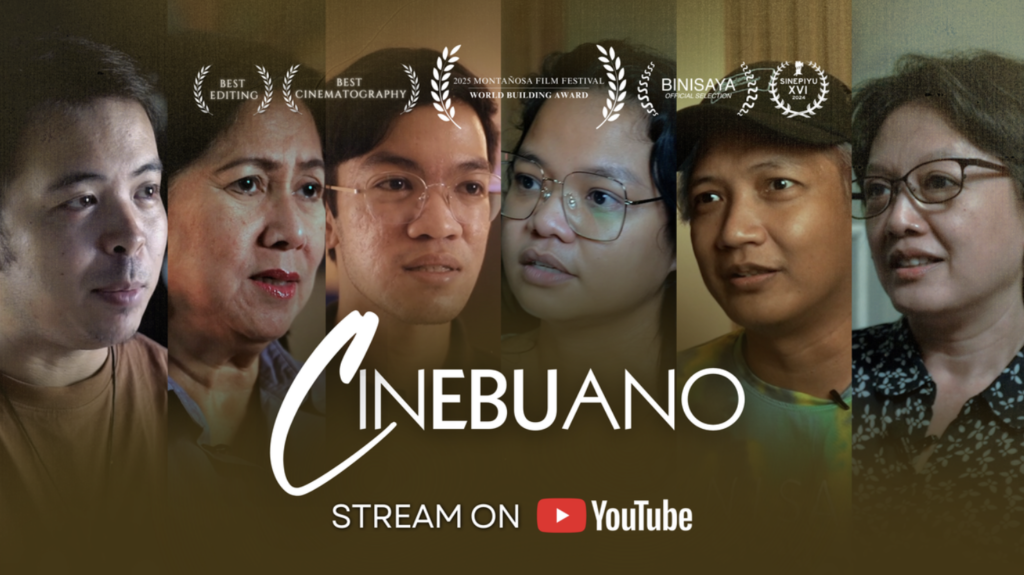
That desire eventually became Cinebuano, a 20-minute documentary examining Cebuano cinema from its golden age to the challenges facing the regional film industry today.
A history many did not know
Cinebuano began as a thesis project at Mapúa University before finding a wider audience through its premiere at the BINISAYA Film Festival in 2023. The documentary features six voices connected to Cebu’s film industry and culture: Chai Fonacier, Victor Villanueva, Suzette Ranillo, Keith Deligero, Atty. Grace Marie Lopez, and Carl Lara.
What surprised its creator was not simply how much people enjoyed the documentary, but how many were encountering the subject for the first time.
“One thing that surprised me is how many viewers aren’t really aware that Cebuano cinema exists, even those born and raised in Cebu,” he recalls.
That discovery became central to what he wanted the film to accomplish. Rather than treating Cebuano cinema as a niche subject, Perocillo sees it as an important part of the country’s broader film history—one that deserves to be documented and remembered.
Through Cinebuano, he hopes to contribute to that preservation while continuing to develop new projects in both Tagalog and Cebuano.
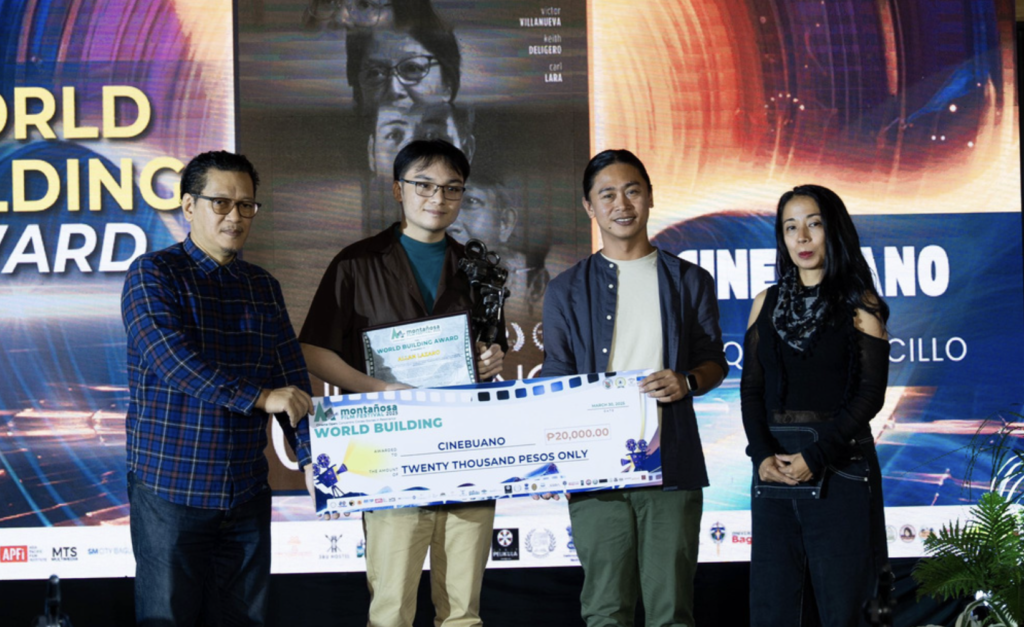
The documentary has since won the World Building Award at the Montañosa Film Festival 2025 and has been featured by The Freeman, SunStar, Kasing2 Mag, and Keeta PH Magazine. Its reach also expanded online through YouTube, allowing audiences beyond film festivals and publications to encounter a history that many had previously overlooked.
In April, former Miss Universe Philippines 2021 Beatrice Luigi Gomez, herself a proud Cebuana, watched the documentary and shared it with her followers, describing it as “an eye-opening documentary about Cebuano cinema.”
For Perocillo, that kind of response reinforces the documentary’s purpose: creating an entry point for people to discover a part of Philippine cinema they may not have known existed.

A message for Bisaya kabayans
That mission takes on another dimension in Dubai, where communities of Filipinos from across the Philippines have built lives far from home.
For Bisaya kabayans in the UAE, Perocillo hopes Cinebuano does more than provide a history lesson. He wants it to serve as a reminder that language and culture can travel with them.
“I hope Cinebuano reminds them to take pride in the Cebuano language and carry it with them, wherever they are,” he says.
He also believes the Cebuano community has an important role in sustaining regional filmmaking. Supporting and sharing Bisaya films, he argues, can help create an audience for filmmakers working in Cebu, the Visayas, and Mindanao.
And that audience may be larger than aspiring artists realize.
“I also hope Cinebuano shows them that if they’ve ever wanted to create Bisaya music, film, art, or anything else, they already have an audience waiting.”
It is an idea that fits neatly with the documentary’s broader message. Preserving regional cinema is not only about looking backward. It is also about making room for the next generation of storytellers.
From one film to what comes next
Among the six people he interviewed, one conversation remains particularly memorable.
Perocillo had already followed Chai Fonacier’s work before making Cinebuano. Sitting down with her for the documentary therefore carried a personal significance.
“I watched her filmography even before working on Cinebuano, so it was a surreal experience meeting her and having her agree to be interviewed for the film.”
Some of Fonacier’s answers also echoed ideas Perocillo had developed himself, making the conversation even more meaningful. He speaks with equal appreciation for the other participants and their support of the project.
Now, from Dubai, he is preparing for the next chapter.
Three short film scripts are in development, with plans to submit them for film grants in the Philippines. He is also preparing a self-produced series that he plans to write and produce with friends in Cebu City under CILLO, the brand he created for his work, and Kuro-Kuro.
Living and working abroad has inevitably slowed some of his film projects. But Perocillo does not see the pause as an ending.
“The UAE has also given me new perspectives and experiences in life,” he says. “While I’m away from my go-to people in creating films, there are so many storylines to explore from my time here, and I can’t wait to dive into them.”
For now, the filmmaker is carrying two places with him: the Cebu that shaped his creative identity and the Dubai that is giving him new experiences to draw from. Cinebuano looks back at a film culture that deserves to be remembered. His next projects suggest he is already looking ahead—to the stories that have yet to be told.
