



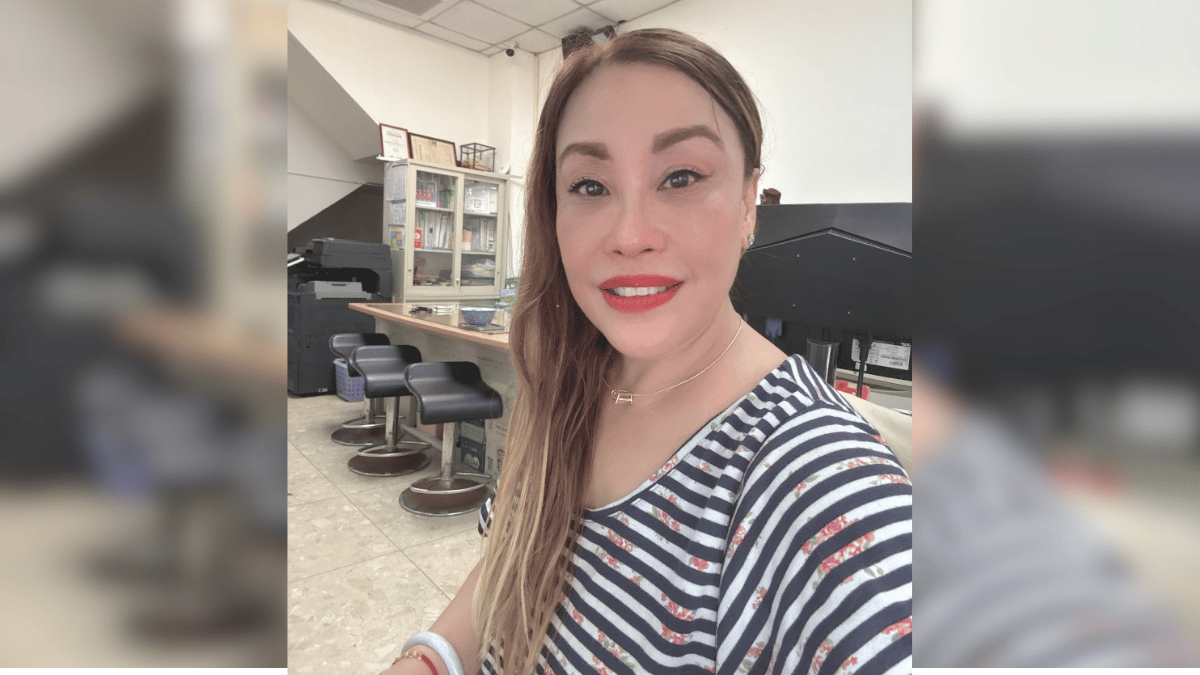

Ask most people what a Filipino woman goes abroad to do, and the answer arrives with depressing speed: caregiver, factory worker, domestic helper. It’s a script written long before she boards the plane, and it fits like a uniform nobody asked to wear. Ana Liza Desuasido Garcia spent much of her career refusing to put it on.

She was 34 when she landed in Chiayi City in 1999, the first Filipino teacher ever hired at Shao Ding Dang and ELITE Language Institute, dropped into the Taiwanese countryside in southern Taiwan where no one quite knew what to make of her. Nearly three decades later, she runs the place — or a good part of it — as Foreign Teacher’s Head and Head of Academic Affairs. But the distance between those two points was never a straight line, and she is the first to say so.
Arriving as a question mark
The move to Taiwan didn’t begin as ambition. It began as a test — literally. A Montessori school needed a teacher, a group of educators was encouraged to sit the exam, and she came out on top.

“I believe that it was GOD’s destiny for me to work abroad because among the bunch of teachers who were encouraged to take the test for a need in a Montessori school in Taiwan, I was the first choice,” she shares with TGFM. Only afterward, she admits, did the rest of the reasoning catch up with her — the pull of a steadier future, the chance to grow in ways home might not have allowed.
Her credentials were not thin. Before Taiwan, she had already taught second-grade math and MAPEH at Canossa School in Santa Rosa, Laguna, coordinated a student club called Munting Tinig, and trained fully in the American Montessori System while teaching at a Montessori school in San Pedro. She arrived, in other words, prepared.
What she wasn’t prepared for was being the only one. Being the first Filipino educator in a rural corner of southern Taiwan meant carrying an entire national reputation on her back, whether she wanted to or not. “Being the first Filipino in Southern Taiwan and was also a countryside didn’t make life easy,” she recalls. The homesickness was real. So were the misunderstandings, the language gaps, the days that pressed hard enough to make her consider walking away.
Two things held her in place. One was her employer, who backed her early and helped the surrounding community accept her. The other was stubbornness with a point to prove.

Proving a point that shouldn’t need proving
There is a particular kind of resolve that comes from being underestimated, and she found it fast.
“The struggle was so hard that had made me almost wanting to give up,” she says, “but determination and perseverance to prove that Filipinos aren’t for caregivers nor factory workers only, struck me to keep going.”
That sentence is the quiet engine of her whole story. She wasn’t only teaching phonics and numbers to Taiwanese children; she was, in her own mind, correcting a stereotype one classroom at a time. During that first Taiwan chapter, from 1999 to 2008, she added Japanese Montessori System training to her toolkit, deepening a specialization that would later set her apart.
Then, in 2008, she went home. She spent the following stretch teaching in the Philippines, including at a Singaporean school, and pursued further professional training through the British Cambridge Institute. It looked, for a while, like the Taiwan years might stay in the past tense.
They didn’t. ELITE wanted her back, and in March 2018 she returned to Chiayi — not as the anxious newcomer of 1999 but as someone the institution now built around. The rehiring marked a shift she probably couldn’t have imagined during those early lonely months: the school that once took a chance on an unknown Filipina was now handing her the keys to its academic direction.

From one classroom to the whole school
The version of her that came back was ready to lead, and the role grew to match. Today she supervises and supports the foreign teaching staff, shapes curriculum and learning materials, coordinates academic programs across preschool education, music, arts, and PE, mentors newer teachers, and keeps the lines open with parents. The through-line of it all is that she never actually left the classroom.
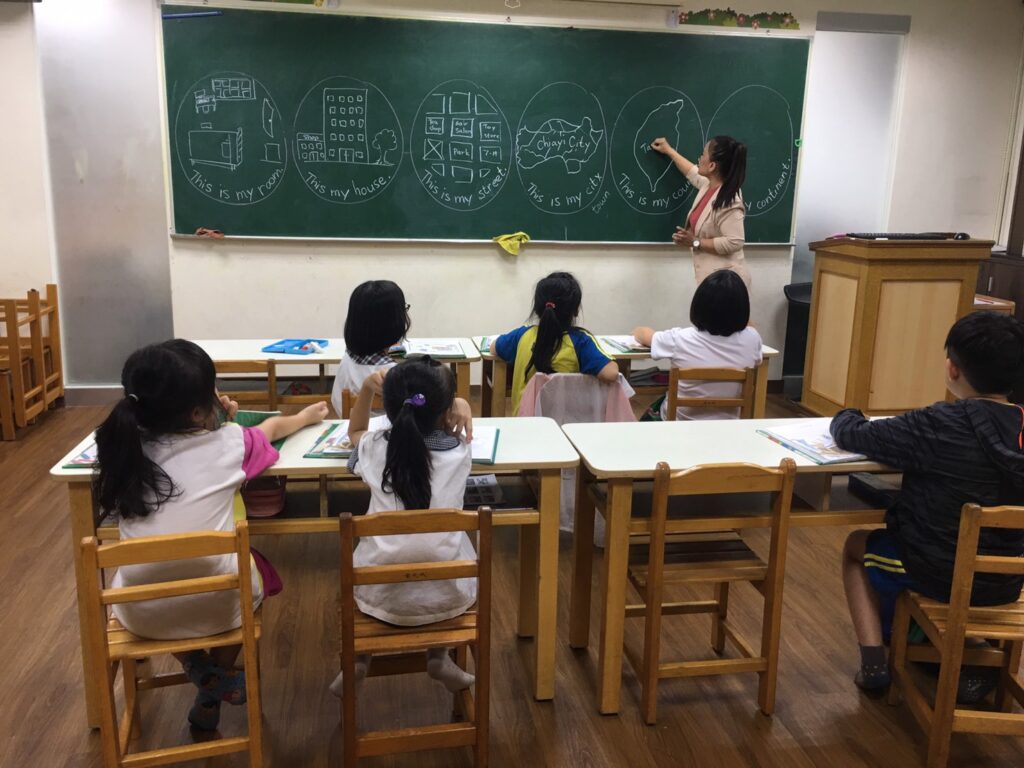
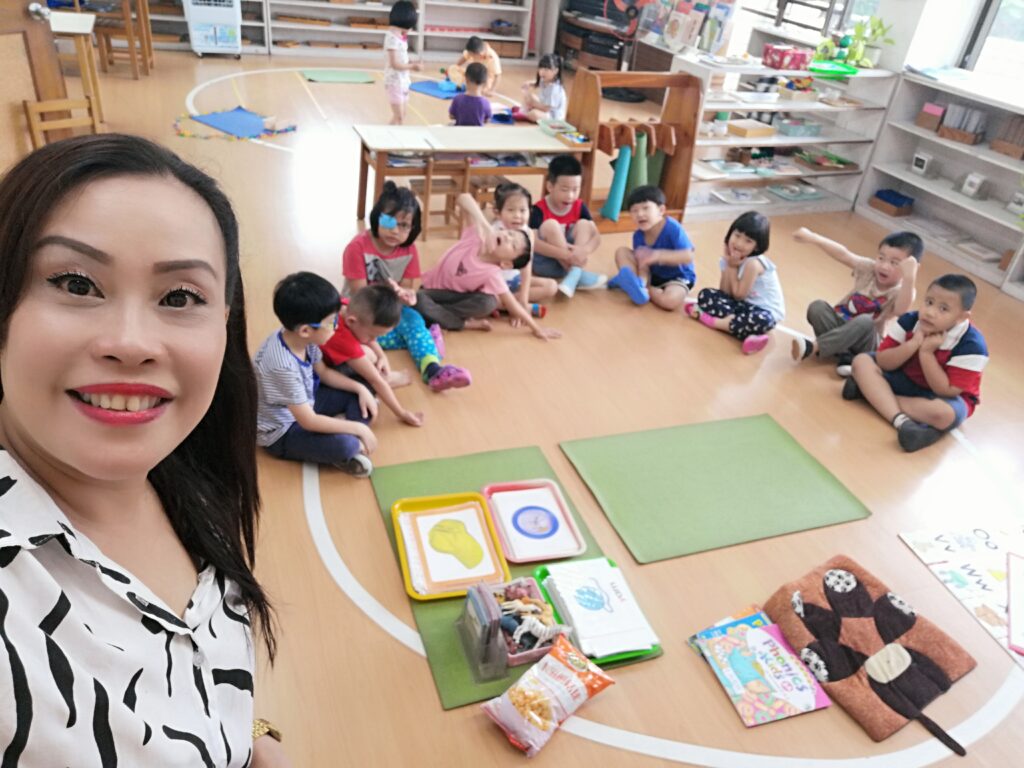
That matters to her. For all the administrative weight she now carries, the reward she names first is still the smallest and most human one.
“I especially enjoy working with young learners because their curiosity and honesty remind me why I became a teacher in the first place,” she says. “Seeing a child understand something for the first time, become confident, overcome a difficulty, or proudly show what they have learned is incredibly rewarding.”
Leadership gave her a second kind of satisfaction, one she didn’t expect early on. “When I see a teacher become more confident and effective because of the support and guidance I provided, I feel that my work has a greater impact,” she says. The woman who once had no local mentor to lean on had become the mentor she’d lacked.
She’s careful, though, not to romanticize what leadership cost her to learn. Years abroad taught her that most problems don’t yield to force or blame. “Sometimes, the best approach is to remain calm, understand the situation, communicate respectfully, and look for a solution rather than blame someone,” she says — a philosophy that reads less like a management seminar and more like something earned the hard way.
The life that grew around the job
Somewhere along those 18 years, Taiwan stopped being a workplace and became a home, and the proof is in how much of her life now happens outside school walls.
She serves as President of the KAPITAN Chiayi Mother Chapter, coordinates events for the Kaohsiung Philippine Embassy Extension, and acts as Southern Taiwan Filipino Teachers’ Coordinator. In 2019 she helped organize a community band, Sound_Range, turning music into one more way to gather Filipinos far from home. Talent shows, cultural nights, programs tied to MECO, MWO, DMW, and OWWA — she has had a hand in a long list of them, all pointed at the same idea: that Filipinos abroad deserve to be seen for the fullness of what they are.
That conviction shapes the advice she’d give anyone following her overseas, and she doesn’t soften it. Protect your dignity. Budget your money. Choose your friends by their actions, not their words. And guard your sense of self against the loneliness that pushes people into bad decisions. “Do not allow loneliness to make you settle for someone who does not value you,” she warns — the kind of counsel that only comes from watching it happen to others, or nearly to oneself.
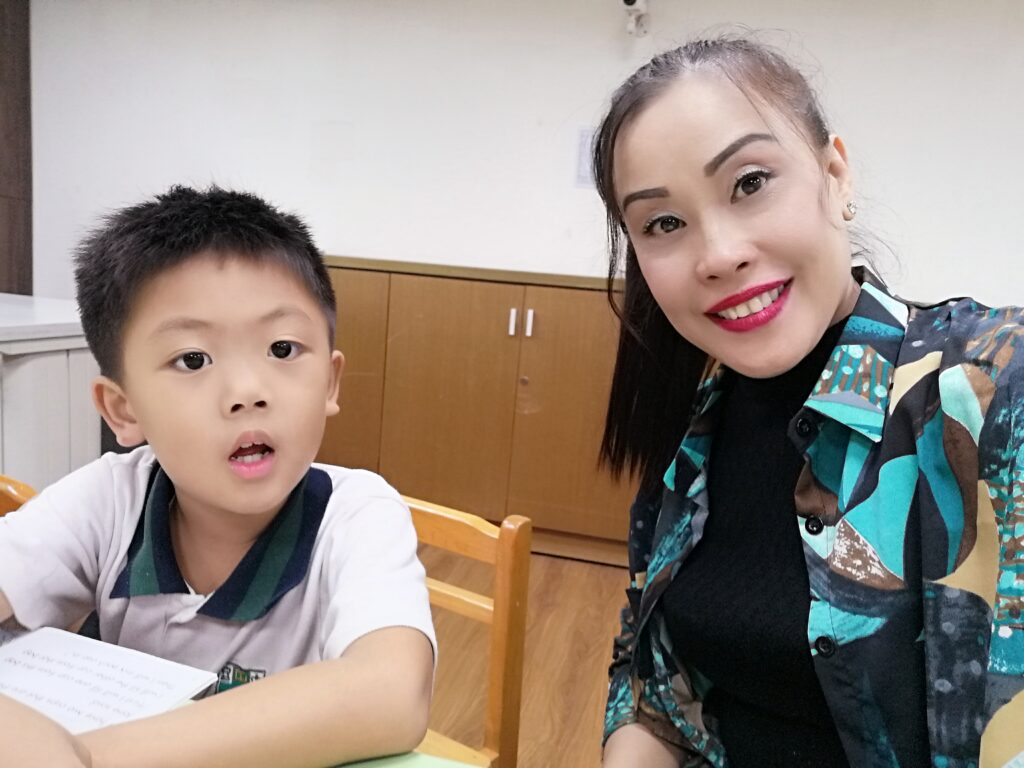
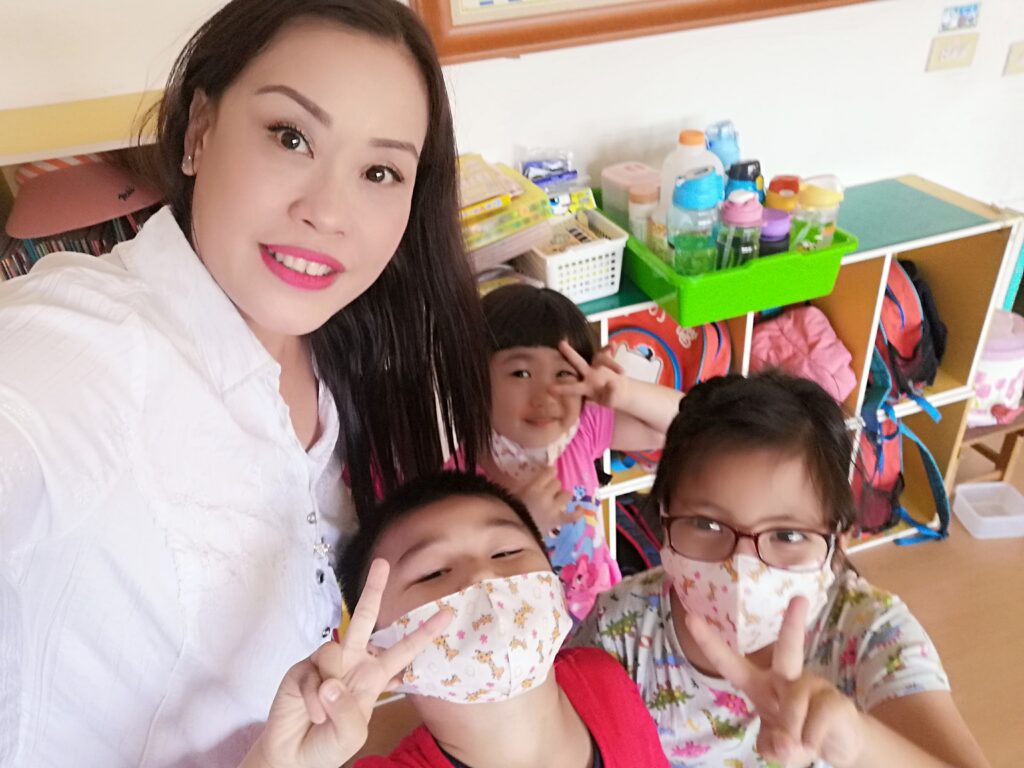
Her definition of a life well spent has widened over the years. In the beginning it was about earning and building. Now it’s about reach. “Success is also measured by how many people we have helped, how many lives we have touched, and how much good we have contributed to our community,” she says.
When she eventually closes the Taiwan chapter, she wants to keep doing versions of what she already does — mentoring teachers, supporting struggling OFWs, and creating stages where Filipino talent can stand proudly on display. The exit plan, in her telling, isn’t really an exit at all.
She sums up the whole arc in a line she offers to fellow OFWs, and it lands as both instruction and self-portrait: “Wherever life takes you, never forget who you are, where you came from, and the people who believed in you.” A rural school in Chiayi believed in her once, when believing wasn’t the obvious choice. She has spent 18 years making the bet look obvious in hindsight.
