



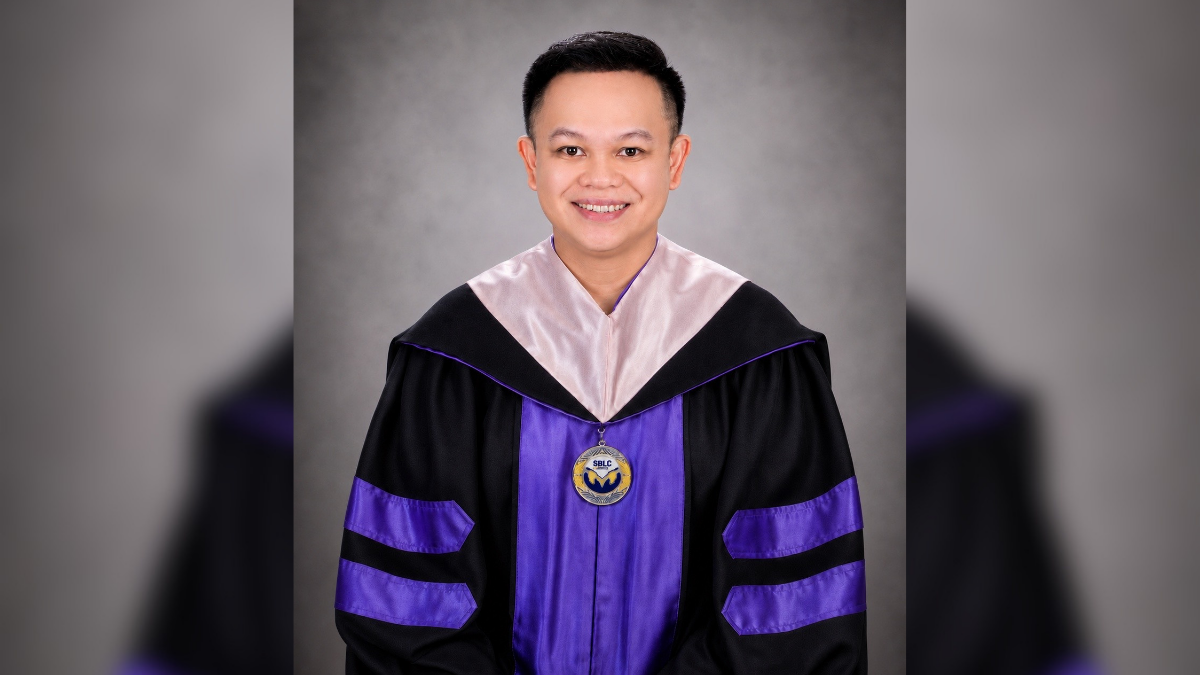

The resuscitation bay at King Abdullah Specialized Children’s Hospital is quiet until it isn’t. Then the doors open, a critically ill child arrives, and there are only seconds to decide what happens next. For Paul John Pasia, a Filipino registered nurse from Sta. Teresita, Batangas, those seconds are where the whole job lives.

He works as a Staff Nurse II in the Pediatric Emergency Department’s Resuscitation Unit in Riyadh, Saudi Arabia, caring for children during the most fragile moments of their lives. It is a role that asks for competence, composure, and compassion in equal measure, often all at once. And it is a long way, in every sense, from where he began.
Where the story starts
Paul’s earliest lessons in work ethic came from watching his parents. His father sold ice cream. His mother ran a small sari-sari store. Neither job was glamorous, but both were relentless, and that relentlessness shaped him.
“Growing up, I witnessed how my parents worked hard every day to provide for our family,” he shares with TGFM. “Their perseverance, humility, and determination became some of the most important values that shaped who I am today.”
It’s a familiar Filipino origin story, but he draws a specific lesson from it — one that reads less like nostalgia and more like a working philosophy. “Coming from a simple family taught me that success is not determined by where you start, but by how willing you are to work hard, persevere, and pursue your dreams,” he says. The sacrifices he watched his parents make, he adds, became “one of my greatest motivations to keep moving forward.”
Nursing appealed to him because it offered something he wanted from a career: the chance to matter to someone on their worst day. He describes being drawn to a profession where he could “care for people during some of their most vulnerable moments and be someone they could depend on when they needed help.” What he didn’t fully grasp at the start was how far the profession would stretch that definition of care.
The decision to leave
Deciding to work abroad was not a leap he took lightly. He frames it in plain terms — professional growth, greater opportunity, the hope of building a better future — but he doesn’t romanticize the cost.
“Leaving the Philippines was not easy,” he says. “Being away from family and everything familiar comes with many sacrifices, but I believed that stepping outside my comfort zone would allow me to grow both personally and professionally.”
That belief brought him to one of Riyadh’s busiest pediatric emergency environments, where the learning curve never quite flattens. Every critically ill child, he says, teaches him something new — “not only about nursing, but also about teamwork, leadership, compassion, and the importance of being prepared when every second matters.” Working in Saudi Arabia’s multicultural healthcare system, alongside colleagues from around the world, also changed how he sees himself. It made him more adaptable, he says, and strengthened his confidence as a Filipino nurse.
Ask him to describe a typical shift and he pushes back on the premise. In the Resuscitation Unit, he explains, “there is really no such thing as a completely typical shift because every day can bring a different emergency.”
What is constant is the preparation. Before anything else, he checks that the resuscitation area, emergency equipment, medications, and critical supplies are ready and functional. The reason is stark: “when a critically ill child arrives, there is very little time to waste.”
When an emergency does arrive, his role can shift by the second — assessing the patient, preparing and administering medications, assisting with procedures, monitoring the child’s condition, and anticipating what the team will need next. None of it, he stresses, is a solo act. “Resuscitation is never the work of one person alone,” he says, describing the tight choreography between physicians, respiratory therapists, and nurses working to stabilize a patient with evidence-based care.
And then there is the part of the job that no equipment check can prepare you for: the family in the room. When a child is critically ill, he says, the parents are living through one of the most frightening moments of their lives. Offering them reassurance, clear communication, and compassion is, to him, as much a nursing responsibility as anything clinical.
Staying calm when everything isn’t
The obvious question about his work is how anyone stays composed while a child’s life hangs in the balance. His answer is less about suppressing pressure than redirecting it.

“I remind myself to focus on what needs to be done rather than on the pressure of the situation,” he says. In an emergency, he leans on training, experience, protocols, and the people beside him — narrowing his attention to his role, the immediate priorities, and clear communication with the team.
Preparation, again, is what gives him a foothold. Knowing the equipment is ready and everyone understands their roles, he says, “helps create a sense of control even in very stressful situations.” But the anchor beneath all of it is purpose. “I remind myself that there is a child and a family depending on us,” he says. “That perspective keeps me focused on the purpose behind everything we do — to provide safe, timely, and compassionate care when it matters most.”
That instinct to look past the individual patient toward the larger system is what eventually pulled him beyond the bedside. His time in the resuscitation bay convinced him that good nursing isn’t only a function of good nurses — it’s a function of the systems they work inside.
“My experiences at the bedside made me realize that excellent nursing care is influenced not only by individual nurses, but also by the systems and environment in which we work,” he says. That realization drew him toward medication safety, quality improvement, and nursing governance — work that included Closed-Loop Medication Administration, Omnicell, and the Unit-Based Governance Council. It gave him a seat at the table where problems get identified and solutions get built.
He’s careful about what leadership actually means to him. “Leadership is not simply about having a position or title,” he says. “It is about taking responsibility, listening to others, identifying opportunities for improvement, and helping the team create meaningful changes.”
Studying between shifts
That same conviction led him to the hardest balancing act of his career: earning a Master of Arts in Nursing, major in Leadership and Governance, while working full-time in a demanding pediatric emergency unit, thousands of miles from home.
He doesn’t gloss over how difficult it was. There were demanding shifts stacked on top of research, presentations, and academic deadlines. There were, he admits, “moments of exhaustion and self-doubt when I wondered if I could really finish everything.” Some days he came home from work drained, only to find coursework waiting for him.
Survival came down to discipline. He learned to guard his time fiercely — to prioritize, manage his schedule carefully, and, when necessary, sacrifice rest. What carried him through the lowest moments was a simple act of memory. “What kept me going was remembering why I started,” he says. “I wanted to continue growing not only as a clinician, but also as a nurse leader.”
Finishing the degree, he says, meant far more than a line on a résumé. “It represents perseverance, discipline, sacrifice, and the decision to keep moving forward even when the journey became difficult.” Doing it while working full-time and living away from home, he adds, made the accomplishment even more meaningful.
The journey, of course, has come with a running tab of sacrifice — the missed family gatherings, the cultural adjustments, the long shifts and hard cases that test both knowledge and emotional stamina. But he measures the rewards against them without hesitation. The best of them, he says, is watching a critically ill child recover and knowing he played a part in it. Being part of a team that comes together in a life-threatening emergency to save a child’s life is, in his words, “something that is difficult to put into words.”
A word to those still dreaming
For young Filipino nurses eyeing careers overseas, his advice is honest rather than inspirational — or perhaps honest because it refuses to be only inspirational.
“Dream big, but prepare yourself for the sacrifices that come with those dreams,” he says. “Working overseas is not always as glamorous as it may appear.” There will be loneliness, homesickness, difficult shifts, and moments of doubt. His answer to all of it is steady persistence: never stop learning, build competence, protect your integrity, stay compassionate, and “always strive to become better than you were yesterday.”
He returns, in the end, to where he started — to the ice cream cart and the sari-sari store in Sta. Teresita. “No matter how far you go, never forget where you came from,” he says. His parents, he notes, taught him that hard work, perseverance, and humility “can take you places you never imagined.”
His closing words to the next generation carry the weight of someone who has lived them. “Don’t be afraid to start small. Keep showing up, keep learning, and keep believing in yourself.” The struggles won’t always make sense in the moment, he says, but they tend to make sense in hindsight. “One day, you may look back and realize that the sacrifices you once questioned were the very things that brought you where you were meant to be.”
And then, a line that lands like it’s meant for the person he once was: “Wherever your career takes you, always remember the people who believed in you before the world ever knew your name.”
