



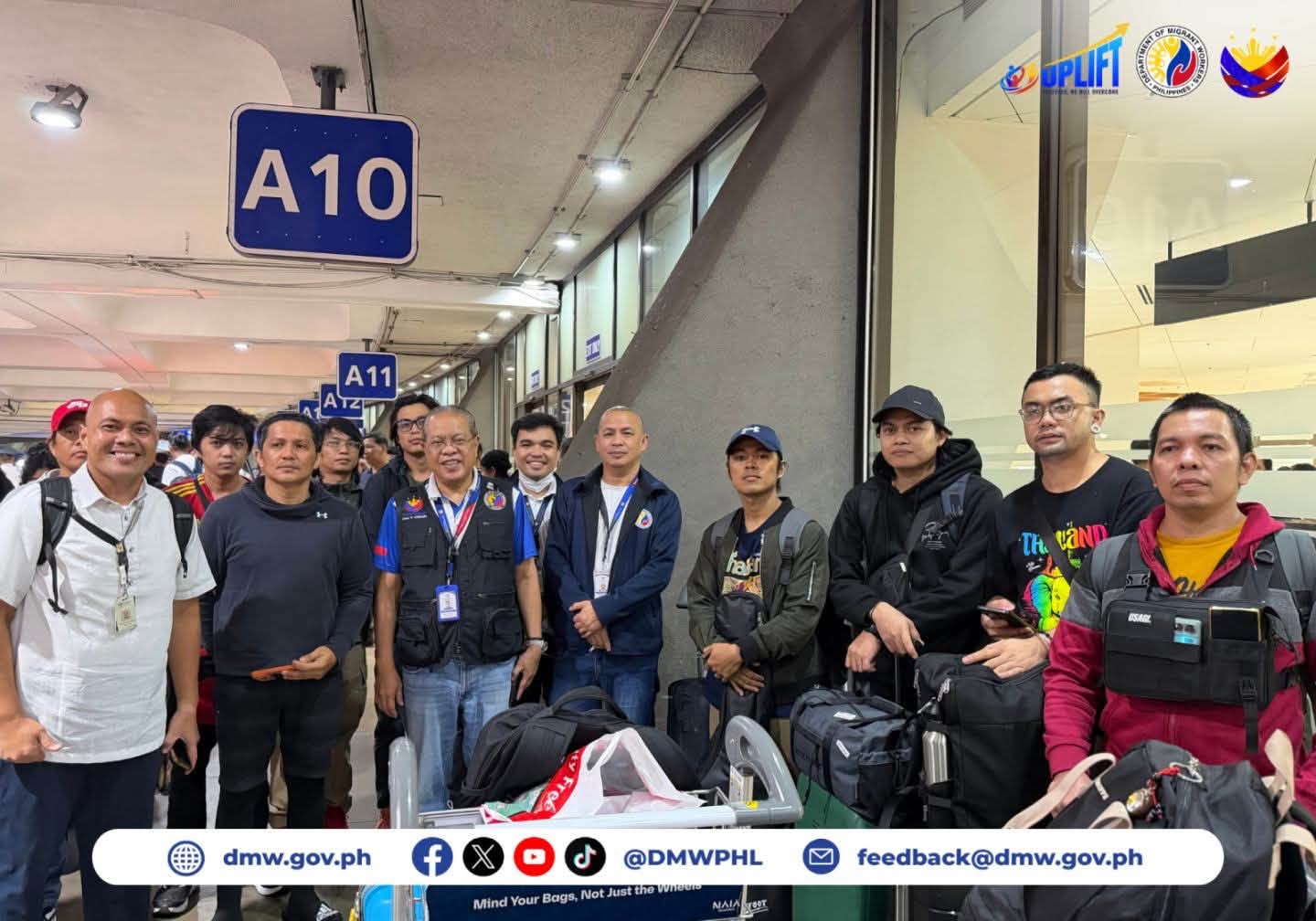

The right of overseas Filipinos to walk away from a dangerous assignment was on display again this week as 10 seafarers came home rather than steer the M/V Dema M toward the Strait of Hormuz, one of the world’s most volatile shipping corridors.

The crew touched down at Ninoy Aquino International Airport (NAIA) Terminal 3 on September 4, 2026, where Department of Migrant Workers (DMW) Assistant Secretary Venecio V. Legaspi was waiting to greet them. Personnel from the DMW and the Overseas Workers Welfare Administration (OWWA) handled the men’s repatriation and helped ease their return.
Legaspi used the welcome to underscore where the agency stands. “Nandito kami para ipakita ng DMW at ng ating Secretary ang suporta sa desisyon ninyo,” he told the returning workers, casting their refusal to sail as a choice the government would back rather than second-guess.
He went further, pledging that the department would defend the earnings, entitlements, and legal protections of Filipino mariners, particularly against employers or agencies that might dispute those rights.

The decision to turn down the voyage falls squarely within a policy the DMW has repeatedly invoked during the Middle East crisis: seafarers cannot be compelled to sail into waters flagged as high-risk. According to the department, that principle reflects a broader directive from President Ferdinand R. Marcos Jr. to keep migrant workers and their households out of harm’s way, part of what the agency describes as its UPLIFT thrust.
The strait itself has proven the point in grim fashion. Just days before the Dema M crew flew home, two Filipino seafarers were killed on September 1 when the Saudi-flagged tanker M/V Sidr was hit by projectiles while approaching the same passage, according to the DMW. Secretary Hans Leo Cacdac has reported that 31 vessels carrying 421 Filipinos have come under attack near the waterway since late February, with 10 injured and one still unaccounted for alongside the fatalities.
Even with that toll, the department has stopped short of barring deployment to the region outright. Cacdac has said the government will block sailings only when a crew member actually exercises the right to refuse, a stance he has tied to the economic strain the conflict has placed on the shipping trade.
