



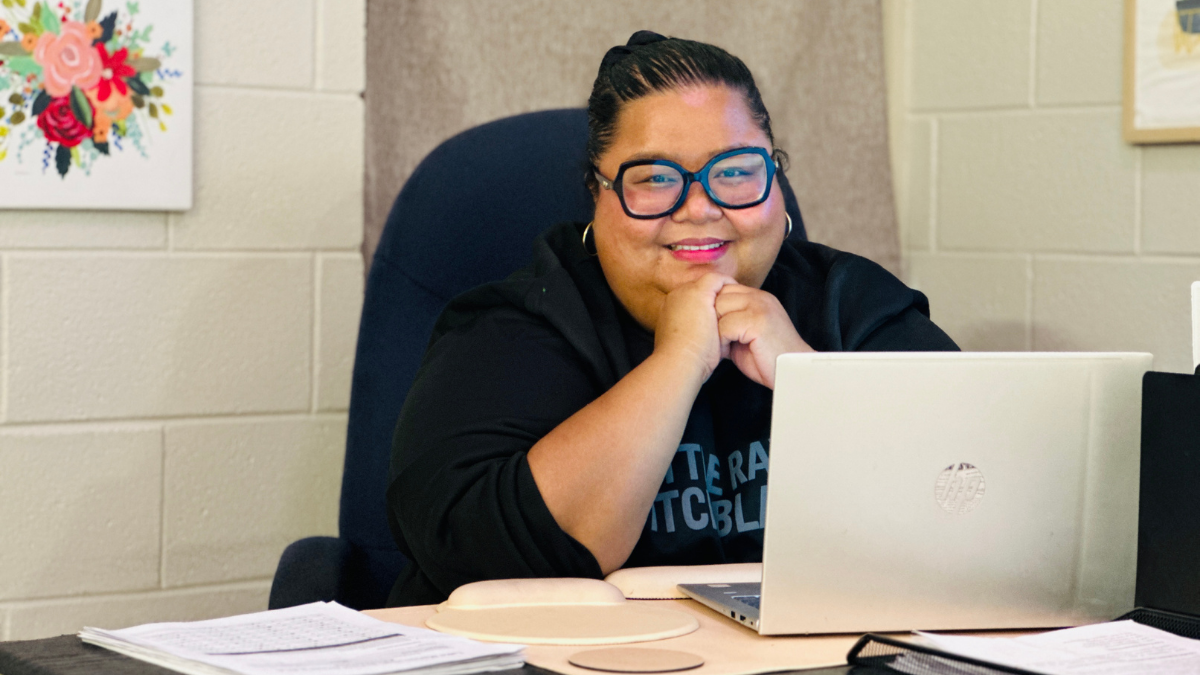

The best teachers, we are told, command a room by force of authority. Arlene Marie M. Ocampo learned the opposite the hard way. On her first days in an American classroom, authority was the one thing she could not summon. Half the class was buried in their phones. A few were asleep. She stood at the front, a decorated educator with a decade of experience and a master’s degree, and felt something close to invisible.

“I almost gave up completely,” she recalls of that first year. “There were painful days when students simply weren’t listening to me, half the class was glued to their phones, and some were even sleeping right through the lesson. I felt entirely defeated, deeply homesick, and genuinely questioned if I was fit for the American education system at all.”
What happened next did not come from a classroom management seminar. It came from everything Arlene had done before she ever set foot in Elloree, South Carolina—the radio broadcasts, the stage plays, the years of building things in her hometown. The turnaround is the whole story, and it begins, as these things often do, with a decision to stop pretending to be someone she wasn’t.
A young mother who thought her future was closed
Long before she was “Mrs. O” to the students of Lake Marion High School, the 39-year-old from Santa Ana, Pampanga, was a young woman who believed her dreams were finished. Becoming a mother early meant stopping her studies, and for years she assumed that was that—life would be about getting by, working whatever jobs came along, and quietly setting ambition aside.
“For a long time, I believed my personal dreams were over—that my life would only ever be about surviving day-to-day,” she says. “I worked various jobs to get by, but deep down, a quiet voice kept telling me that I had more to give, even if I was terrified to try again.”
The person who heard that voice too was her husband, Sonny, a police investigator who served in Pampanga for 18 years. He offered to fund her education so she could finally finish her degree. Saying yes meant walking back into a classroom after years away, this time as the oldest student in the room, and confronting a stack of accumulated fear and self-doubt. The question she asked herself is now stitched into how she talks about her whole life: “If Not Now, Then When?”
That single decision, she says, “transformed everything.” She earned her Bachelor of Secondary Education, majoring in English, at Holy Cross College in Pampanga, then a Master of Arts in Language Teaching at Wesleyan University–Philippines. The young mother who thought her story was over became an English instructor, then a coordinator, then—improbably—an artistic director. Ambition, it turned out, had only been postponed.
Before America, a life built in Pampanga
It is tempting to treat the move abroad as the beginning of the interesting part, but the Filipina teacher’s most inventive years arguably came earlier, at home. At Holy Cross College she served as English Instructor, English Coordinator for the Senior High School Department, and National Service Training Program (NSTP) Coordinator for the College Department. When COVID-19 shuttered schools, she authored and printed self-learning modules for Purposive Communication and NSTP so that students could keep going through the lockdowns.
As NSTP coordinator she pushed students out into the community: town cleanups, tree-planting drives, relief-goods distribution for displaced families, and health and literacy outreach in local barangays. And then there was the other life, the one that ran alongside the academic titles. She was a radio broadcaster on Radio Libertas, streamed globally through Zeno FM and Spotify. She co-founded the Kruz Festival, a cultural celebration of local arts that was featured nationally on GMA 7’s Unang Hirit. For five years she was the festival’s artistic director, staging its annual plays—including, during the pandemic, a digital production shot with green screen technology to keep local theater alive when live audiences were impossible.
None of this looked, on paper, like preparation for teaching ninth-grade English in the American South. It would turn out to be exactly that.
The classroom that would not listen
She arrived in the United States in 2022, part of the wave of J1 Filipino educators who cross an ocean to teach. The financial logic was hard to argue with. Even with two dedicated professionals in the household, she and Sonny struggled and worried constantly about their children’s futures. But money was only part of it. “I also carried a deep professional hunger,” she says, “a desire to step out of my comfort zone, experience teaching in another country, and learn from global educational systems.”
The cost was steep and personal. Leaving Pampanga meant leaving friends, a hometown she loved, and—hardest of all—her son Christian. “It was a sacrifice made out of love,” she says, “driven by a goal to secure a better future for my family.”
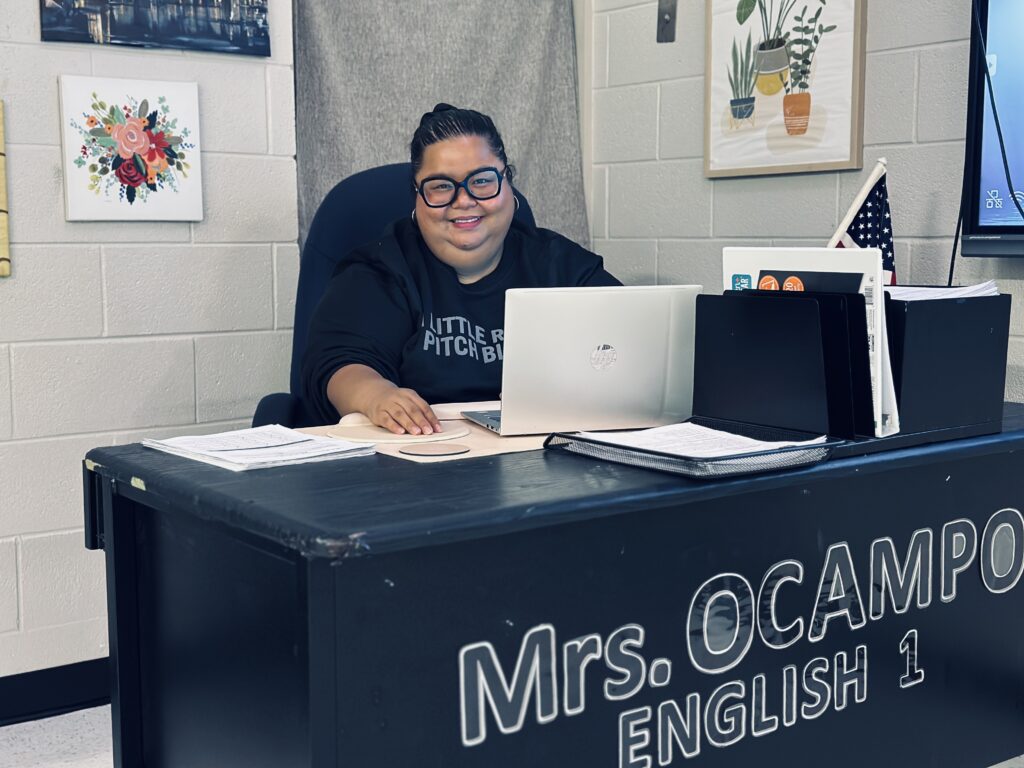
Then came the classroom that would not listen. Teaching American teenagers, she found, was less about content than about culture—different rhythms, different communication styles, a trust she would have to earn rather than assume. “It took time, patience, and consistency to bridge that gap, gain their trust, and prove that I was fully equipped to lead and inspire them.” In the meantime, the phones stayed up and the eyes stayed down.
Leaning into what she already knew
The pivot, when it came, was less a strategy than a homecoming. In her lowest moment, the former festival director stopped trying to impose a rigid structure she didn’t believe in and reached instead for the tools she had spent years mastering back home: directing, broadcasting, producing, community-building.
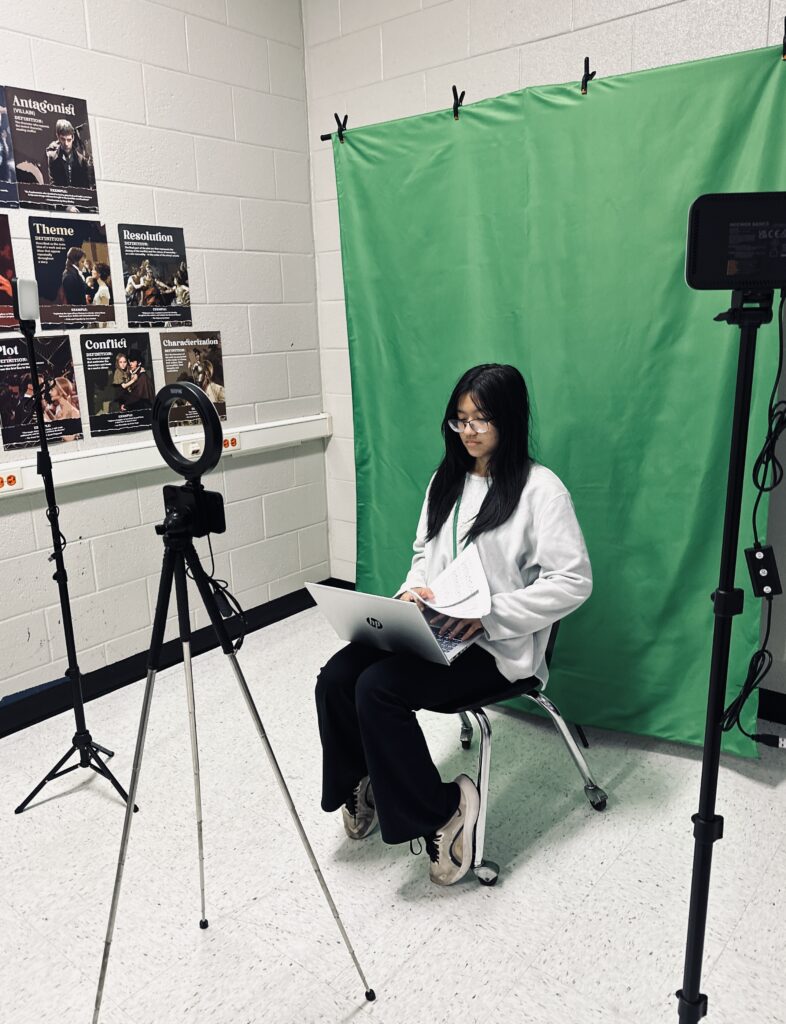
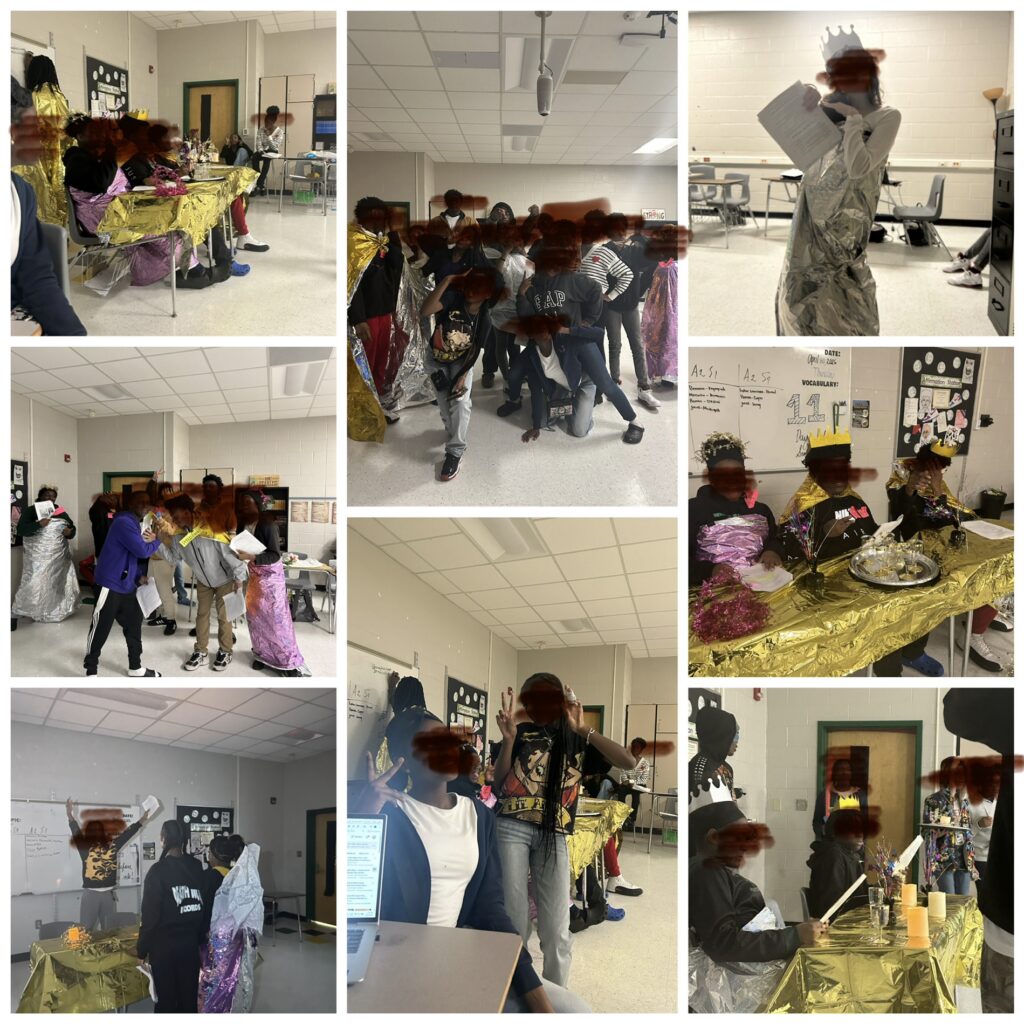
The test case was Romeo and Juliet. Instead of assigning the play as a reading, she handed the production to the students. They didn’t just perform scenes—they ran them, taking on real production roles as stage directors, scriptwriters adapting the language, costume managers, and prop coordinators. She layered in green screen video production and broadcast-style discussion. The change in the room was almost immediate.

“Almost instantly, the atmosphere shifted,” she says. “The students put their phones away, woke up, and began engaging with me and the literature on a deeply personal human level.”
Out of that shift grew something she could name and build on: the PACELIT framework—short for Performance-Active-Communication Educational Literacy. The model marries performance-based learning with media literacy tools, green screen technology and student-produced multimedia among them, to turn reading from a chore into something closer to a rehearsal. “I get to help students transform reading from a routine task into an interactive, voice-building experience,” she says. It is the highlight of her career so far, and it was born, fittingly, out of the year she nearly quit.
Watching confidence bloom
Ask her what she loves about teaching freshmen and the answer is not about literature at all. “What I love most about teaching 9th graders is watching their confidence bloom,” she says. “Freshman year is a pivotal crossroad, and I see it as a privilege to help students find their voice during such a formative time.”
The proof arrives in small, repeated moments. At Lake Marion High School she is known to everyone as “Mrs. O,” and the surest sign that the work is landing is the traffic through her classroom door. “The greatest fulfillment comes when former students continuously drop by my classroom just to visit—a heartwarming reminder that they have not forgotten their teacher, and that the bond we built was real.”
She has widened the footprint beyond her own roster. Last year she moderated the school’s Drama Club, a project she intends to keep growing into a genuine theater community. She has mentored and sent several students to the Arts Bridge Program summer residency at Winthrop University. And for three years running she has moderated the school’s annual English Night Poster-Making Contest, carving out space for visual learners to interpret literature their own way. The instinct to build things for other people, honed across festivals and barangay outreach, clearly did not stay behind in Pampanga.
What the ocean gives back
The rewards of working overseas, in her telling, are not only the ones that show up in a bank statement—though those matter. “Life has become significantly more stable,” she says. “We no longer carry the heavy mental burden of worrying about basic living expenses or everyday bills.”
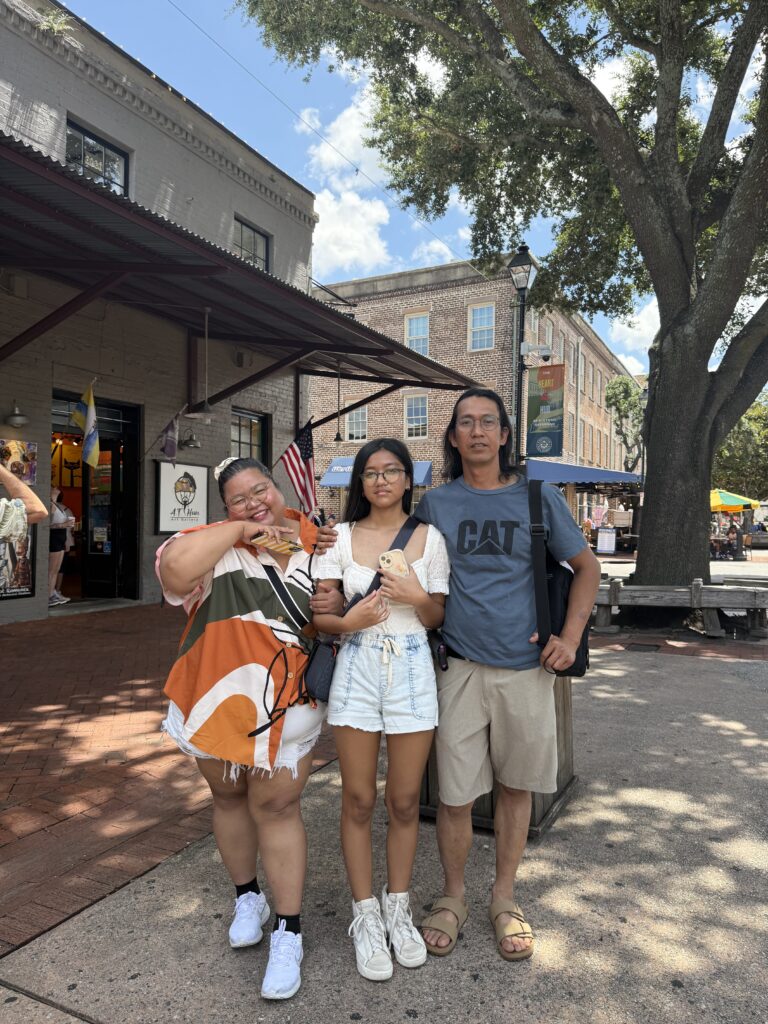
The deeper dividend has been time and distance to see the world differently, often through a car windshield. She and her family have fallen for long American road trips, and the tally is impressive: 28 U.S. states so far. “We are getting to experience places, landmarks, and adventures that we used to only dream about while looking at pictures back home,” she says, “turning what once felt impossible into real, shared family memories.” Living far from where she started, she adds, has reshaped her sense of resilience—teaching her “how to build a home anywhere” and deepening a pride in her Filipino heritage that travel only sharpens.
Advice from someone who nearly gave up
Because she came close to walking away, the Kapampangan educator’s advice to fellow overseas Filipinos carries the weight of someone who knows the exit was right there. Her first counsel is the one she had to relearn in a defeated classroom: do not shrink. “Never shrink your worth to fit into a new space,” she says. “Leverage your unique background, creative talents, and cultural strengths—they are your greatest asset.”
On money she is practical, urging kababayans to build financial literacy, make every dollar count, and look into safer, higher-earning options like high-yield savings accounts while building emergency funds. But she is just as insistent about the opposite of thrift. “Collecting moments and experiences is far more fulfilling than simply accumulating material things,” she says, making the case for spending some of that hard-earned money on the road.
And she is candid about marriage across the strain of migration, rejecting the neat arithmetic of an even split. “Love and responsibility are rarely a neat 50/50 split every single day,” she says. “Sometimes it is 80/20, or 60/40. There will be seasons when one partner simply cannot give their usual share because they are exhausted, overwhelmed, or adjusting to a new environment—and that is okay.” What holds a marriage together, she says, is the willingness of the other person to carry the heavier load until strength returns.
The rest of her survival kit is unapologetically Filipino. As a proud Kapampangan she cooks by second nature and sings as her outlet, and the Saturday gatherings she hosts in the U.S.—a close circle of teachers, nurses and their spouses, food on the table, karaoke in the air—have become a lifeline. “Singing our hearts out eases the lingering loneliness of being far from home,” she says. “Culture is not just where we come from; it is what carries us through.”
The footprint she wants to leave
Her plans stretch past the tenure abroad and, eventually, back toward the place that made her. She wants to keep developing and publishing research on the PACELIT framework and media literacy, and to advocate for arts-infused teaching. The longer arc bends home. “I hope to return home to mentor emerging Filipino educators, support teacher-training initiatives, and help bridge educational gaps for local students,” she says, “so they too can thrive in an interconnected world.”
It is a fitting destination for a career that began with a husband who believed in her before she did, and a question she still asks herself when the next scary step appears. “I hope my journey shows that no matter where you started or how long you’ve been delayed, your dreams are still worth chasing,” she says. “If you lead with faith, empathy, and hard work, your footprint can touch lives far beyond borders.”
The students who once slept through her lessons would probably agree. They put their phones down, after all—and some of them keep coming back.
