



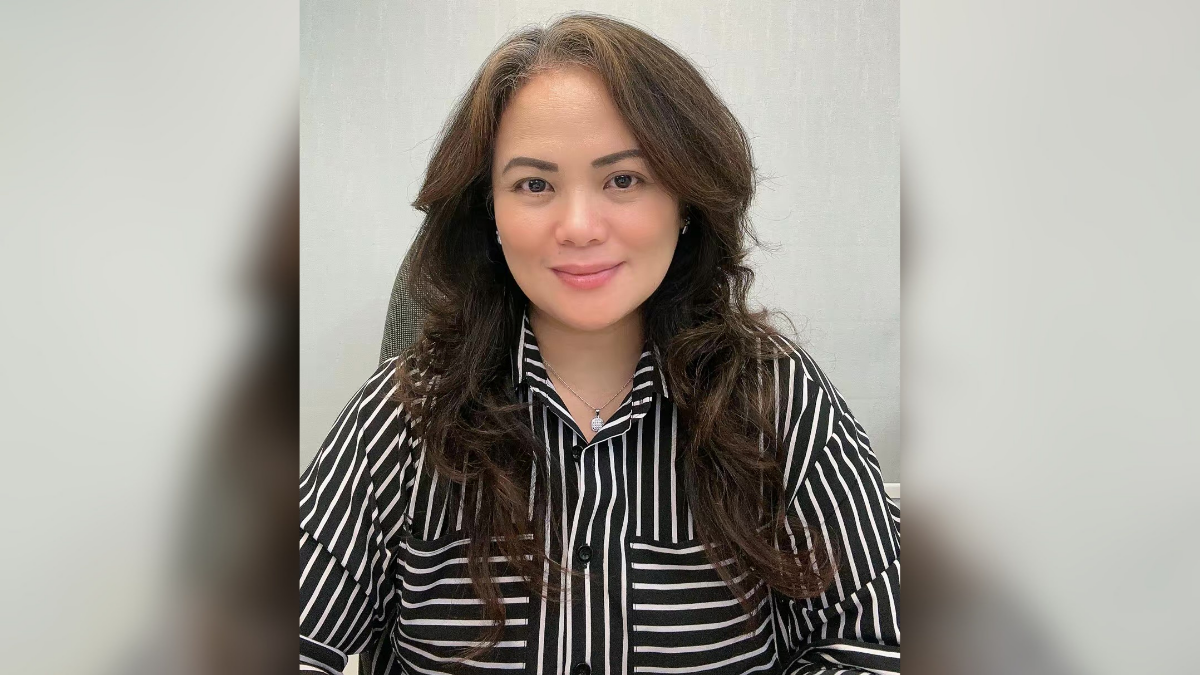

Hospitals rarely hand their most sensitive turnarounds to outsiders — and almost never to a foreign woman with no medical degree, working in a language she doesn’t speak. That is exactly the assignment Engr. Salvacion Manalili Ordoña accepted in 2010, when she left a stable career in the Philippines and flew to Jeddah to fix a quality system that had already failed a national inspection twice.

The choice looked like a gamble. It was, in fact, a calculation — the kind a good industrial engineer makes every day.
A career built on systems, not luck
Long before healthcare, Engr. Salvacion learned to think in processes. Her first 13 years were spent at International Elevator & Equipment, Inc., a Mitsubishi Electric group company in the Philippines, where she climbed from job analyst to senior HR supervisor while doubling as an internal quality auditor and 5S lead auditor for the ISO management system. The vision took shape early. “My journey began in 1998 with a vision to become a Total Quality Management practitioner,” she recalls — a goal that would quietly organize the next three decades of her working life.
That engineering discipline is the throughline. She holds a degree in industrial engineering from Mapua Institute of Technology, now Mapua University, and describes herself first not as a hospital administrator but as “an experienced Industrial Engineer with over 25 years of experience” across quality improvement, human resources, and project management. When she moved into the hospital, she brought the same lens: systems could be measured, and what could be measured could be improved.
The reason she left home at all was not abstract ambition. “My primary motivation is to provide full financial support for my family, particularly to cover the medical expenses of my daughter, who is managing a developmental delay and a congenital disease,” she shares with TGFM. Career growth mattered, but the ledger began at home.
Earning trust the hard way
The early years in Saudi Arabia tested more than her technical skill. She arrived as a non-Arabic speaker stepping into a senior leadership role, and the reception was not uniformly warm. “As a Filipino holding a senior leadership role within the healthcare facility, I initially experienced discrimination,” she says plainly. What carried her through was an employer willing to bet on results over assumptions — leadership that, in her words, “consistently supported and defended me based on their trust in my ability to deliver results.”

The proof arrived in 2012. The hospital had already failed the CBAHI National Hospital Standards accreditation twice before she took over its preparation. Under her direction, it passed. The moment reset how her colleagues saw her. “It was through this achievement that my colleagues recognized the value of my work and looked past my nationality,” she says. Skepticism, it turned out, was a problem she could engineer her way out of — one passed standard at a time.
From there the trajectory steepened. She was promoted to assistant hospital director while serving concurrently as quality improvement and risk management director, then led successful CBAHI reaccreditations in 2017 and 2021 and took on deputy director duties for facility management and safety. The recognition followed the work: a Leadership Award for Quality in 2012, and a “Best Assistant Hospital Director” award in 2016 for steering the institution through three consecutive accreditations.
The measure of a good mentor
Today, as Corporate Adviser for Continuous Quality Improvement, Facility Management and Safety, and Healthcare Accreditation at Dr. Khalid Idriss General Medical Complex in Rabigh, she oversees everything from medical equipment management to firefighting systems, keeping the facility aligned with MOH, CBAHI, and Civil Defense requirements. In September 2025, she guided the center through the CBAHI Ambulatory Care Center standards — another milestone on a long list.
But ask what she values most and the answer isn’t an award or an audit score. It’s the people she has trained. Over 28 years she has mentored managers, doctors, nurses, engineers, and allied health staff, and their success is her real return on investment. “I feel incredibly fulfilled whenever I see the people I have trained and mentored excelling and doing a great job,” she says. The sentiment tracks with the words she lives by: that true fulfillment comes from helping others succeed.
That philosophy also shapes what comes next. After 16 years abroad, the veteran engineer plans to retire from corporate life and move into academia. “I have a strong passion for teaching and mentoring, and I am eager to share my professional knowledge and experience with students,” she says. The plan includes overdue time with family, a business of her own, and, of all things, urban farming.
Her advice to fellow Filipinos overseas is as disciplined as her career. “Focus on your main goals,” she urges, warning that distractions and temptations are inevitable — the answer is to stay grounded, protect your health, and manage money wisely enough to support family, help others, and prepare for retirement.
It is fitting counsel from someone who treated her own career as a system to be optimized. The daughter she crossed the world for remains the reason. The hospitals she rebuilt are the evidence. And the professionals she shaped are, by her own measure, the success that counts most.
