



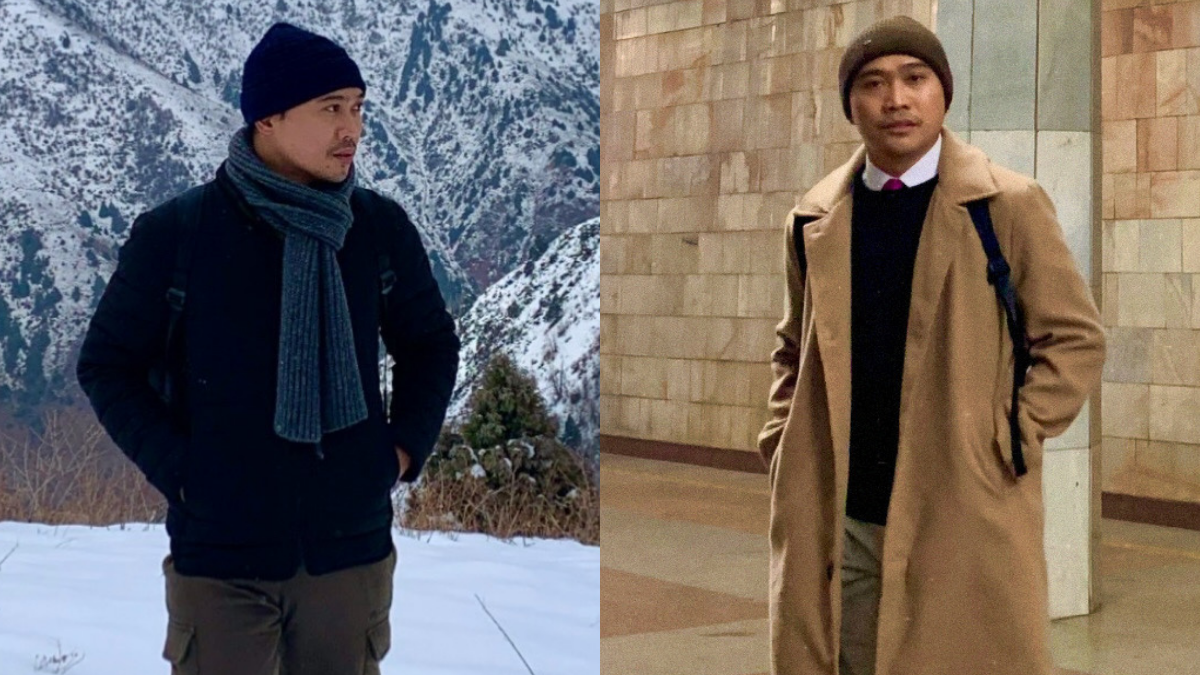

From the mall floor to the front of a classroom, the distance can look impossibly far—until you meet someone who has walked it. For fourteen years, that walk carried a young man from a Baguio fast-food counter to a folded-shirt display in Singapore and, finally, to a secondary school in the Tashkent Region of Uzbekistan. Jaime Gabay Cudapas Jr. did not set out to become a teacher. He set out, at twenty-three, simply to build a better life—and discovered along the way that the skills he’d gathered folding sweaters and calming customers were the very ones that would one day steady a nervous teenager learning to speak English aloud.

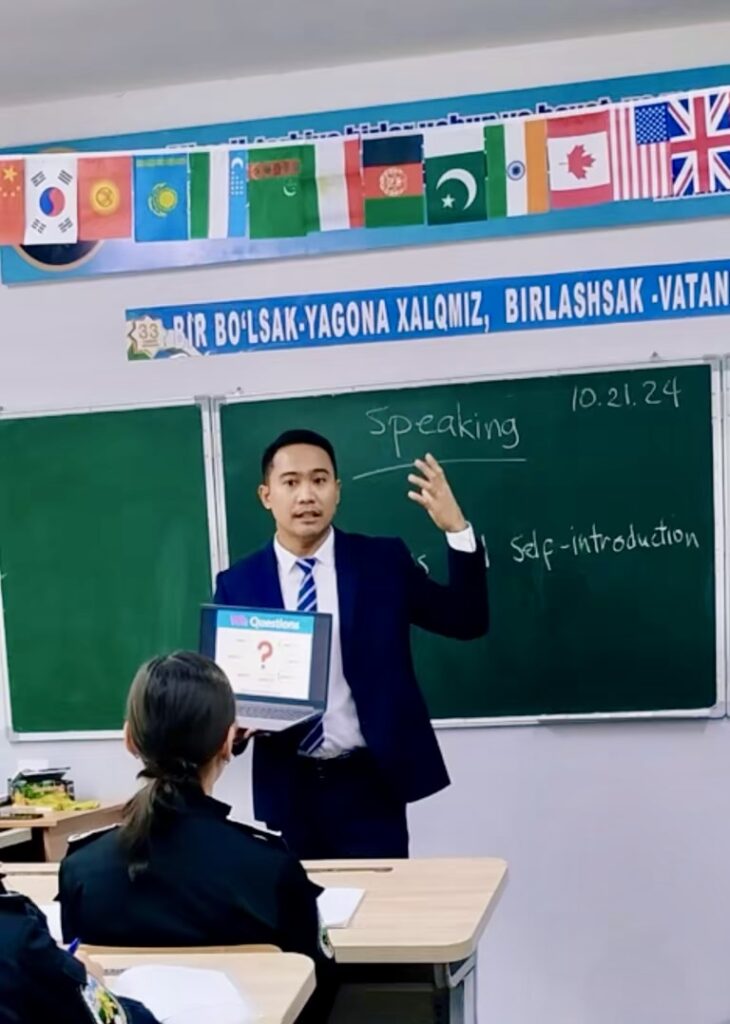
Today, at 37, he works as an ESL Specialist with Uzbekistan’s Ministry of Preschool and School Education, teaching students aged 12 to 18. His days are built around a single, patient goal.
Learning to serve, one aisle at a time
Jaime’s story begins not in a lecture hall but behind a register. Before there was any talk of pedagogy, there were shifts at Jollibee and McDonald’s, a checker’s post at SM City Baguio, and a sales job at FTC Leasing—work he took on while pushing through school. “Working my way through school taught me real humility and the value of every small step forward,” he shares with TGFM, and the sentiment reads less like a platitude than a thesis for everything that followed.
In January 2012, he left the Philippines for Singapore, starting from the ground up as a Management Trainee at Giordano. What came next surprised even him: an eight-year run as an Assistant Store Manager at Uniqlo, leading teams and running operations in one of Asia’s most demanding retail markets. It was steady, respectable work. It might have been the whole story.
Instead, one assignment cracked it open. While at Uniqlo, he was chosen to represent Singapore in a sustainability outreach effort with the UNHCR in Malaysia, distributing recycled clothing to refugees. “Standing in front of those families moved me to my core,” he says. The child who had once dreamed of a brighter future was now, improbably, the one offering comfort to others. “To find myself in a position where I could offer comfort and support to others in need was a deeply humbling milestone I will carry with me forever.”
That day planted a question that retail could not answer: what would it mean to spend his life making a direct difference in young lives?
A pivot no one saw coming
Here is where the path bends. His degree is in Information Technology—not education, not English. By any conventional logic, a career in teaching made little sense. He made the leap anyway, first into a kindergarten and elementary classroom at Santipap School in Thailand, then to Uzbekistan.
He is candid that the choice was deliberate, not accidental. “Though my degree is in Information Technology, I chose to pivot into education because I wanted my life’s work to directly empower others,” he explains. Rather than abandon his technical background, he folded it in, using it to design interactive, technology-driven lessons for teenagers who might otherwise tune out. The former retail manager had become, in effect, a translator—of language, yes, but also of possibility.

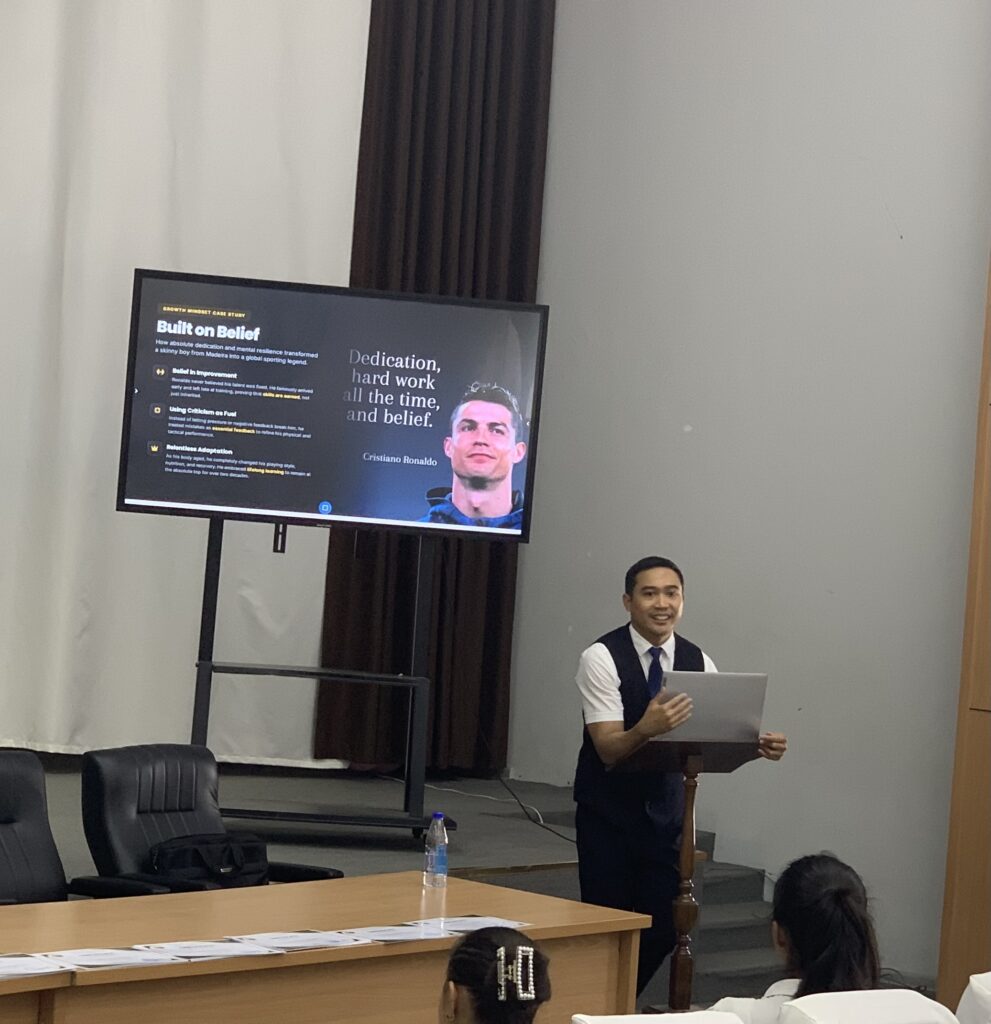
What he finds most rewarding isn’t the lesson plan. It’s the moment a student stops shrinking. “Watching a hesitant teenager gain the confidence to express themselves and dream bigger, knowing I helped guide them toward a broader world, is the most deeply fulfilling part of my career,” he says. Last school year, he channeled that conviction into a seminar for graduating Grade 11 students titled “Unlocking Your Future with a Growth Mindset,” where he stood before the room and offered his own winding history as evidence that the road forward is rarely straight.
The reinvention itself, he says, is the achievement he’s proudest of. Not a title, but “the privilege of reinventing myself”—carrying the leadership, patience, and cross-cultural understanding earned in retail directly into the classroom.
The cost of the crossing
None of it came without a price. Fourteen years abroad, across three countries with three sets of rules, meant learning fast and often alone. There were language barriers, cultural gaps, and the quiet weight of homesickness that no promotion ever fully lifts. Adapting to different work dynamics in Singapore, Thailand, and Uzbekistan, he admits, “meant I often had to learn new norms quickly while managing the pressure to succeed.”
His method for surviving the friction was disarmingly simple. When misunderstandings surfaced at work, he leaned on “active listening, patience, and humility—focusing on empathy rather than assumption.” What kept him anchored was less strategy than purpose: family. “Knowing I was working to build a better future for them kept me grounded and motivated,” he says. He credits his parents most of all, whose “quiet strength, sacrifices, and unwavering work ethic” became his template for facing hardship without losing his footing.
For the kababayans navigating their own difficult stretches overseas, he offers guidance shaped by experience rather than theory. Live within your means and set healthy boundaries around remittances, he urges. Never stop learning, and don’t be afraid to pivot. And guard your inner circle: “Distance can make us vulnerable, so choose your inner circle carefully and always remember to check in on your own mental health.”
Building the road home
For all the miles logged, his gaze is fixed firmly on the return. Once his tenure abroad is complete, he plans to settle near his family in the Philippines and pour what he’s learned back into local soil—either a sustainable business or an educational initiative. The advocacy is specific and personal: community workshops that bridge technology, English communication, and mindset development for young Filipinos, so they might build bright futures without ever having to leave.
It’s a fitting destination for someone who has spent nearly half his adult life proving that no chapter is wasted. IT led to retail, retail led to teaching, and teaching led back, eventually, toward home. “Life rarely follows a straight path, and that is where its beauty lies,” he reflects. “No experience is ever wasted.”
The teenager at the front of his classroom, hesitant and unsure, may not yet know that the man encouraging him once stood in the same uncertainty. But Jaime does. And that, more than any diploma, is what he brings to the room.
