



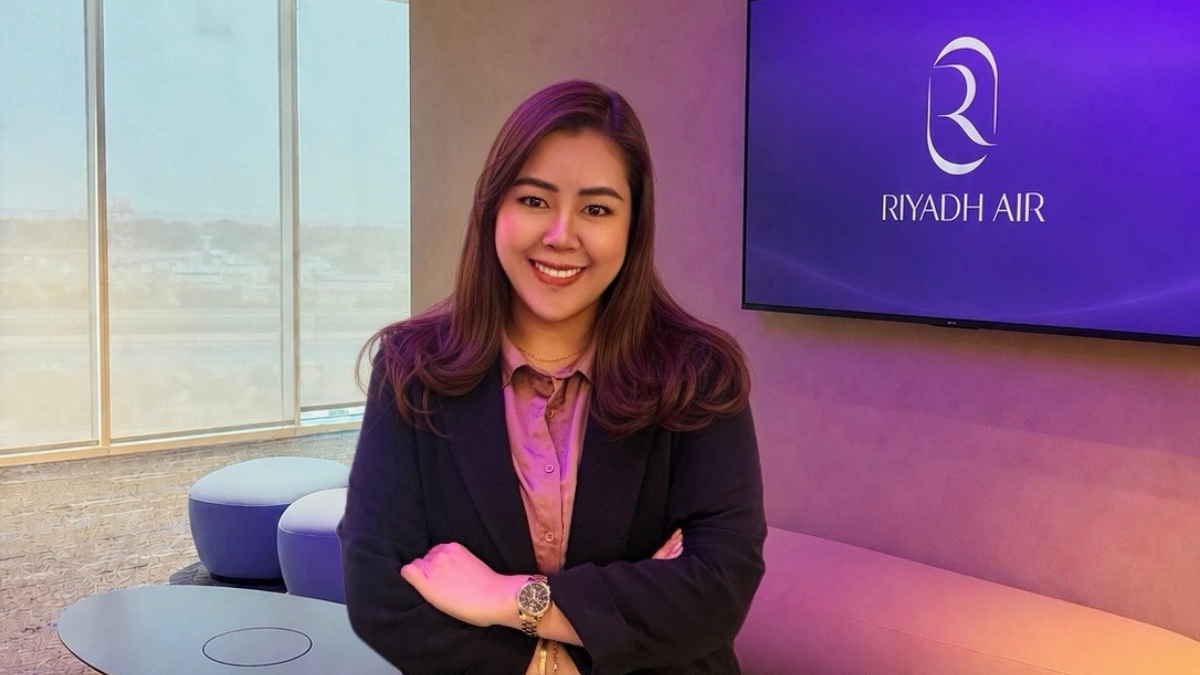

The salary tables tell a quiet, uncomfortable story about Philippine nursing. Between 2011 and 2014, a registered nurse could pour years into training, master the delicate choreography of a delivery room, and still find the math refusing to add up against the future she imagined. Lovely Mae Española lived inside that math. She was good at her job — a Community Health Nurse and a Labor and Delivery Nurse who assisted doctors and fellow nurses through childbirth, guiding expectant mothers from the anxious first hours to the moment a newborn finally cried. She loved it. The numbers simply loved her back a little less.

“It was incredibly rewarding to care for expectant mothers throughout their journey and witness the joy of welcoming their babies,” she shares with TGFM. But rewarding and sustainable are not always the same word. “Despite my passion for nursing, career growth and financial opportunities were limited at the time, and the salary for nurses between 2011 and 2014 made it difficult to build the future I envisioned for myself and my family.”
So in 2014, she left. Not the vocation — she would never quite manage that — but the country, the hospital, the familiar. She packed for Dubai with the same resolve that had carried her through night shifts, and no clear map for what came next.


A startup, a bankruptcy, and a message from home
The first job overseas was nothing like the second act anyone plans for. Lovely landed a role as a secretary and receptionist at a small food trading startup, the kind of scrappy operation where the job description is a polite fiction. “Being part of a startup environment meant wearing many hats and supporting different areas of the business,” she recalls. She learned the business from the inside, absorbing how orders moved, how suppliers were chased, how a small company keeps its lights on.
Then the lights went out. Distributors stopped paying, then disappeared entirely, and the company folded under the weight of the debts owed to it. The news reached Lovely at the worst possible distance — she was back in the Philippines on vacation when the message arrived. There was, her employer told her, no job to come back to.
It could have been the end of the Dubai chapter before it truly began. Instead, a small act of decency kept the door open. Her employer left her visa active, a gesture that gave her the runway to return and start looking again. “That challenging experience became a turning point in my career,” she says now, and the phrasing is telling. She does not describe the bankruptcy as a setback so much as a hinge — the point where one life quietly swung into another.
Finding a calling in the logistics of flight
What she found next was flydubai, and what flydubai found in her was someone who could impose order on chaos. She spent seven years there, beginning in Administration and Facilities Management before moving into Crew Training Planning — and it was in that second role that something clicked. The work asked her to juggle people, resources, schedules, and regulatory requirements all at once, and rather than exhausting her, it lit her up.
“I discovered my passion for crew training planning,” she says. “The role allowed me to combine organization, problem-solving, and operational coordination.” For a former nurse, the leap makes more sense than it first appears. A delivery room and a training schedule both demand the same underlying instincts: anticipate, adapt, keep everyone moving safely toward a good outcome. She had simply traded one high-stakes environment for another.
A move to a Lithuanian carrier brought the next milestone — her first management position, and with it the harder lessons of leading people rather than simply coordinating them. “This was an important milestone that helped me develop my leadership skills and gain broader experience in crew operations and team management,” she says. Each role was building toward something, even if she couldn’t yet see the shape of it.
The shape arrived in 2024. After a recruitment process she describes as multi-staged and demanding — panel interview after panel interview — she was appointed Training Support Manager at Riyadh Air, one of the most closely watched new entrants in global aviation. Today she leads training planning, scheduling, and operational activities for flight and cabin crew, coordinating internal and external stakeholders, managing logistics, keeping regulatory compliance airtight, and pushing process improvements as the airline scales.
“Securing the role was a significant achievement and the result of years of hard work, persistence, and continuous learning,” she says. There is pride in it, but no complacency. Joining a startup airline meant building rather than inheriting — a chance “to contribute to building processes, developing teams, and supporting the airline’s ambitious growth journey from the ground up.” A decade after a food trading startup collapsed beneath her, she had willingly walked into another ground-floor operation. This time she was helping design the floor.
What the work is really about

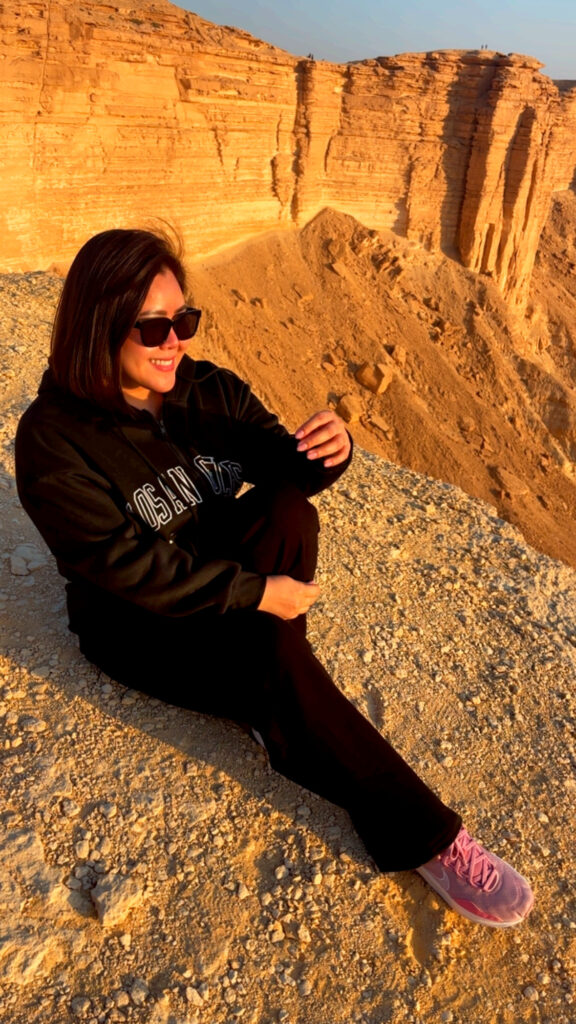
Ask Lovely why she loves the job, and the answer is not the tidy corporate line about strategy and efficiency — though she offers that too. “I genuinely enjoy working in training planning and operations because it combines strategy, problem-solving, and the fast-paced nature of aviation,” she says. “No two days are ever the same, and that is what makes the work exciting.” She lights up talking about the training floor itself, especially simulator operations. “There is an energy and adrenaline that comes with crew training that keeps me engaged and motivated.”
But the deeper answer circles back to people, the way it always seems to with her. Her role supports flight crew and trainers, but she is quick to trace the ripple outward. “By planning training efficiently and helping create better work-life balance whenever possible, I can contribute, even in a small way, to their well-being and that of their families,” she says. “That human element is the most rewarding part of the job. Knowing that my work helps people succeed professionally while also allowing them to spend quality time with their loved ones gives me a strong sense of purpose.”
The nurse never left. She just changed her uniform. In every company she has worked for, including Riyadh Air, she has volunteered as a First Aider — a small, telling continuity. “They say that once you’re a nurse, you’re always a nurse,” she says. That empathy, she believes, is her real professional edge. “I always try to put myself in other people’s shoes, understand their perspective, and support them in the best way I can. This approach has helped me earn trust, foster collaboration, and build meaningful professional relationships throughout my career.”
Starting over, again
Success rarely announces its costs upfront. From the outside, a management title at a marquee airline in a booming region looks like arrival. From the inside, Lovely’s 2024 came with a quieter reckoning. Moving from Dubai to Riyadh two years ago meant leaving behind more than a city — it meant leaving the entire support system she had spent a decade building. Her sister, her brother, close friends, the people she could lean on when life turned heavy — all of them stayed in the UAE. “Dubai had become my home,” she says. In Riyadh, she had colleagues and little else.
The early months were hard in ways that had nothing to do with work. “At the time, it was also challenging because of the language barrier, as many people did not speak much English,” she says. “There were moments when I felt isolated and overwhelmed, especially being far away from my loved ones.” She is candid about the particular loneliness of the independent career woman abroad. “As a woman, there are times when I long for the love, care, and comfort of my parents, and navigating life’s challenges without a partner can feel lonely.”
What steadied her was faith. It is the thread she returns to most insistently, the thing she credits above career strategy or sheer grit. “Through all the struggles, I have found strength and comfort in my relationship with Jesus,” she says. “My faith reminds me that I am never truly alone, and it gives me the courage to keep moving forward no matter how difficult the circumstances may be.” Two years on, she measures the distance traveled not in job titles but in character. “I am proud of how much stronger, more resilient, and more independent I have become.”
Home, from a distance
For all the talk of homecoming that shadows every overseas Filipino worker’s story, Lovely is clear-eyed about her own. She is not planning to stop anytime soon. Working abroad has let her build financial stability, invest in property back home, help cover her father’s medications and healthcare, and provide a house for her parents. “My primary goal is to continue advancing my career while contributing to the realization of Saudi Arabia’s Vision 2030,” she says, describing herself as privileged to witness the Kingdom’s rapid transformation firsthand.
She is animated, too, by what her employer’s growth could mean for others like her. The airline is expected to generate thousands of jobs across aviation — pilots, cabin crew, mechanics, engineers — many of them open to Filipinos worldwide. She points with particular pride to the launch of daily non-stop flights between Riyadh and Manila. “This development will help bridge the distance between overseas Filipinos and their loved ones back home,” she says — the family reunion logistics of an entire diaspora, improved by a flight schedule she helps make possible.
Her mantra is a commandment, and she wears it plainly: honor your father and mother, that it may go well with you and that you may enjoy long life on the earth. It threads through everything — the medications paid for, the house provided, the parents she describes as excited about what comes next. “Their encouragement motivates me to keep striving for greater achievements,” she says.
Her advice to kababayans who are struggling far from home is unadorned. “Keep your faith strong,” she says. “There will always be challenges, whether in love, finances, work, or relationships. There will be moments of loneliness, uncertainty, and even disappointment. However, these difficult seasons do not last forever.” She has learned to read hardship as preparation rather than punishment. “Trust the process, stay grounded in your values, and never lose hope.”
It is the kind of wisdom that sounds like a cliché until you know where it was earned — in a bankrupt startup, in a language she couldn’t speak, in the empty evenings of a city where she started over with nothing but colleagues and conviction. The nurse who once counted a salary that wouldn’t stretch far enough now helps run the training operation of an airline being built from scratch. She got there by treating every collapse as a hinge, and every fresh start as a chance to prove how much she could carry.
