





Most people who leave the Philippines for work abroad don’t do it because they want to. They do it because the arithmetic of survival stopped adding up at home. Behind nearly every overseas Filipino worker is a ledger of medical bills, borrowed money, and a family counting on a single paycheck to hold everything together. Jimter C. Decena knows that ledger intimately. Before he became a 5th grade mathematics teacher at Piney Grove Elementary School in North Carolina, he was a man waking at 2:00 a.m. to line up outside government offices, chasing the paperwork that might shave a few pesos off a hospital bill he could not afford.

That he now teaches numbers for a living carries a certain irony, because for years his own life was governed by figures that never balanced.
The years that broke and built him
The story of how a public school teacher from Quezon City ended up teaching fractions to fifth graders in Fayetteville does not begin with ambition. It begins with a diagnosis.
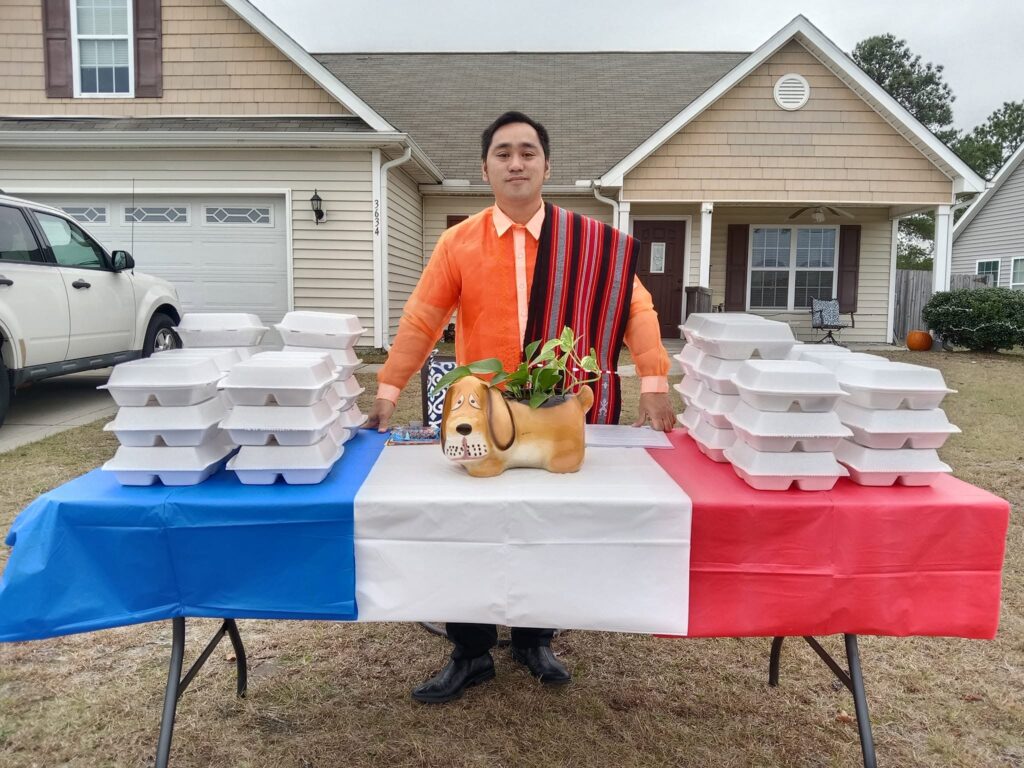

In 2015, Jimter learned he had a thyroid condition, and the cost of treating it landed squarely on a family with little to spare. Three years later, the ground gave way entirely. His mother was diagnosed with Stage IV breast cancer, and as the only member of his family with a stable job, he became the person everyone leaned on—covering her treatment, managing his own, and providing for his wife and young son all at once.
“Those years were among the most challenging of my life,” he shares with TGFM. The family borrowed from relatives, from friends, and eventually from loan providers, doing whatever it took to keep the bills paid. The 2:00 a.m. wake-ups became routine: lining up at government offices and at local politicians’ doors to secure Guarantee Letters that might reduce what the hospital charged.
Then, in 2020, his mother passed away. The loss nearly ended him. “The saddest thing happened in 2020 when my mother passed away,” he recalls, describing a grief so heavy it made him “almost gave up in my life.”
What kept him upright, he says, was faith and the people still counting on him. The experience did not just wound him—it clarified something. He looked at his growing son and made a decision that would reshape the family’s future. He did not want the boy to one day face the same helplessness he had faced with his mother. “I do not want him to have the same struggle that I had,” he says. When a friend introduced him to the J-1 Teacher Exchange Program, he recognized it for what it was: a door.
He walked through it in August 2022.
A science teacher who became a math teacher
There is a small twist in how Jimter’s American classroom came to be. He had applied to teach science—the subject he’d built much of his early career around. What he was offered instead was mathematics. Rather than treat the mismatch as a setback, he leaned in, and the results speak in the precise language of data he now teaches.
During the 2024–2025 school year, his students posted growth numbers that put him in rare company: a 5.32 Growth Index and a 97 Growth Distribution Measure, placing him among the top 25 percent of teachers in all of North Carolina. The state took notice, awarding him a performance bonus in recognition of what his students had achieved. For a man who had once measured his worth in Guarantee Letters, the metrics of academic growth must have felt like vindication of a different kind.
His path to that classroom was long and, by any measure, distinguished. He began teaching in 2006 at Gentle Angels School in Marikina City, handling elementary science, language, and reading. After passing the Licensure Examinations for Teachers, he moved to Fort Aguinaldo Elementary School in Quezon City, where he taught from 2007 to 2022—fifteen years spent teaching mathematics, science, reading, social studies, and values education to a steady stream of learners.
He did not stay in his lane. Over those years he served four terms as President of the Teachers Club, was elected President of the CD 3 Quezon City Association of Elementary School Paper Advisers, and led the Quezon City English Coordinators Club. He coordinated the School Improvement Plan, advised the school paper, ran the Boy Scout program, and served as the school’s English academic coordinator. The résumé reads like that of someone who never quite learned to say no to a responsibility—and who was better for it.
Teaching, for Jimter, was never a fallback. It was the first thing he ever wanted to be. As a child, he played “school” with his younger sister and cousins, and he was always the teacher. “Looking back, those childhood moments reflected a dream that I was fortunate enough to achieve,” he says. Becoming a teacher, he adds, “has been one of the most fulfilling journeys of my life.”
Learning a new country one accent at a time
Arriving in the United States confident in his English, Jimter quickly discovered a gap between the language he knew and the language people actually spoke. He was fluent in the polished, academic English of textbooks and lesson plans. What tripped him up was everything else—the accents, the idioms, the slang, the offhand way colleagues and parents and students strung words together.

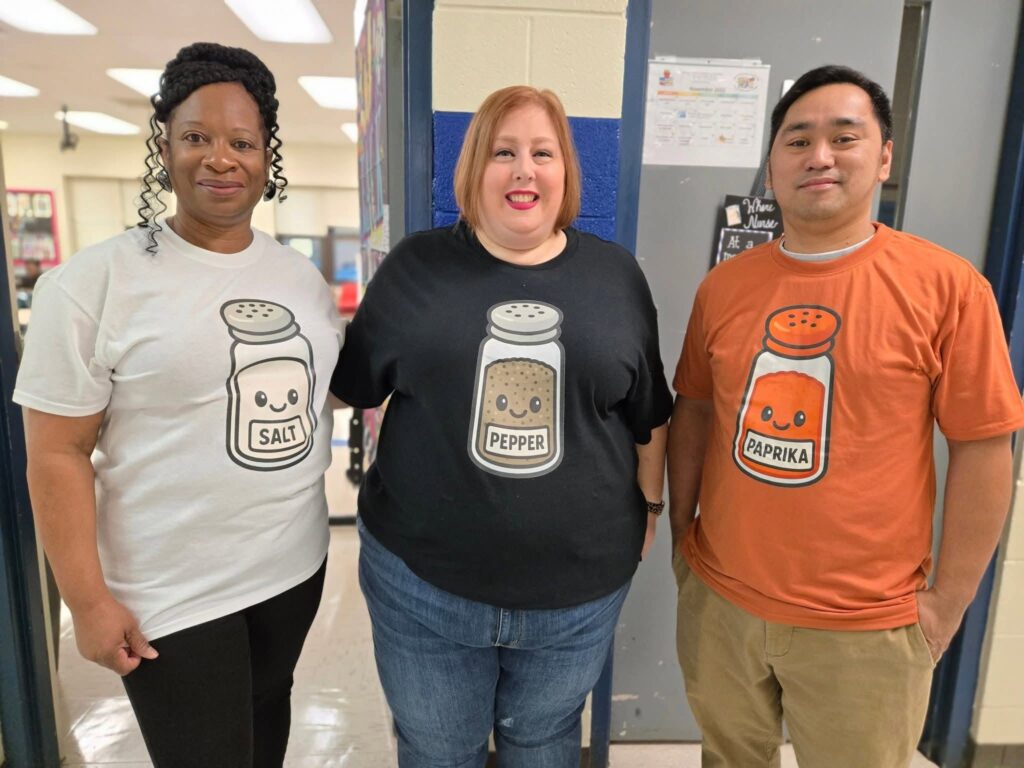
“I soon realized that I was more familiar with standard academic English than with everyday conversational English,” he says. So he adjusted the way anyone learns a place: by listening harder, asking more questions, and letting confidence rebuild itself over time.
Technology was its own mountain. In the Philippine public school system he’d come from, much of the work was still done on paper. In North Carolina, nearly everything—lesson planning, assessments, parent communication, professional development, administrative paperwork—lived online. He did not consider himself tech-savvy, and at first the transition was, in his word, overwhelming. He climbed it the same way he’d climbed everything else: continuous learning, help from colleagues, and a stubborn willingness to adapt until the tools stopped intimidating him.
Then there was the culture of the classroom itself. Some students spoke to teachers in ways that initially struck him as disrespectful. He watched conflicts play out and saw parents who were slow to acknowledge their child’s part in them. Rather than harden, he tried to understand. He came to see that many students were simply expressing themselves within a different social framework than the one he’d known. The realization let him lead with patience and empathy without lowering the bar he set for behavior.
But the hardest part of leaving home was, predictably, leaving home. The homesickness in those first months was crushing. “There were many nights when I called my wife in tears, telling her that I wanted to give up and return home,” he says. Her encouragement, more than anything, kept him from booking a flight back. Determined not to endure the separation any longer than necessary, he worked to bring his wife and son over just five months after he arrived. The kindness of fellow teachers and new friends did the rest, reminding him he wasn’t facing the country alone.
The LEGO sets he never had
Ask Jimter what working abroad has given him, and he does not begin with a salary figure. He begins with a small plastic building block.
“Growing up, I never owned a LEGO set,” he says, remembering the envy he felt toward cousins whose collections he could only admire. Today, one of his quiet joys is buying LEGO sets for his son—almost every month. It is a small purchase that undoes an old ache, a father handing his child the childhood he himself was denied.
The same impulse runs through how he provides for his wife, giving her the handbags and shoes she once only looked at, a modest thank-you for years of sacrifice. And it runs, still, back to the Philippines, where he continues to help family members with their financial needs. “For me, working abroad is about much more than earning a higher income,” he says. “It is about breaking the cycle of financial hardship.”
That sense of purpose has spilled beyond the classroom. Drawing on a background in Philippine folk dance, he was invited by the Philippine American Club of Fayetteville to serve as their cultural dance choreographer, a role he’s held since August 2025. It is a fitting second act for a man who once wove movement and dance into his lessons to keep students engaged—now using the same tradition to keep a community’s heritage alive far from home.
What he wants his kababayan to know
Jimter is entering the final year of his contract, and he is already thinking about what comes next. He would like to explore teaching in other countries, gathering more perspectives and more cultures along the way. But he is equally clear-eyed about the obligation that awaits him: the two-year return to the Philippines required under the J-1 program. He does not see it as a penalty. He sees it as a chance to give something back.
He plans to hold free seminars and sharing sessions for Filipino teachers who dream of teaching abroad, walking them through the challenges and opportunities he learned the hard way. “I want my journey abroad to create a positive impact not only on my own family and career but also on fellow educators,” he says.
For those already overseas and struggling, his advice is grounded in the same faith that carried him through 2020. Be grateful, he urges, because what you have now is something you once prayed for. Be responsible with every decision—financial, professional, personal—because any of them can strengthen or endanger everything you’ve built. Stay humble. And above all, choose kindness. “Many people can become successful,” he says, “but not everyone chooses to remain compassionate and respectful when they gain financial stability.”
He is candid that the path is not for everyone. Working abroad, he says, “is not an easy journey”—it demands patience, adaptability, emotional strength, and the courage to step into uncertainty far from everything familiar. He returns, again and again, to a phrase Filipinos use about carrying their dreams in their luggage when they leave home. He’d add one thing to the suitcase.
“I believe we should also carry countless prayers,” he says, “because faith, courage, and perseverance will help us overcome the challenges along the way.”
For a man who once measured his mornings in hospital lines and Guarantee Letters, and who now measures them in growth indices and LEGO bricks, the math finally balances.
