



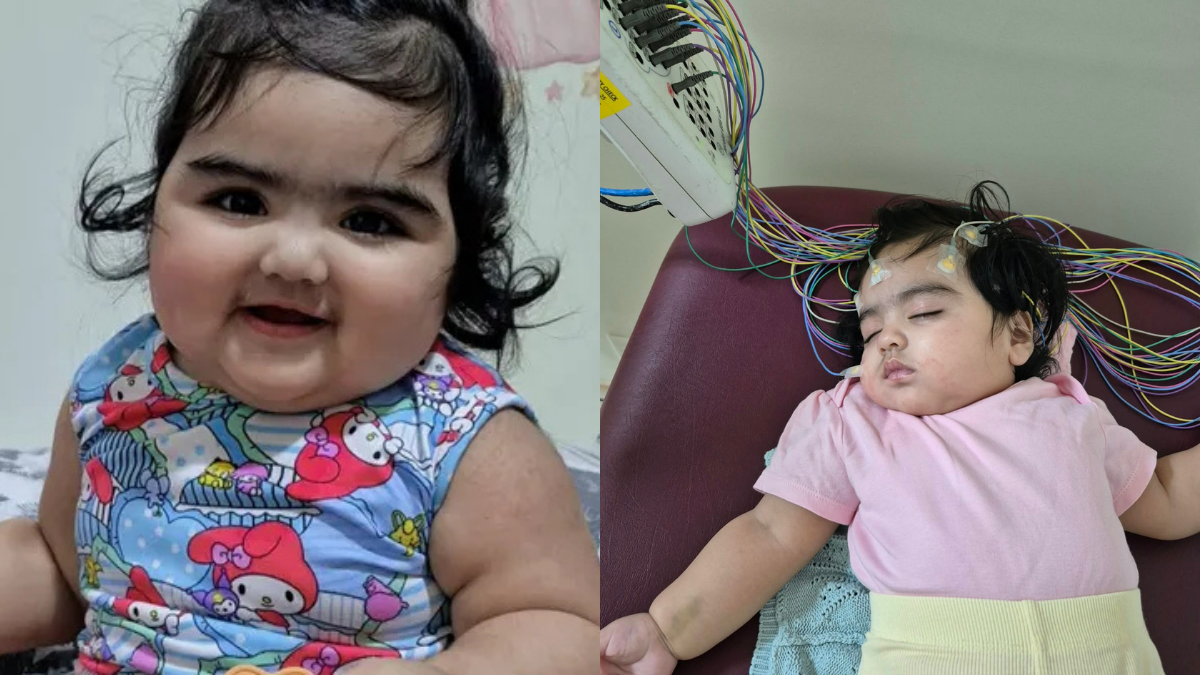

A Filipina nurse working in Saudi Arabia and her husband have launched a public appeal to fund the medical care of their young daughter, who has been diagnosed with an ultra-rare genetic disorder that has no cure.

Dian Sylvie Kenç, a Filipina nurse, and her husband Erbil Kenç, a Turkish national who works as a restaurant manager, are seeking assistance for their daughter, Amirah, through an online fundraiser. As of this writing, the campaign has raised €515 of its €9,000 goal from eight donations.
Amirah was born in Saudi Arabia and appeared to develop normally at first, her parents said. As she grew, they noticed she was not meeting expected milestones — she was not rolling over or crawling on schedule and needed support to sit. The family later observed episodes in which her head would suddenly drop and her eyes would roll upward, which became a growing concern.
A series of medical investigations followed, including CT scans, an MRI under sedation, and EEG testing. While the CT and MRI did not reveal major structural abnormalities, her EEG was abnormal. Doctors diagnosed her episodes as seizures, including infantile spasms and atonic-type episodes, and at one point her EEG showed modified hypsarrhythmia, a severe pattern associated with epileptic spasms.
The family tried several treatments, including Vigabatrin, Prednisolone, Keppra, and Clobazam, but Amirah continued to experience episodes, and managing her condition remained difficult.
Genetic testing eventually provided an explanation. Amirah was diagnosed with SLC35A2-CDG, a congenital disorder of glycosylation, type IIm — a rare genetic condition that affects how cells process and use certain sugars essential to normal development and body function. Because glycosylation is important throughout the body, the effects can be especially significant in the nervous system, leading to seizures, developmental delay, low muscle tone, and feeding difficulties, among other challenges.

According to her mother, there is no cure for the condition, though a supplement produced in Germany may help. She said the supplement is not available in Saudi Arabia or the Philippines. Research into D-galactose supplementation for SLC35A2-CDG has reported improvements in some patients’ clinical scores, growth, and development, but specialists caution that it is not a guaranteed cure and should only be given under medical supervision.
Because the disorder is rare, the family said Amirah requires specialized medical care, regular neurological monitoring, genetic evaluation, medications, therapies, nutritional support, and access to treatment centers experienced with the condition. The costs of consultations, diagnostic and genetic testing, medications, therapy, specialized nutrition, and travel to appropriate medical centers have placed a heavy financial burden on the family.
“As parents, we are doing everything we can for our little girl,” the family wrote in their appeal. “We want to give her every possible opportunity to develop, learn, and have the best quality of life she can.”
The parents are appealing to family, friends, and the wider public for support, noting that any amount can make a difference. They added that those unable to donate can still help by sharing the fundraiser.
“She is our precious little girl, and we will continue fighting for her every step of the way,” they said.
To help, visit this GoFundMe link or message Dian directly at +966 57 676 3448.
