



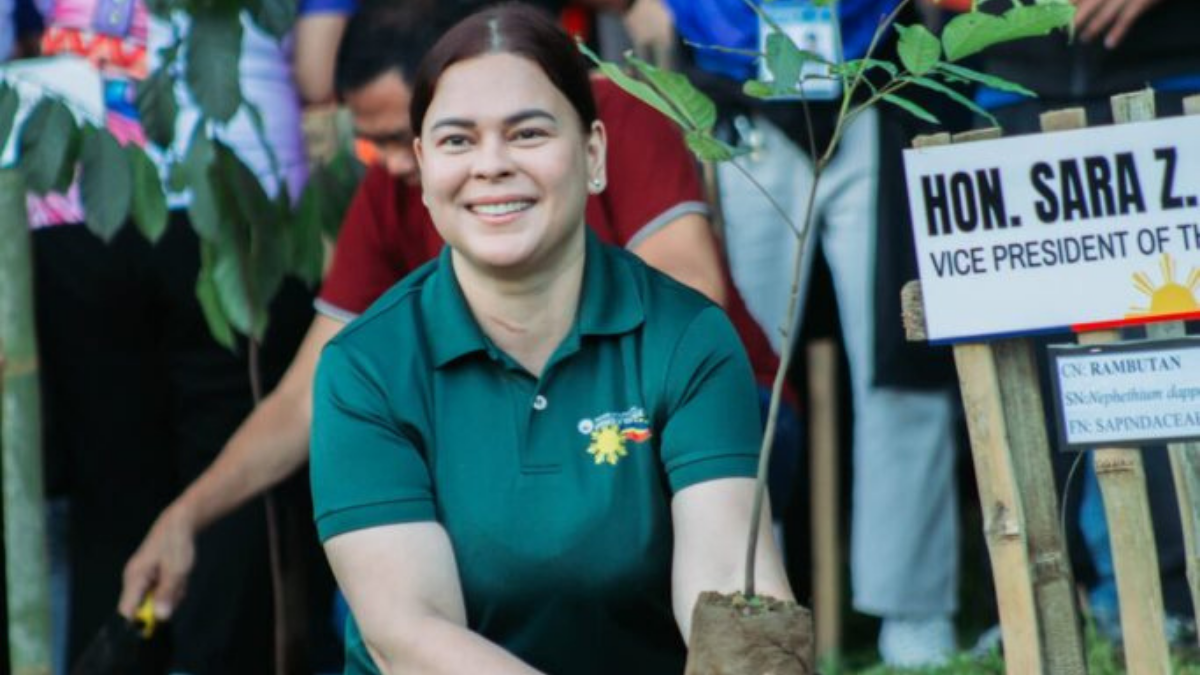

The Office of the Vice President charged tree-planting drives, Christmas parties, wheelchair distributions, and gift-giving to its confidential funds — none of which are permitted under the rules governing such spending, a state auditor testified Tuesday.

Commission on Audit auditor Xylene Mae del Campo gave that account as she was cross-examined by private prosecutor Lorna Kapunan at the resumption of Vice President Sara Duterte’s impeachment trial. Reading from the OVP’s own liquidation reports for confidential fund use starting December 2022, del Campo enumerated activities that ranged from thanksgiving events and coordination meetings to medical missions and awards ceremonies run out of the office’s satellite branches.
Among the first entries she read was a Department of Education “2022 Partners Appreciation Night” in Mandaluyong City, dated December 13, 2022. Asked whether such an event counted as a confidential activity, del Campo said it did not appear in the list of allowed uses. She went on to cite a December 15 patriotism campaign linked to the Knights of Rizal Supreme Council in Baguio City, two Christmas activities in Tondo on December 17, a consultation with Manila barangay chairmen, and a string of December 17 thanksgiving and update meetings in Quezon City involving a local TODA group, transport network operators from TNVS, Angkas and food delivery, and the persons-with-disability sector.
Kapunan asked del Campo to restate the definition and purpose of confidential funds. The auditor answered that they are the lump-sum amount under the General Appropriations Act meant for an agency’s confidential activities. Asked directly whether tree-planting, the several Christmas parties, and the various awards ceremonies fit that definition, she replied simply, “No.”

The provision del Campo returned to repeatedly, Item 4.8 of Joint Circular No. 2015-01, limits confidential spending to a narrow set of security purposes: buying information for programs tied to national security and peace and order, renting vehicles for confidential activities, maintaining safehouses, procuring supplies for operations that cannot pass through regular channels without compromising intelligence work, and paying rewards to non-employee informants who help uncover or prevent illegal activity endangering agency personnel or property. Anything beyond that requires authorization under the GAA or a special law.
Del Campo is the prosecution’s fourth witness on Article I of the Articles of Impeachment, which alleges Duterte misused the confidential money allotted to her offices from December 2022 through the third quarter of 2023. She and an earlier witness, COA state auditor Roderick Wamil, both belong to the agency’s Intelligence and Confidential Funds Audit Office, which reviews confidential allocations.
Wamil had earlier flagged a separate issue: P40 million of the OVP’s fourth-quarter 2022 allocation was spent on medicines described as informant rewards, which he said were disallowed because the acknowledgment receipts showed no proof of payment or of successful intelligence work. He tied that finding to the same Item 4.8, noting the medicine purchases were “not part of the enumeration under Item 4.8.” On August 4, he made comparable observations on the OVP’s 2023 spending, which included P42 million in the first quarter and P40 million in the second quarter, again on medicines and again without documents evidencing payment or operational success.
The audit office has issued notices of disallowance covering P73 million in confidential spending from the fourth quarter of 2022 and the full P375 million disbursed across the first three quarters of 2023. The COA en banc has already affirmed the disallowance on the P73 million.
