



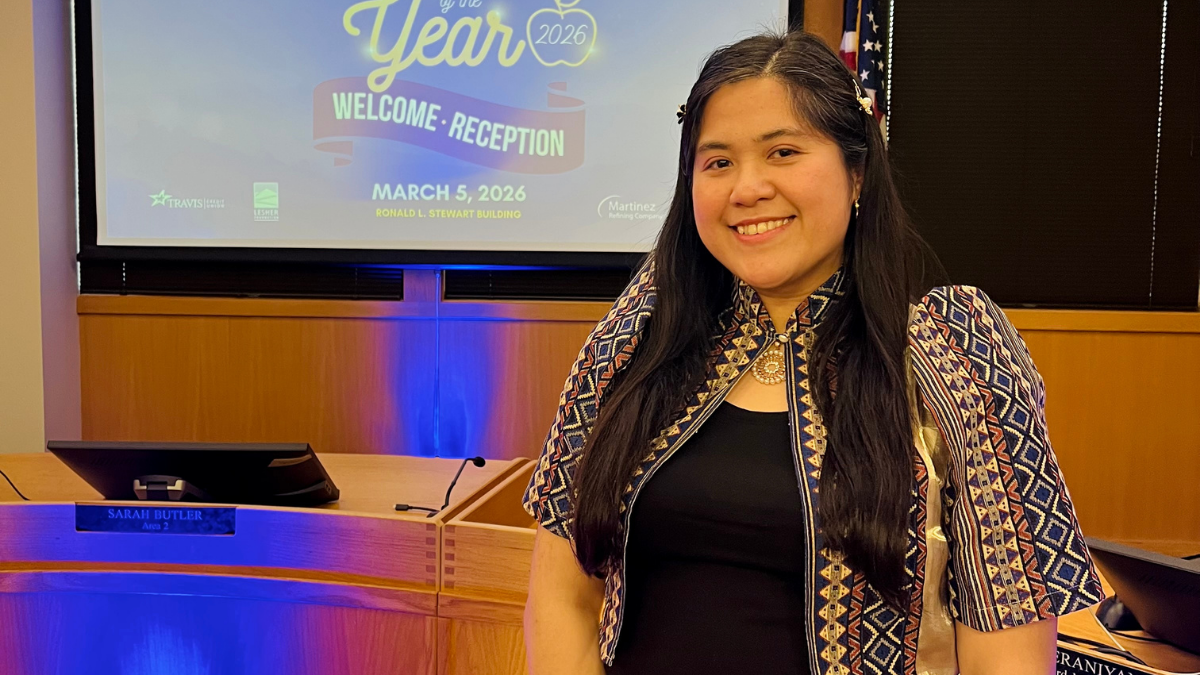

The photographs tell one story: a Cum Laude graduate from the University of Santo Tomas, a Licensed Professional Teacher, a young woman with a special education degree and a future mapped out in the Philippines. The reality, when she landed in California in 2013, was a certified nursing assistant program and a job planning bingo afternoons and music hours for elderly residents and veterans in a skilled nursing facility. Mary Erica Acebu did not see that gap as a demotion. She saw it as the price of admission.

“At the time, I simply embraced the opportunity that was in front of me,” she says of those first years. “Looking back, I realize that every experience prepared me for the next chapter of my life.”
Thirteen years later, that chapter reads very differently. Today Mary Erica is the Director of Technology, Data, and Assessment for the Oakley Union Elementary School District in California, her first district-level leadership role. But the distance between the nursing home and the district office is not the most striking part of her story. The most striking part is the eleven years it took her to simply be in the same room as her mother again.
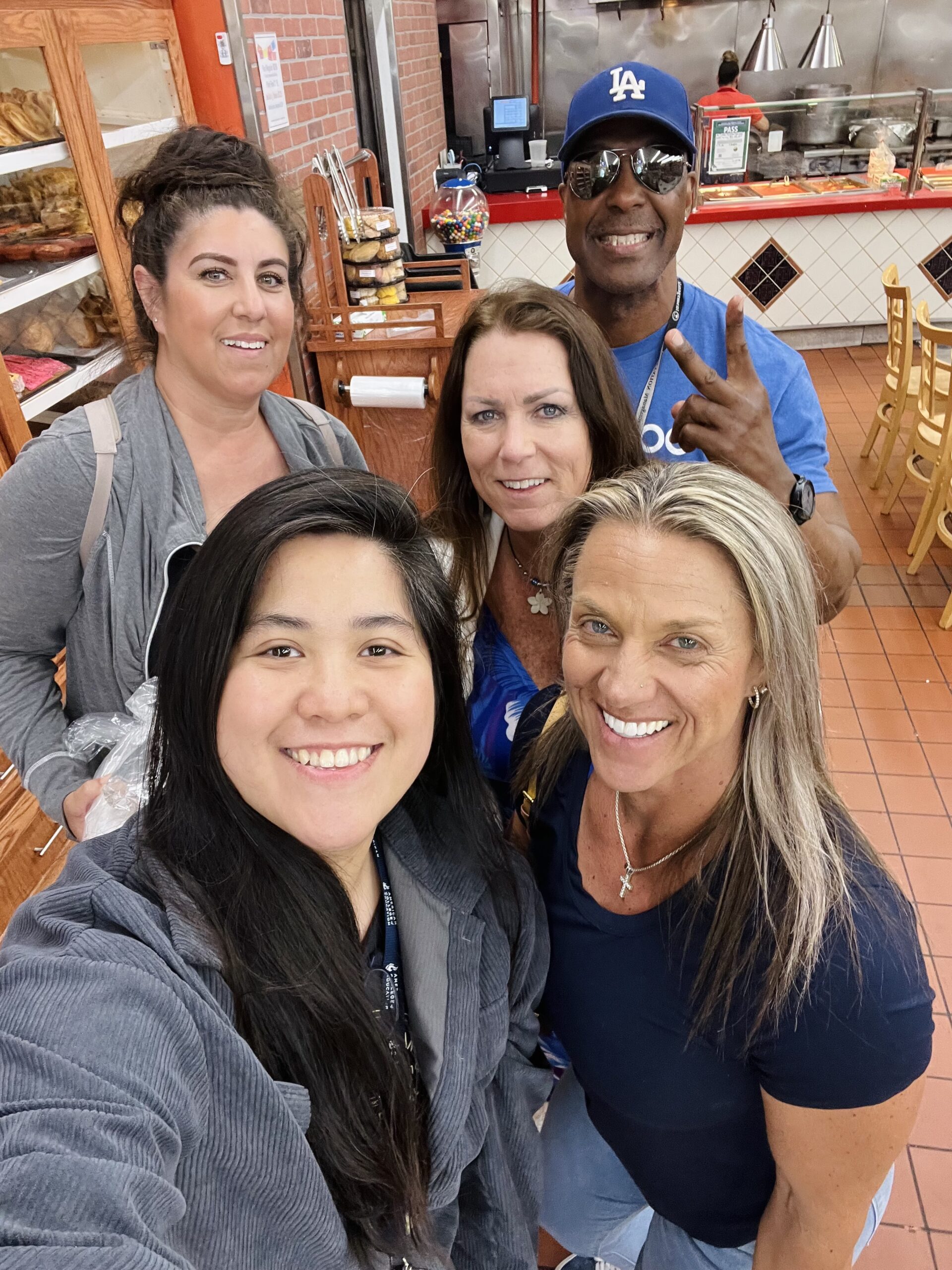
The long separation
Education runs in the family. Mary Erica’s maternal grandmother served as a school principal in the Philippines, and the 33-year-old traces her own instincts for leadership and service back to that lineage. But before education became a career, family became a distance to be measured in years.
In 2001, her mother immigrated to the United States, chasing the same promise that has pulled generations of Filipinos abroad: better opportunities for the people left behind. The last time Mary Erica saw her mother in person was 2002. She was a child. Like so many sons and daughters of overseas Filipino workers, she and her younger brother stayed in the Philippines, raised by a father who filled the space their mother’s sacrifice had opened.
That father worked as an administrator in the Information Technology Department at a bank’s main office. His was not the story that gets told at reunions and homecomings, but it was the one that held the household together. “His steady presence, guidance, and unconditional support gave us the stability we needed while our mother sacrificed to provide opportunities for our future,” she recalls. Both parents, in her telling, made sacrifices of different shapes. One left. One stayed. Neither is the hero of a simpler version of the story, because there is no simpler version.
The family would not be whole again until 2013, when the young teacher immigrated to California, nearly eleven years after that last embrace. She describes the reunion plainly, without embellishment, which somehow makes it land harder: “That reunion remains one of the most meaningful moments of my life.”
Starting over, on purpose
Arriving in America with a teaching license and honors from one of the Philippines’ most respected universities might have felt like arrival. It wasn’t. It was a starting line.
The credentials she had earned in Manila did not transfer neatly into a California classroom, so she did something that requires a particular kind of steadiness: she started over in a field that wasn’t hers. She completed CNA training and spent close to two years as an Activity Assistant, designing recreational and therapeutic programs for aging residents. It was not the plan. It was, she insists, an education of its own.
“That experience taught me compassion, patience, empathy, and the importance of preserving dignity and human connection,” she says. Those are not throwaway virtues in her account. They are the same qualities she would later carry into special education classrooms and, eventually, into the systems-level decisions of a district office. The nursing home was not a detour from her purpose. It was a rehearsal for it.
When the teaching credential finally came through, she returned to the work she had wanted all along. She spent two and a half years at a non-public school in Antioch, then moved to the Mt. Diablo Unified School District as a Mild/Moderate Special Education teacher — a role she would hold, and grow far beyond, for the better part of a decade.
Special education was never a fallback for her. It was the calling she discovered as a student, during her student teaching in the Special Education Department at St. Joseph’s College of Quezon City, working with children from elementary through high school. The students moved her. So did the teachers who mentored her. “Their compassion, patience, creativity, and unwavering belief in every child’s potential helped shape the educator I wanted to become,” the former special education teacher says. While waiting out the immigration process, she returned to St. Joseph’s as a volunteer teacher — a bridge, she calls it, between the education she received in the Philippines and the career she would build in California.
More than one classroom
If there is a turning point in her story, it is not a single dramatic moment. It is the slow, deliberate way she kept refusing to stay in one lane.
Over her ten years with Mt. Diablo, the special educator became a Technology Integration Leader, a Special Education Department Chair, a mentor teacher, a teacher residency mentor, and a professional development presenter. She stacked certifications — Google Certified Educator Levels 1 and 2, plus training in Gemini, Brisk, MagicSchool, Canva, and Cisco computer basics — and was named to the district’s Artificial Intelligence Task Force, where she worked with district leaders on the responsible use of AI in schools.

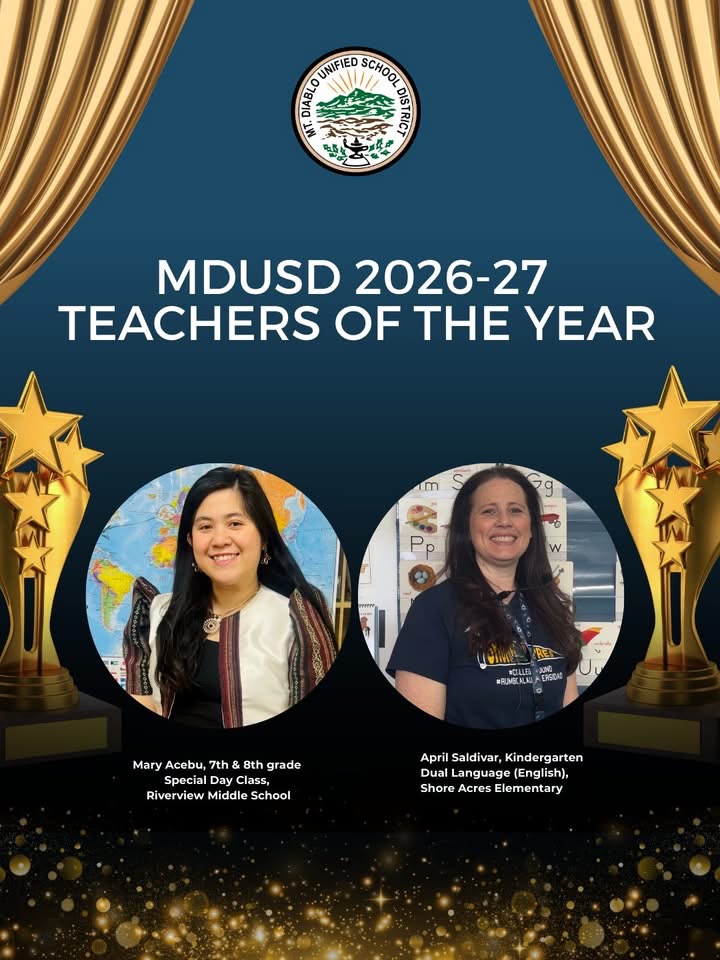
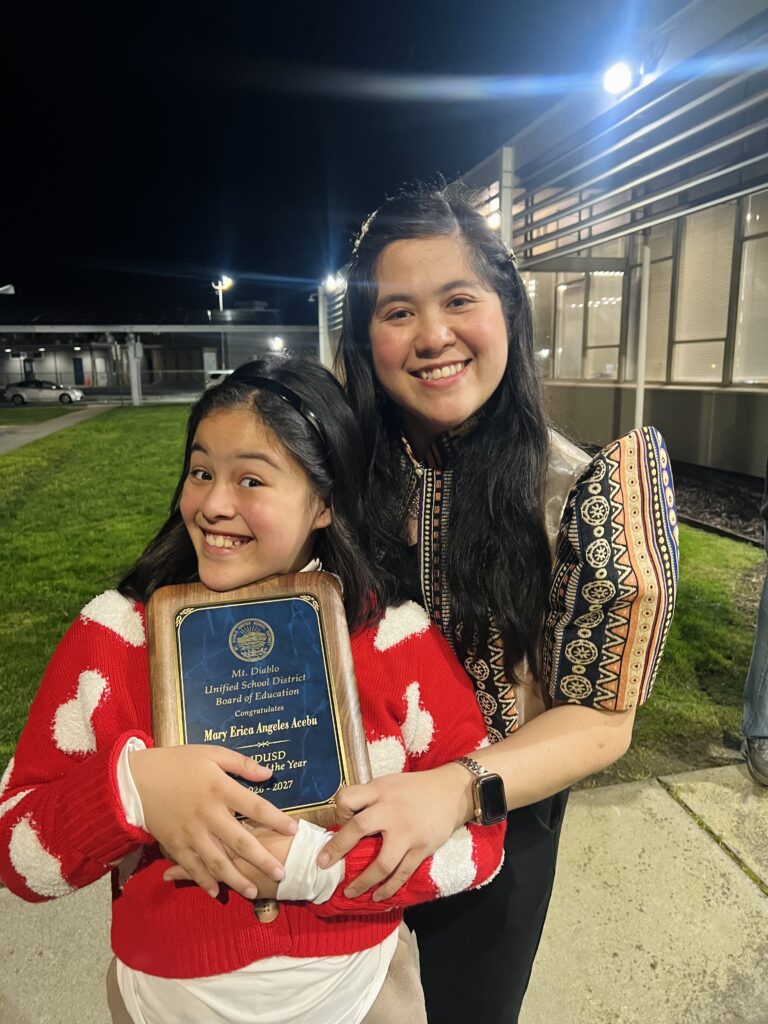
That last assignment brought her an unexpected kind of recognition. National Public Radio featured her work exploring how artificial intelligence could support teachers by trimming administrative workload without eroding the human relationships at the heart of the job. Around the same time, Mt. Diablo named her its 2026 Secondary Teacher of the Year.
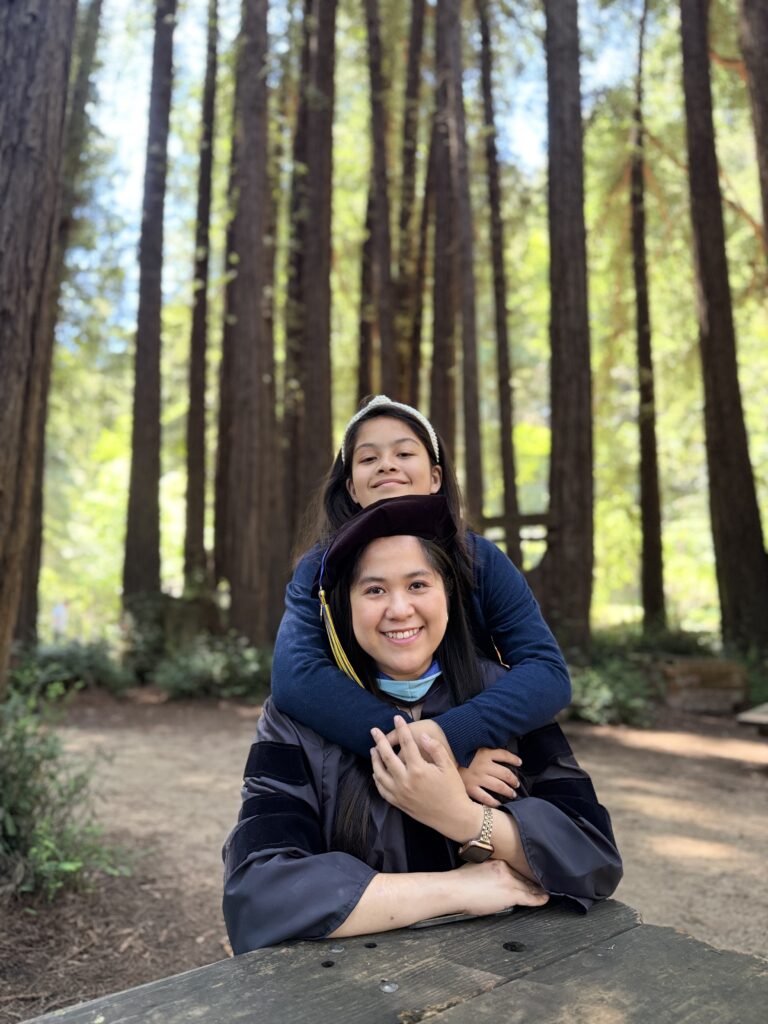
The recognition arrived alongside a punishing personal schedule. She earned a Master of Education in Educational Technology in 2019, graduating with a 4.0 GPA as a Distinguished Graduate. In 2026 she completed her Doctor of Education in Instructional Technology — working full time and raising her daughter as a single mother the entire way. Her dissertation, which examined how teachers perceive technology integration in a Title I middle school, was published through ProQuest Dissertations & Theses Global. She is now part of Cohort V of the Contra Costa County Office of Education’s Preliminary Administrative Credential Program.
She does not romanticize what that stretch cost her. “There were many late nights spent studying after she had gone to bed, weekends dedicated to research, and moments when I questioned whether I could continue,” she admits. The way through, she found, was narrow and unglamorous: “Those experiences strengthened my resilience and taught me to focus on one step at a time.”
The educator who left the classroom
After ten years with Mt. Diablo, she accepted the Oakley Union role — a move up and out, into district-level leadership. The job is sprawling by design. It pulls together instructional technology, student information systems, data-informed decision making, assessment programs, digital learning, infrastructure, cybersecurity, software implementation, vendor partnerships, and strategic planning. On any given day she might be deep in enrollment figures, budgeting, or a cybersecurity question she had never considered a year ago.
She is candid that she is still learning it. That, oddly, is the part she likes best. “No two days are ever the same,” she says. “Every day I am exposed to something different… It has challenged me in the best possible way and reminded me that growth never stops.”
Her framework for the work is unfussy. Technology supplies the tools. Data shows where things stand. Assessment measures whether students are growing. Leadership brings people together to make thoughtful calls. Separately, she argues, each of those is limited; together, they can actually move a district. And underneath all of it sits a conviction that has survived every job title she has held: the systems only matter because of who they serve. “When we make a process easier or more efficient, we give educators more time to focus on students,” she says. “That is what makes this work meaningful to me.”
For all the distance she has traveled from the special education classroom, she resists the idea that she has left it behind. “I still consider myself an educator first,” the district director says. “My classroom may look different today, but my purpose remains the same: to support people, remove barriers, and create opportunities for others to succeed.”
What she wants her kababayans to hear
Ask her what she would tell other Filipinos working overseas, and she does not reach for a slogan. She reaches for her own résumé — specifically, its least glamorous line.
“I graduated Cum Laude from the University of Santo Tomas and became a Licensed Professional Teacher, yet my first job in the United States was as an Activity Assistant in a skilled nursing facility,” she says. The point is not the fall. It is the refusal to read it as one. “Do not be afraid to start over. There is dignity in every honest job, and there is value in every experience if you are willing to learn from it.”
Her other counsel is just as plain: keep investing in yourself, but understand that credentials alone open nothing. “Education has always opened doors for me, but it was curiosity, humility, and perseverance that helped me walk through those doors.” Keep learning, she urges, ask questions, find mentors, and extend the same encouragement to others, because “we never truly succeed alone.” And do not forget where you came from — the resilience, compassion, respect, and faith that, in her account, are less cultural decoration than working equipment.
Those values are also, she is careful to say, not hers alone to claim. When people fixate on the milestones — the degrees, the Teacher of the Year award, the published dissertation, the NPR feature, the district title — she redirects the credit to what she calls her village. Her grandmother the principal. Her mother, who left. Her father, who stayed. The teachers, students, colleagues, and leaders who believed in her along the way.
And most of all, her daughter, who dreams of becoming an engineer. It is a path entirely her own, which is exactly the point. “I have never wanted her to become another version of me,” the mother of one says. “I want her to know that she can dream boldly, work hard, lead with integrity, and create a life filled with purpose and service.”
Today, both of her parents live with her in California. After the years apart — the 2002 goodbye, the eleven-year wait, the reunion she still counts among her greatest blessings — the arithmetic of her family has finally come back around to togetherness. She does not take a day of it for granted.
“Some of life’s greatest dreams take time, patience, and sacrifice to become reality,” she says. Hers took thirteen years abroad, one improbable stint in a nursing home, a doctorate earned in stolen hours after bedtime, and a career that kept insisting on becoming something larger than a single classroom. If there is a lesson she hopes readers carry off, it is the one her own life keeps proving: where you begin does not determine where you can go.
