



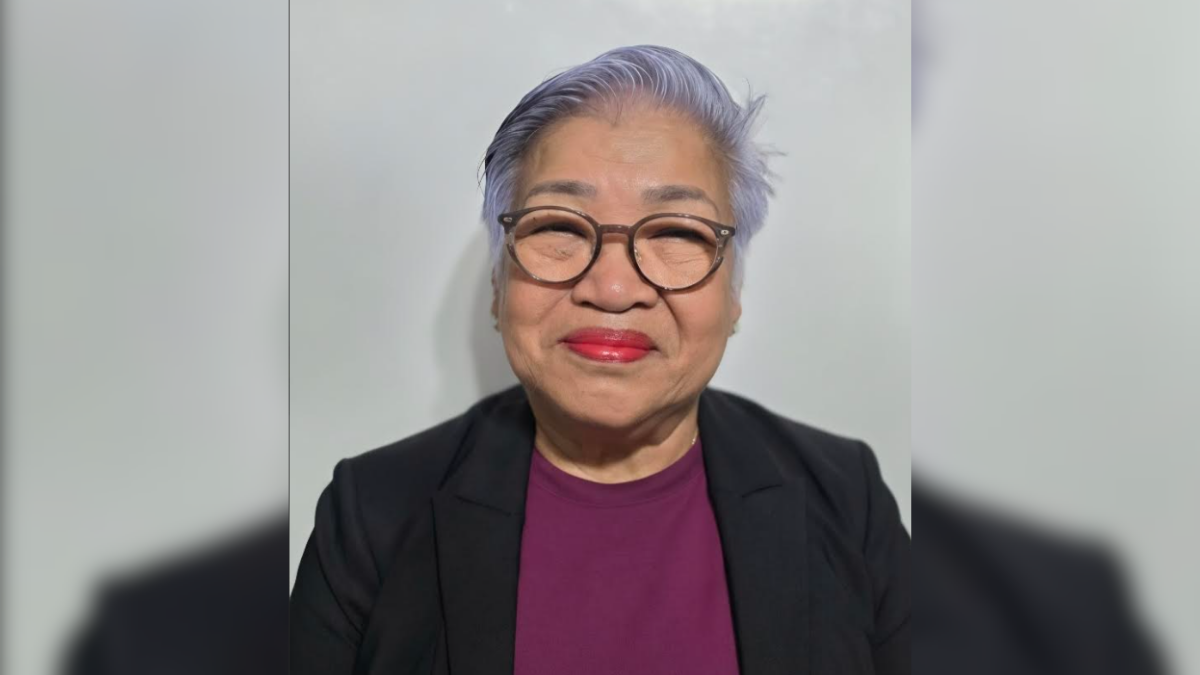

Long before she became a military officer, chief nurse, educator, and mentor to generations of nurses, Col. Luzviminda (Ret.) was simply a young woman trying to understand where life would lead her.

Nursing was not her original dream. She once hoped to become a dentist. But through the encouragement of her father, a soldier who believed she had the qualities needed for service, and the example of her eldest sister who was already a military nurse, she found herself drawn toward a different path.
What began as a decision influenced by family eventually became a lifelong commitment.
Over the next four decades, nursing would take Luzviminda to military hospitals across the Philippines, where she cared for patients, led healthcare teams, and helped develop the next generation of nurses. Her journey would eventually bring her to some of the highest leadership positions in military nursing, including serving as Chief Nurse of V. Luna Medical Center.
But for Col. Luzviminda, leadership was never defined by rank or position. It was defined by responsibility.
“It is not just about giving orders,” she shared when reflecting on her leadership philosophy. “It is about serving others, listening, showing compassion, and making sound decisions, especially in difficult situations.”
Her career is a testament to how nursing extends far beyond bedside care. It can become a platform for leadership, education, and nation-building. Through every assignment, challenge, and opportunity, she carried one belief: that the true measure of a nurse leader is not only the care they provide, but the people they inspire.
Yet when asked about her greatest achievements, she does not begin with her rank, awards, or prestigious assignments. She speaks about people.
“The greatest accomplishment has always been the people I have mentored and inspired throughout my career,” she shared. “Seeing those I trained succeed in their own careers has been more rewarding than any individual recognition I received.”
That perspective captures the heart of her remarkable career: a life built not around personal achievement, but around creating opportunities for others to rise.
A Calling She Never Expected
Interestingly, nursing was not the first dream Col. Luzviminda imagined for herself.
Growing up, she wanted to become a dentist. However, life had a different path prepared for her. Her father, a soldier in the military, recognized qualities in her that she had not yet discovered herself. He encouraged her to pursue nursing and challenged her to consider military service.
At the same time, she found inspiration from her eldest sister, who was already serving as a military nurse. Watching her sister dedicate herself to caring for others revealed something powerful: nursing was not simply a profession. It was a life of purpose.
“At first, I simply followed my father’s advice,” she recalled. “Looking back now, I realized it was one of the greatest blessings of my life.” That decision opened a door to a lifetime of service.
After graduating from Marian School of Nursing in 1974, she continued expanding her knowledge and skills, earning her Bachelor of Science in Nursing from De Ocampo College of Nursing and later completing her Master of Arts in Nursing at the Philippine Colleges of Health and Science.
For Col. Luzviminda, education was never just about credentials. It was preparation for greater responsibility. She believed that excellent nurses must remain lifelong learners because healthcare itself never stops evolving.
Answering the Call to Military Nursing
In 1976, Col. Luzviminda joined the Armed Forces of the Philippines, beginning a military nursing career that would span decades and take her across Luzon, Visayas, and Mindanao.
Military nursing demanded more than clinical expertise. It required resilience, adaptability, discipline, and the ability to remain composed during uncertainty. She cared for soldiers, their families, and communities in environments where healthcare needs often intersected with emergencies, conflict, and humanitarian challenges.
To prepare herself for these responsibilities, she pursued extensive military leadership training, including the Basic Female Medical Officers Course, Advance Nurse Officers Course, Command Nurse Officers Course, and the Command and General Staff Course. These experiences transformed her from a skilled clinician into a nurse leader capable of guiding teams through complex situations.
Her commitment to specialized practice also led her to complete Nurse Anesthesia training at the Armed Forces of the Philippines Medical Center from 1980 to 1981. She later served as a Nurse Anesthetist at Camp Awang Station Hospital in Maguindanao, Southcom Hospital in Zamboanga, and Fort Bonifacio General Hospital. For Col. Luzviminda, every assignment became an opportunity to learn, serve, and contribute.
Leading With Compassion and Discipline
As her career progressed, Col. Luzviminda was entrusted with increasingly significant leadership roles. She became Chief Nurse of several military hospitals, including Camp Melchor Dela Cruz Station Hospital in Echague, Isabela; Camp Odin Sinsuat (Awang) Station Hospital in Maguindanao; and Camp Capinpin Station Hospital in Tanay, Rizal.

At V. Luna Medical Center, she served in multiple leadership capacities, including Head Nurse, Supervisor, Assistant Supervisor, and Assistant Chief Nurse for the Training and Education Department. Before retiring from military service in 2008, she achieved one of the highest honors in military nursing: appointment as Chief Nurse of V. Luna Medical Center.
However, her leadership philosophy was never centered on authority alone. “My nursing background had a great influence on the way I led throughout my military career,” she explained. “Nursing taught me that leadership is not just about giving orders. It is about serving others, listening, showing compassion, and making sound decisions.”
For Col. Luzviminda, a leader’s responsibility was not simply to manage people but to develop them. She encouraged teamwork, open communication, and continuous professional growth among her nurses. She wanted those under her leadership to feel supported and empowered to become confident healthcare professionals. Her approach reflected a powerful truth about nursing leadership: the strongest leaders do not create followers. They create future leaders.
Breaking Barriers as a Woman in Military Leadership
Serving as a woman leader in both nursing and the military came with challenges. Col. Luzviminda understood that earning respect required more than holding a position. It required consistency, competence, and integrity. “One of the biggest challenges I encountered was leading people from different backgrounds, each with their own beliefs, practices, attitudes, and personalities,” she said.
Leadership required patience and adaptability. Every person responded differently, and effective leaders needed the wisdom to understand those differences while remaining fair and consistent. Rather than seeing these challenges as obstacles, she viewed them as opportunities.
Her career became evidence that women could thrive in demanding leadership environments and make meaningful contributions to both healthcare and national service. Through her example, she encouraged younger nurses and female officers to pursue leadership opportunities without hesitation. Her message was clear: capability is not determined by gender. It is demonstrated through dedication, preparation, and service.
Nursing Beyond the Bedside
Throughout her career, Col. Luzviminda witnessed nursing evolve dramatically. When she first entered the profession, many people viewed nurses primarily as bedside caregivers. Today, she sees nurses as essential contributors to national security, disaster response, humanitarian missions, research, education, and public health.
The COVID-19 pandemic highlighted this reality. Nurses became frontline responders, protecting communities while caring for patients during one of the greatest healthcare crises in modern history. But long before and beyond pandemics, nurses have always played vital roles during disasters, conflicts, and humanitarian emergencies.
Whether responding to typhoons, floods, earthquakes, or armed conflicts, nurses provide immediate care, perform triage, educate communities, and help rebuild lives. “Nurses have become essential partners in protecting the health and safety of our nation,” she said.
She believes the future of nursing will continue expanding. Modern nurses are not only caregivers. They are educators, researchers, advocates, innovators, leaders, and public health champions. This evolution, she believes, is something nurses should embrace with confidence and pride.
A Second Chapter: Shaping Future Generations
Retirement from military service did not mean retirement from service itself. In 2008, Col. Luzviminda entered another chapter of her mission by joining the Graduate Studies faculty of Concordia College of Nursing. She also served as a part-time professor at St. Paul College of Nursing. For eleven years, she mentored graduate students, guided nursing research, and helped prepare future nurse educators and leaders.
Her transition from military command to academic mentorship demonstrated a consistent theme throughout her career: wherever she was, her purpose remained the same. She developed people. Eventually, she stepped away from academia to spend more time with her family, relocating to New Zealand to be with her eldest daughter.
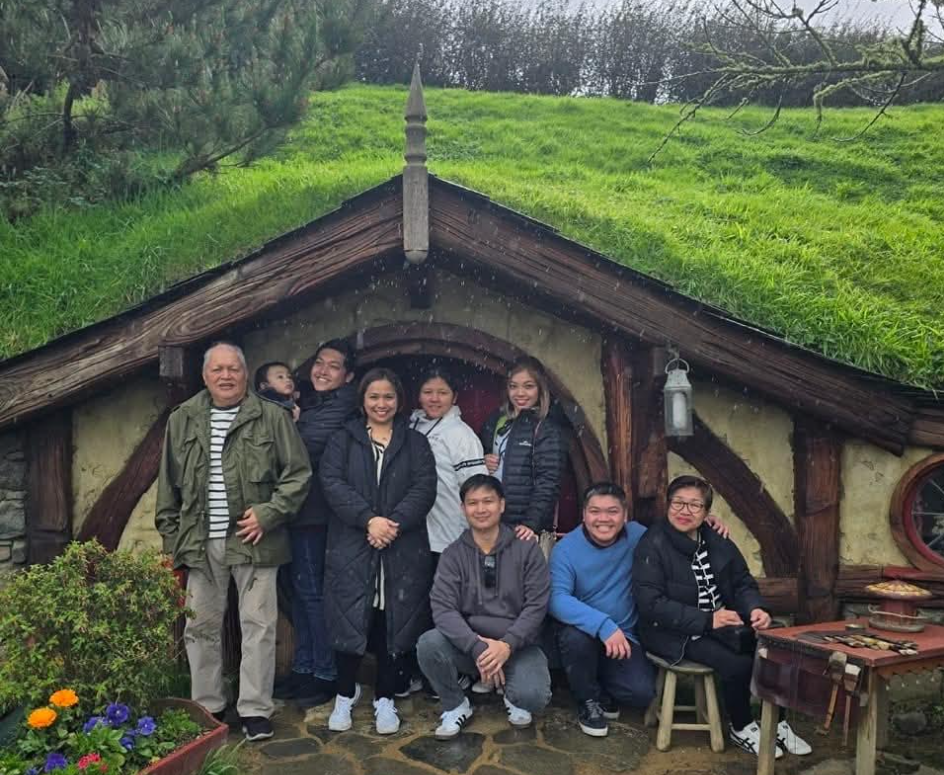
Today, she finds joy not only in reflecting on her decades of service but also in watching her family continue their own journeys of excellence. Her eldest daughter, Christine, works as a nurse at Auckland City Hospital in New Zealand. Her son, Eriberto Jr. III, is a mechanical engineer based in Florida, USA. Her youngest son, Ervim Charles, built a career as a chef in Melbourne, Australia. Now, one of her greatest joys is being a grandmother to Brie and Ethan.
After a lifetime spent nurturing young nurses, she now witnesses another generation growing before her eyes.
The Legacy That Lives Beyond the Uniform
Col. Luzviminda’s story is not simply about a military officer who achieved distinction. It is about a nurse who understood that service is measured by impact. The medals and recognitions she received, including the Combat Kagitingan Award, Military Merit Medal, Military Commendation Medal, and recognition as the Model Nurse Corps Officer of V. Luna Medical Center, represent her years of dedication.
But her true legacy cannot be displayed on a uniform. It exists in every nurse she trained. It lives in every patient she cared for. It continues through every student she inspired. Her advice to the next generation of Filipino nurses reflects the principles that guided her entire life: “Never stop learning, never stop caring, and never forget why you chose this profession.”
She encourages young nurses to embrace innovation, research, and technology while protecting the human qualities that define nursing: compassion, kindness, respect, and genuine concern for others. “True success is not measured by rank, medals, or titles,” she said. “It is measured by the lives you have touched, the people you have inspired, and the positive difference you have made.”
After more than forty years of service, Col. Luzviminda leaves behind a powerful reminder: leadership is not about standing above others. It is about standing beside them.
And sometimes, the greatest mark a leader leaves is not the position they held, but the people who became better because they were there.
