



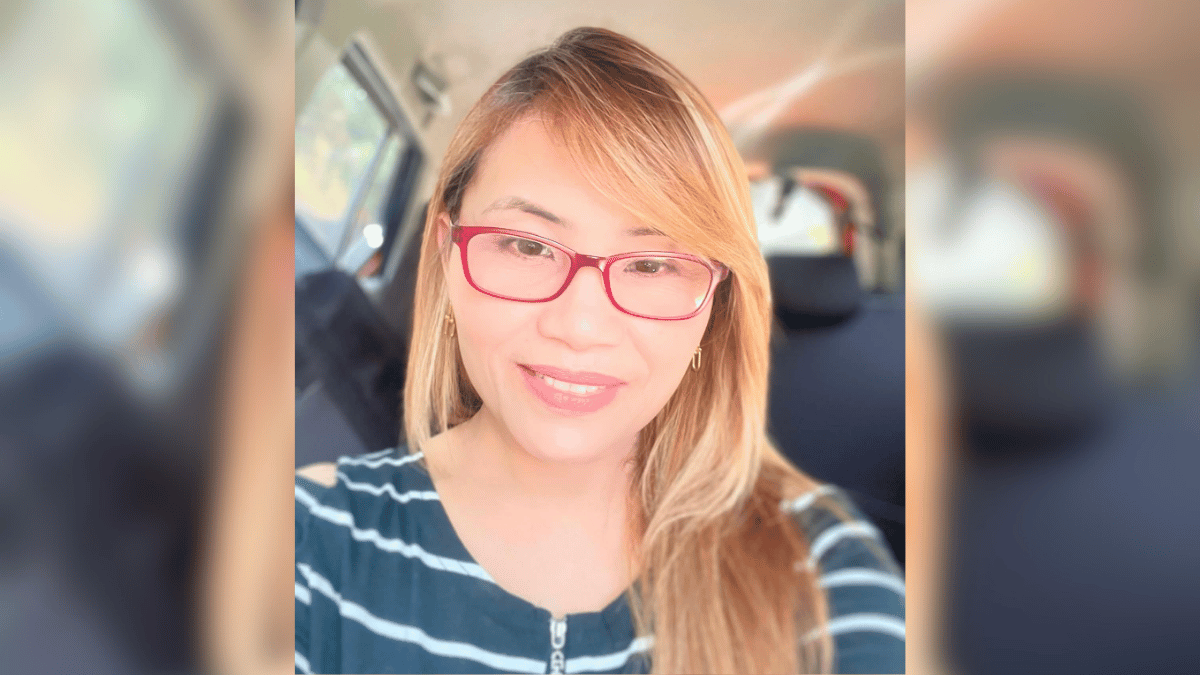

Everyone assumes a move abroad is an upgrade: better pay, brighter prospects, a cleaner start. Almost nobody talks about the version where you come home from work and cry, not once in a while but nearly every single day for months. That was the reality that greeted Dr. Shierryl A. Ambata when she landed in California in January 2024 to begin her first-ever job outside the Philippines — a Resource Specialist Program teacher walking into an American middle school in the dead center of the school year, when the routines were set, the students already knew one another, and she knew almost nobody.

She was 48, accomplished, and, by her own account, undone.
“There were nights when I would go home exhausted and just cry. Not once. Not occasionally. Almost every single day during those first few months,” she shared with TGFM. The tears had reasons stacked behind them — a foreign curriculum, unfamiliar paperwork, a classroom culture nothing like the one she’d spent her career inside. “I cried because I felt overwhelmed. I cried because I missed my family. I cried because I doubted myself. I cried because I wondered if I truly belonged here.”
A career built on the belief that education changes lives
Long before California, there was a full teaching life in the Philippines — one that started in an unexpected place. Dr. Shierryl began by teaching computer subjects in high school, helping students build the technical skills that would follow them into the workforce. From there she moved into special education, which is where the work stopped being about content and became something closer to a calling.

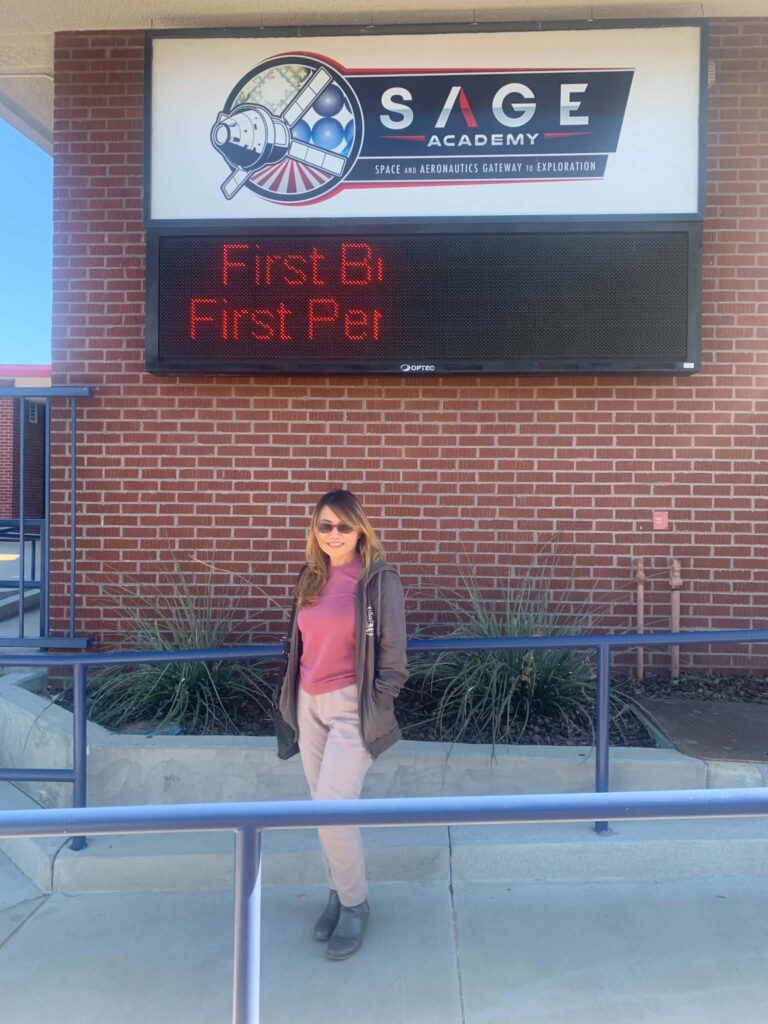
“I discovered that my greatest passion was not simply teaching content but helping students believe in themselves,” she says. That thread ran through everything that came after: transition programs for learners with disabilities, preparing them for life past graduation; college teaching; graduate-level instruction; her own advanced studies layered on top of a full workload. Different roles, one conviction. As she puts it, “I always believed that education should change lives, not just grades.”
Her present job carries a heavier administrative load than most people picture when they hear “teacher.” At Palmdale School District, she works with middle schoolers receiving special education services while also serving as an IEP case manager — coordinating with general education teachers, tracking student progress, keeping families in the loop, and building instructional strategies tailored to each learner. It is a role that demands equal parts patience, precision, and paperwork.
But the part that keeps her in it has nothing to do with any of that. “The best part of my job is not the lesson plans, meetings, or paperwork,” the special education teacher says. “It is seeing hope return to a child who once believed they could never succeed.”
Leaving the people who were always a walk away
To understand why the move cost her so much, you have to understand what she left. In the Philippines, family wasn’t a phone call — it was a short walk.
“Back home, our houses were literally just walking distance from each other,” Dr. Shierryl recalls. “We celebrated birthdays together, shared meals without planning, and knew that someone was always nearby whenever life became difficult.” Moving thousands of miles away meant surrendering that proximity, the casual certainty that help and company were minutes down the road.
So why go at all? Not for the reason people assume. “People often assume that working abroad is only about earning more money,” she says. Financial stability mattered, she’s clear about that — but it was never the whole story. She had good students in the Philippines, supportive colleagues, work she loved. The problem was precisely that everything felt safe.
“There came a point where I realized that growth sometimes requires stepping outside of the environment where we have become comfortable,” the Filipina educator explains. She wanted to test herself against an entirely different system, to learn inclusive education at a larger scale, to find out what kind of teacher she could still become. Her own framing is the one that stuck: “Moving abroad was not running away from something. It was running toward something bigger than myself.”
There’s a harder chapter behind that resolve, too — one she doesn’t hide. Back home, she was passed over for promotions she believed she had earned through years of work. “At that time, it hurt deeply. I questioned my worth and wondered whether all my efforts had been enough,” she admits. For a while, those closed doors felt like verdicts on her value. Only later did they look like something else entirely.

Learning to not know everything
What turned those brutal first months around wasn’t a single breakthrough. It was a slow, deliberate decision she made every morning — to stand back up.
“Little by little, I learned. I listened more. I accepted that I did not have to know everything immediately,” she says. For someone with a doctorate and decades of classroom authority, that surrender was its own kind of humility: asking questions, welcoming feedback, letting herself be a beginner again. The people around her made it survivable. “My mentors, instructional coaches, administrators, and colleagues patiently guided me whenever I doubted myself,” she recalls. “They reminded me that growth takes time and that every experienced teacher was once a beginner too.”
Her faith and her family carried the rest — every phone call, every prayer, every small win treated as something worth noticing. And gradually, the tears stopped being evidence of failure and started looking like foundation. “Today, when I look back, I realize that those tears became part of my foundation,” she says.
The turnaround eventually produced the kind of moment that makes the whole gamble legible. She designed instructional materials to help students with special needs grasp difficult mathematical concepts — hands-on, meaningful, built for learners who had failed at math before they ever reached her classroom. Then came the payoff no award could match. “Seeing students who once struggled finally say, ‘I get it now,’ is a feeling that no award can replace,” she says.
Many of those students arrive already convinced they can’t do it. “Some have lost confidence. Some struggle academically. Others simply need someone to believe in them long enough until they begin believing in themselves,” the RSP teacher explains. Watching that shift happen is, in her word, priceless.
From crying after work to steadying the next beginner
There’s a quiet symmetry to where she’s landed. The woman who once wept in her car after a full day of doubt now mentors the teachers walking in behind her — new special education educators facing the same fears she knew intimately.
“It is humbling to know that the same person who once cried after work and questioned whether she belonged is now encouraging other teachers to keep going,” she says. Her hardest months became her deepest well of empathy, and she uses it deliberately: she wants beginners to hear, out loud, that they are not alone and that it genuinely gets better.
That’s also where those old Philippine rejections finally resolve. Seen from California, the promotions she didn’t get look less like losses and more like redirection. “Sometimes, rejection is simply God’s way of redirecting us toward something greater,” she reflects. “I no longer see my setbacks as failures. I see them as stepping stones.”
Her plans don’t end at personal success. Whether she stays in the United States or someday returns home, she wants to strengthen special education programs, keep conducting research, keep building materials that make learning stick, and keep raising up new teachers. “More than titles or recognitions, I want my legacy to be measured by the lives I have helped change,” she says.
For the kababayan abroad in the middle of their own difficult season, her advice is plain and hard-won. Ask for help. Choose friends wisely. Manage money responsibly. Don’t let temporary hardship erase the reason you started. And above all, she says, “stay humble. Continue learning. Continue serving others whenever you can” — because success overseas was never only about building a better life for yourself. It was about using what you’ve been through to lift the person next to you.
The math teacher who nearly convinced herself she didn’t belong now spends her days convincing children — and colleagues — that they do. She’d tell you that’s not irony. It’s the whole point.
