




The idea came out of a death. In 2024, in the town of Kasibu in Nueva Vizcaya, three people died from methane gas poisoning inside a tunnel. One of them was a village official who had gone in to help. He became the one who needed helping.

That story sat in a brainstorming session in mid-August, raised by a set of coaches trying to point a high school student toward a research problem worth solving. It stuck.
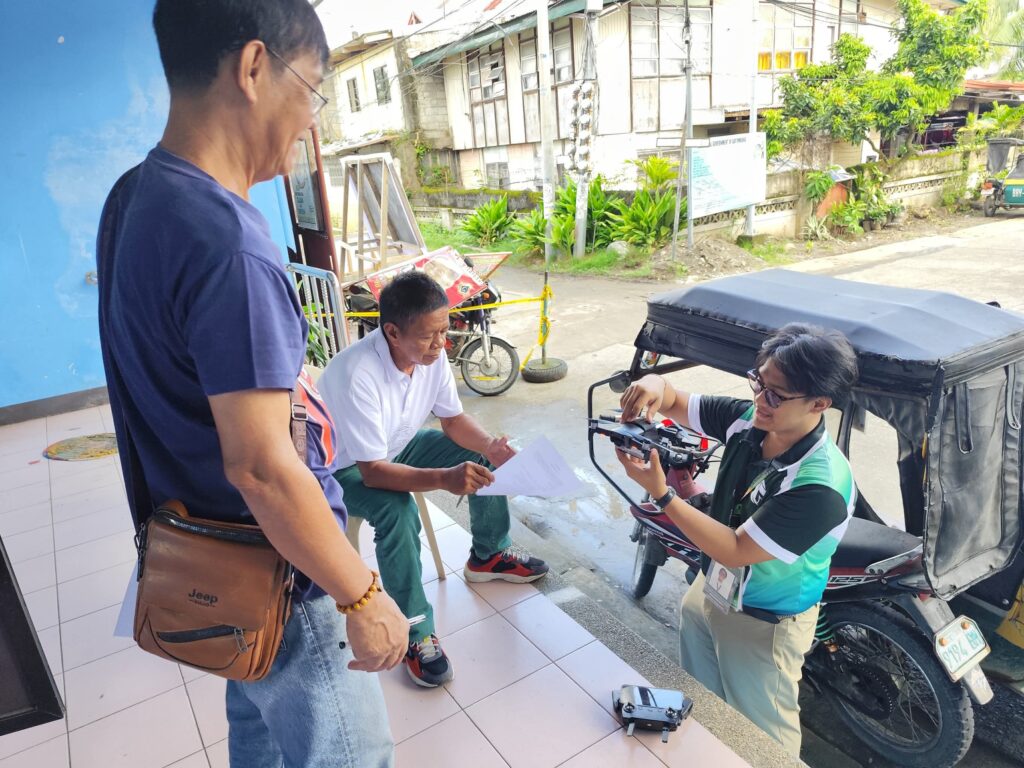
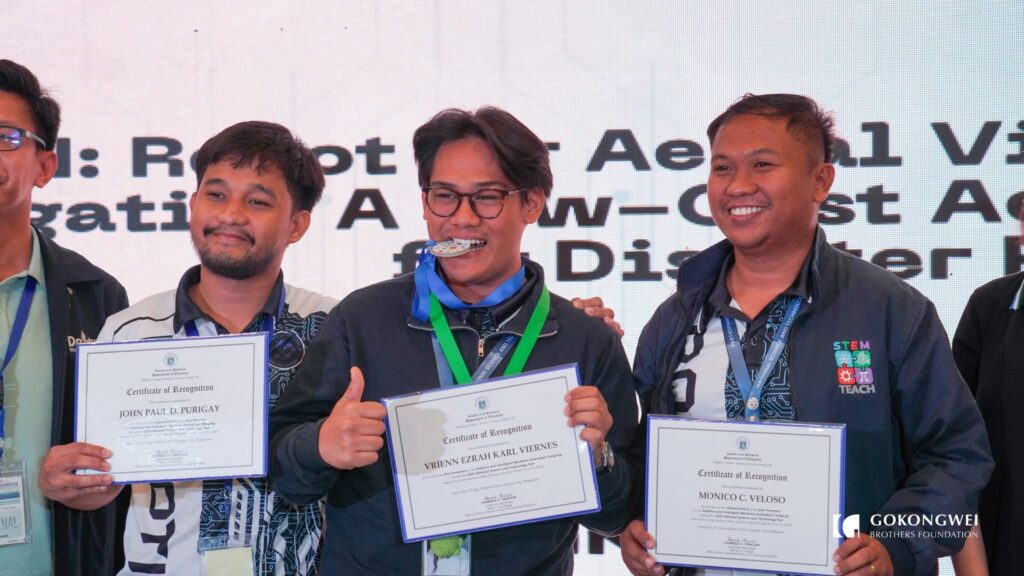
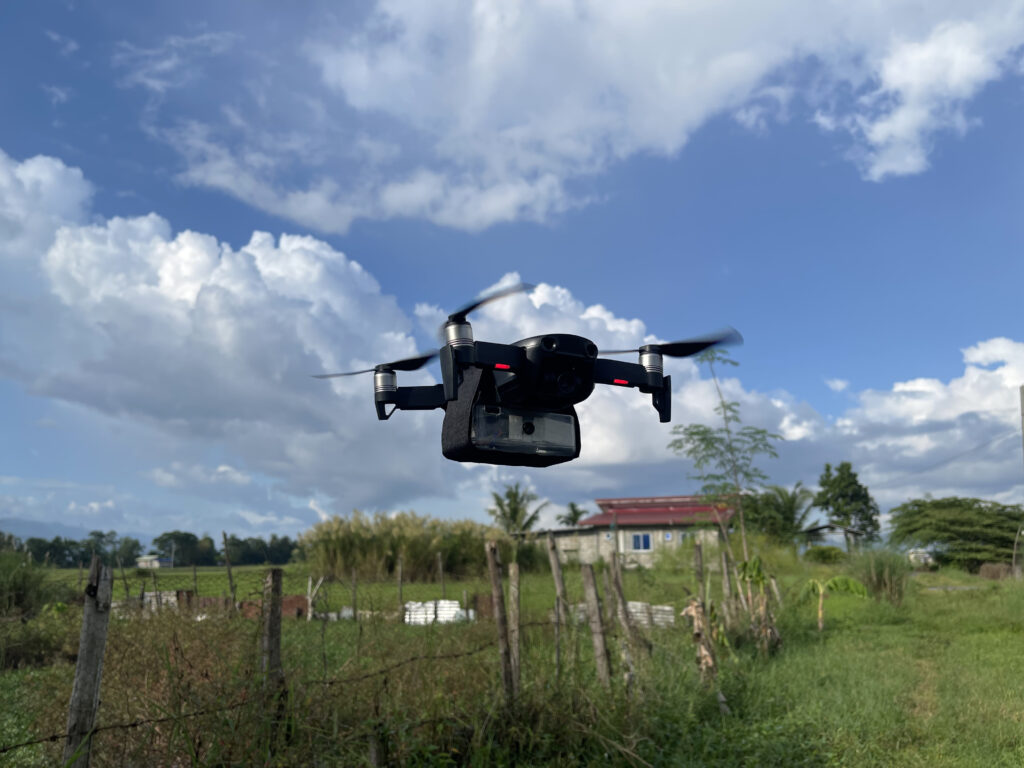
Vrienn Ezrah Karl Viernes, a student at Nueva Vizcaya General Comprehensive High School, went on to build RAVEN — Robot for Aerial Vigilance in Emergency Navigation — a low-cost aerial system designed to gather information from hazardous or hard-to-reach areas before human responders ever step inside. “Imagine trying to help, then being the one in need of help at the end of all the chaos,” Vrienn told TGFM, describing why the Kasibu incident became the project’s starting point. He and his coaches — Engr. Monico C. Veloso, John Paul D. Purigay, and Engr. Michael Luis Casil — wanted a system that could read a dangerous environment and hand first responders something they could actually use.

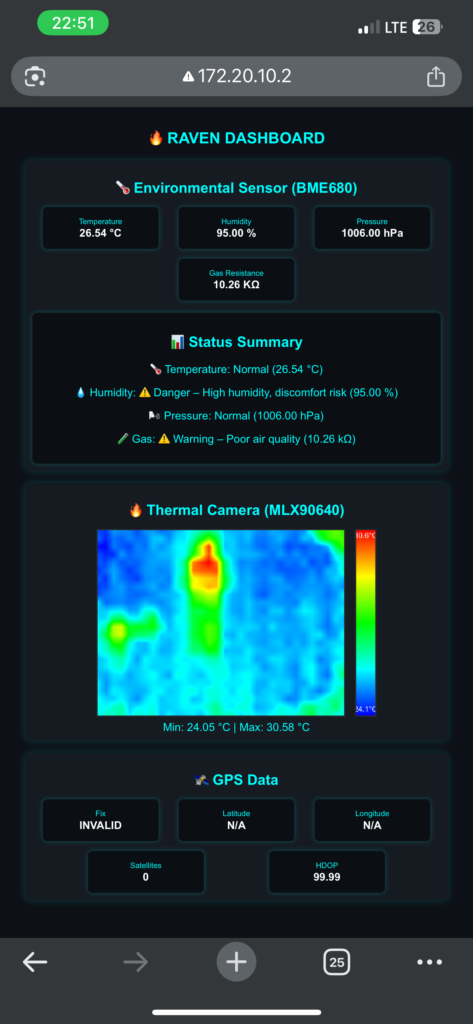
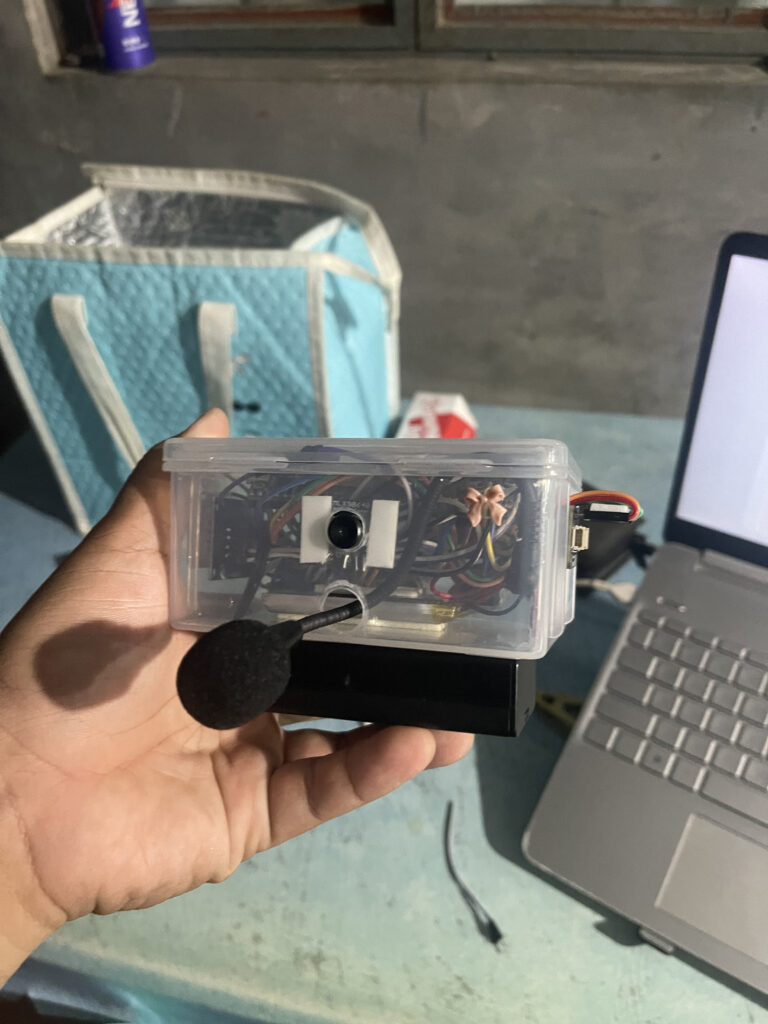
RAVEN works by layering sensors rather than trusting any single one. Once powered on, an ESP32 acts as the central controller, coordinating everything else. A 24 GHz mmWave radar scans for signs of human presence, picking up movement and even the subtle motion of breathing. When it flags a possible survivor, an Adafruit MLX90640 thermal camera confirms the reading by identifying body heat, while also watching for the heat of fire or other hazards. A BME680 sensor measures temperature, humidity, atmospheric pressure, and air quality to judge whether the area is safe to enter. If a victim is conscious, a Voice Recognition Module V3 listens for calls for help. Only after all of that does a GPS module fix RAVEN’s location and a GSM module transmit the coordinates, human-detection status, and environmental data out to responders. “Rather than relying on a single sensor, RAVEN combines information from multiple sensing technologies to detect, verify, assess, and communicate critical information,” the young inventor explained.
Getting there was not smooth. The first obstacle came before RAVEN had competed anywhere. During the critiquing of his manuscript for Division-level eligibility, judges nearly turned it away, dismissing it as a drone with something bolted to the bottom. “That was a major push for my team and me to prove them wrong,” Vrienn recalled — and prove it he did.
Smaller failures piled up after that, as they tend to in engineering. Components broke. Code refused to cooperate. Days before the Regional competition, his ESP32 fried, and a coach drove to Manila to buy the exact replacement part in time. But the heaviest weight was money. The team leaned on personal funds, and the support they secured from their local government still fell short. Through careful budgeting and resourcefulness, Vrienn said, they managed to cover the essentials and keep the prototype alive.

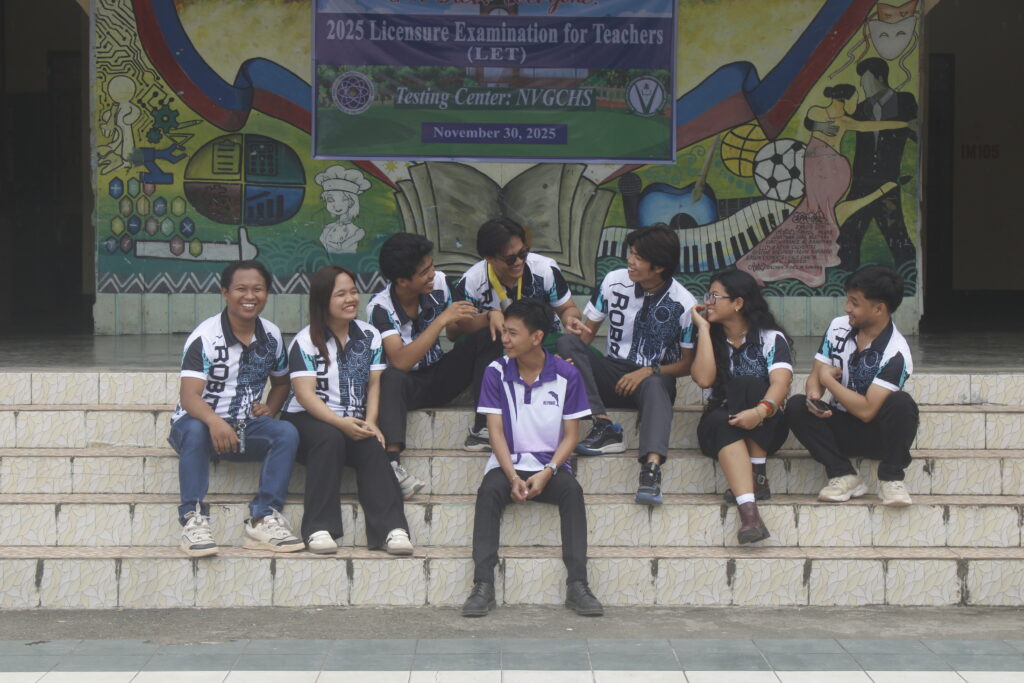
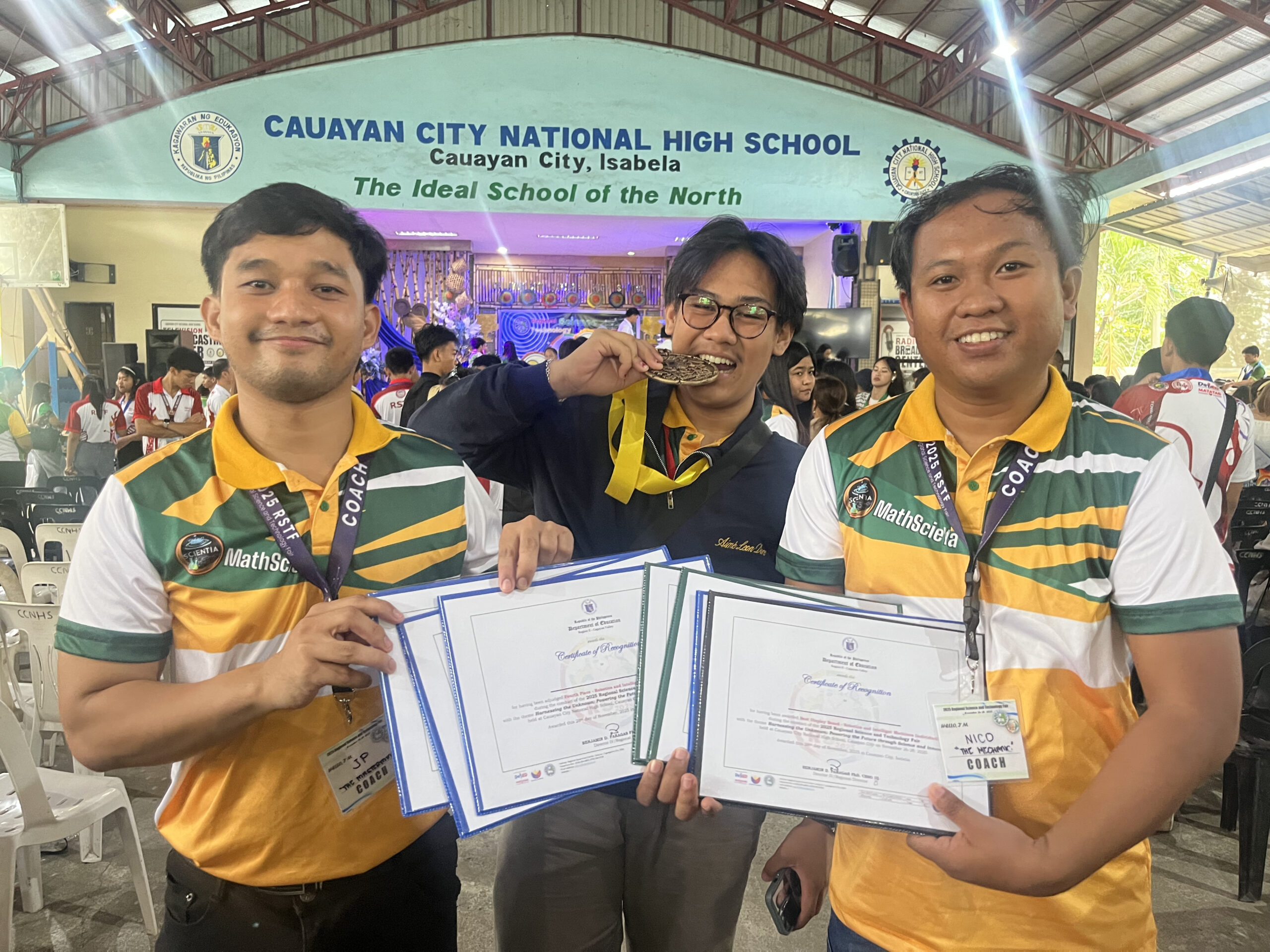
The payoff arrived in stages. Vrienn had finished second at the 2024 Regional Science and Technology Fair, and he carried that result into the next cycle as a target. When his name was called at the Division fair, he cried — not over winning, he said, but over the sense that the hardships had bought him a shot at redemption. At the 2025 Regional Science and Technology Fair, RAVEN was named champion and also took the best display board award. “This is your chance to set the standards,” he remembered thinking before his defense.
A misconception nearly caught him off guard: he assumed a regional win meant automatic entry to the Nationals. It did not. The project first had to clear regional and national evaluators, and it did. At the 2026 National Science and Technology Fair, competing against regional champions from across the country, Vrienn wasn’t expecting anything — he was scrolling memes on his phone when his region was announced as Best Presenter in the Robotics and Intelligent Machines Individual Category. His coaches had to nudge him before it registered.
Affordability was never an afterthought; it shaped the whole design. Many disaster-prone communities, schools, and local government units have little money for expensive search-and-rescue technology, and Vrienn wanted to show that an effective emergency robot doesn’t require high-end industrial hardware. That conviction drove his choices: the inexpensive, energy-efficient ESP32 as the brain, commercially available sensor modules instead of costly specialized ones, and a modular build so a broken part could be swapped or upgraded on its own rather than junking the whole system.
The project changed the person who built it, too. By his own account, Vrienn once hated problem-solving and couldn’t understand how anyone worked with wires and circuits day after day — until the hands-on experience turned it into what he calls a love-hate relationship. The science-minded curiosity he’d always had found a direction. It helped him settle on a path: a computer engineering degree, ideally at Mapúa University, on the way to becoming an embedded systems engineer.
RAVEN remains a student-developed prototype. But in a country regularly battered by typhoons, floods, and landslides, its purpose points at a real and recurring need. Vrienn hopes it becomes a catalyst for more affordable systems aimed at the everyday problems Filipinos face, and that it keeps drawing collaboration, mentorship, and support beyond the competition stage. And if institutions won’t provide that runway, he offers a challenge in its place: let the next generation of innovators showcase their ideas to make the country — and the planet — something that serves both itself and the people it cares for.
