



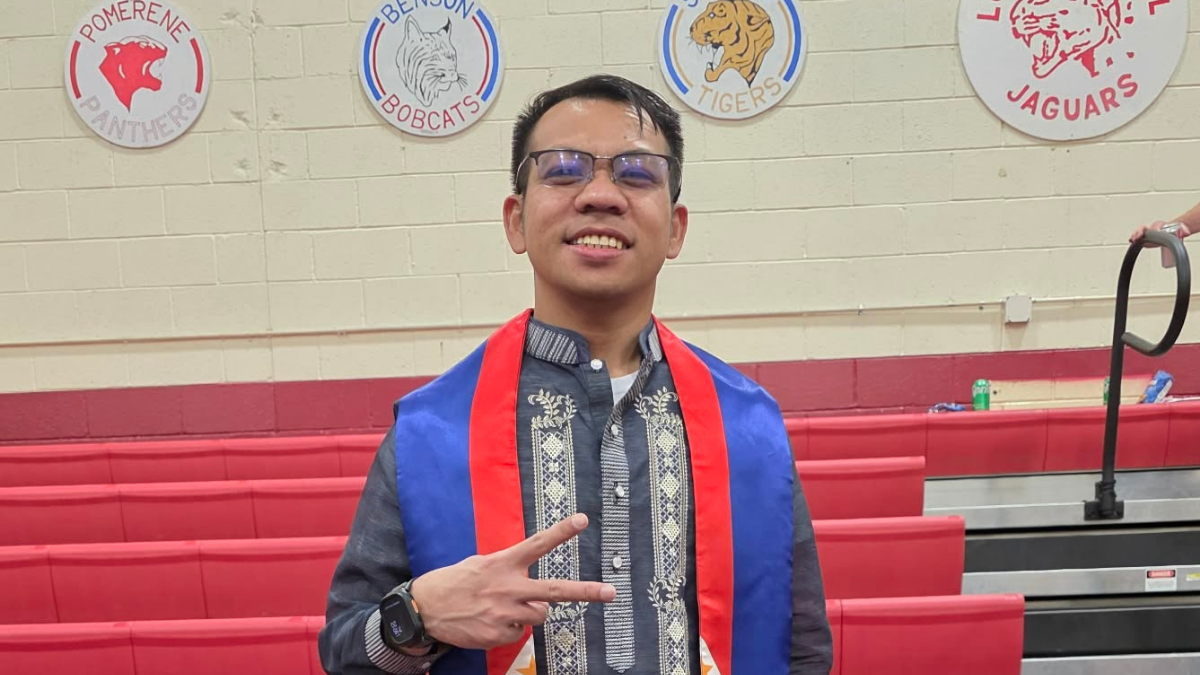

For a math teacher, the moment of victory rarely looks like victory. It looks like a kid who spent all year insisting she was “just bad at math” suddenly raising her hand without being asked. Regie H. Padre has built a fourteen-year career on that quiet turn, and it has carried him from a fishing-and-farming household in Bicol to a middle school classroom in Bisbee, Arizona, where he was recently named the state’s teacher of the year in mathematics.

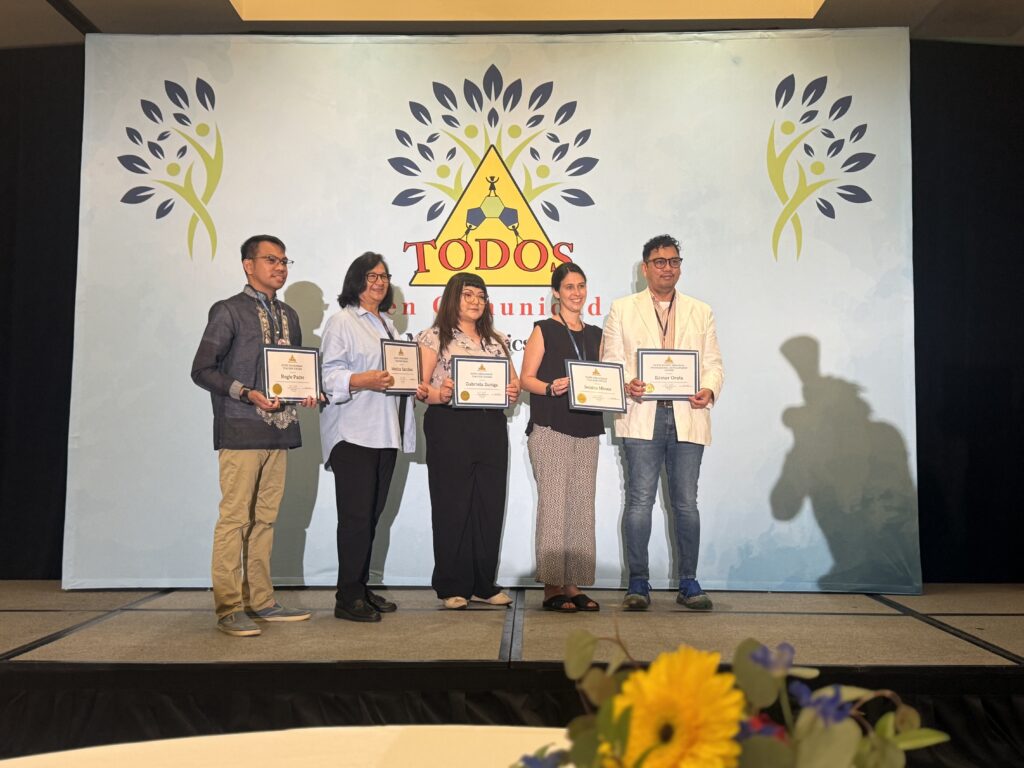
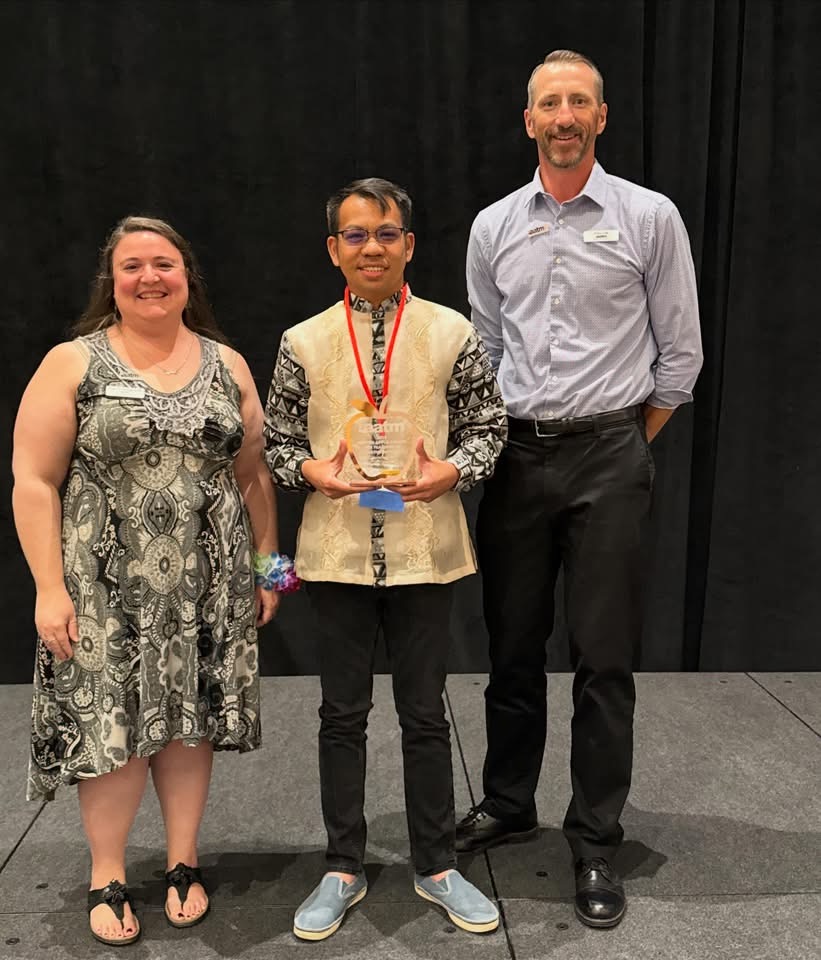
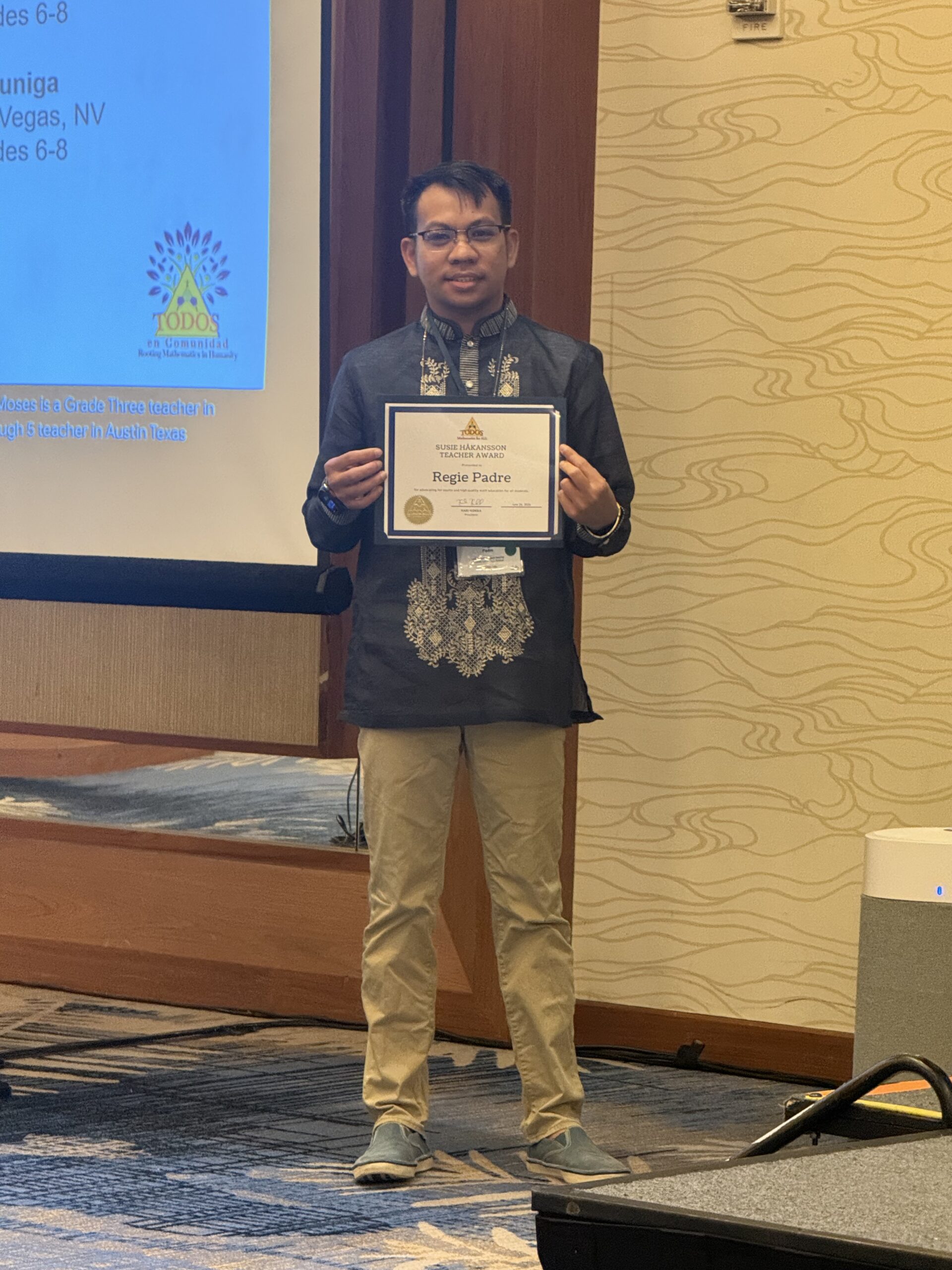
Padre, 36, teaches Grades 6 through 8 at Lowell Junior High School in the Bisbee Unified School District. In February, the Arizona Association of Teachers of Mathematics gave him its 2026 Copper Apple Teacher Award — an honor handed to a single educator each year. The same year, the national nonprofit TODOS: Mathematics for ALL recognized him with its 2026 Susie Håkansson Teacher Award for excellence in equitable math education. Two of the profession’s notable distinctions, arriving in the same season, for a Filipino teacher who was still finding his footing in the American system not long before.
The long way to the front of the classroom
The distance he has traveled is not only geographic. Regie grew up in a simple family in Bicol, where his parents supported the household through fishing and rice farming. He and his siblings walked to school every day, from elementary through high school, because transportation was not always available. “Despite the challenges, my parents instilled in us the importance of education, discipline, and determination,” he shares with TGFM.
That upbringing produced a striking academic record — salutatorian in elementary school, valedictorian in high school — and then a wall. His family could not afford a private university. Rather than give up, he kept his grades high and applied for scholarships to fund his degree, eventually graduating cum laude. The former scholarship student has never lost sight of what that stretch of his life taught him. “My humble beginnings have greatly influenced who I am today as a teacher,” he says. “They taught me the value of resilience, compassion, and the importance of providing opportunities for students, especially those who face challenges similar to what I experienced.”
He chose mathematics education deliberately, and he defends the choice with conviction. To him, the subject is not a stack of formulas but a way of thinking. “I believe mathematics is more than just numbers and formulas—it teaches students how to think critically, solve problems, and persevere through challenges,” he explains — the same qualities that got him through his own schooling.
From Riyadh to a J-1 visa
Regie’s move overseas began in 2016, when he accepted his first international post at a Philippine International School in Riyadh, Saudi Arabia. For six years he taught mathematics to the children of Overseas Filipino Workers, following the Philippine curriculum in a multicultural setting. The Filipino educator says the experience sharpened his ability to adapt and to connect with students from different backgrounds while serving OFW families far from home.
After Saudi Arabia, he continued his journey to the United States through the J-1 Exchange Visitor Program, landing in Arizona and a very different educational system. His reasons for leaving the Philippines in the first place were part ambition, part service. “I chose to work abroad because I wanted to grow professionally, experience different educational systems, and create better opportunities for myself and my family,” he says. “Learning does not only happen inside the classroom; educators also need opportunities to learn from different cultures, communities, and teaching practices.”
In the classroom, that philosophy takes concrete form. The middle school teacher runs a Mathlete Arcade Club and Weekly Math Challenges designed to build confidence and problem-solving skills, and he leans on STEM projects that tie abstract math to real-world uses. He has also sought out professional development that feeds back into his teaching, including the Arizona STEM Acceleration Program through Arizona State University, the CU at the Mine Teacher Academy at the University of Arizona, and the TODOS conference.

The year he almost doubted himself
The awards suggest a smooth ascent. The reality had a harder stretch in the middle. At a previous Arizona school, Regie felt he was not getting the support an international teacher needed from administration. Negative feedback about his classroom management and teaching effectiveness left him questioning abilities he had spent more than a decade building.
“The experience was emotionally challenging because I felt that my efforts and years of teaching experience were not fully recognized,” he says. “It also made me reflect on the importance of having a supportive and inclusive workplace where every teacher, regardless of background, is valued and respected.”
He decided not to let that season define him. He kept learning, reflected on his practice, sought feedback from colleagues who backed him, and eventually moved to the first district that had hired him in the country — a community he found more welcoming of international educators. His family, friends, and fellow Filipino teachers formed the support system that pulled him through, and he drew steadiness from other Filipino educators abroad who had weathered similar treatment and kept teaching with dedication. The lesson stayed with him: “Challenges do not define our abilities, but they shape our character and resilience.”
What keeps him in it
Ask him what he appreciates most about the work, and the answer is not the recognition. It is the shift he watches happen in individual students. “Many students come into my classroom believing that they are not good at math, but watching them overcome challenges and realize that they are capable learners is one of the most rewarding experiences as a teacher,” he says. That is the whole project, distilled — the confidence, not the correct answer.
Looking past his overseas tenure, the award-winning educator wants to keep contributing to math education, championing STEM opportunities and teacher development, and helping students from underserved communities see their own potential. He also hopes to encourage the next wave of Filipino teachers to keep growing.
For kababayans facing their own hard stretches abroad, his advice carries the weight of someone who has been through the low points. “Working overseas requires sacrifice, patience, and resilience. There will be challenges, but every difficulty can become a learning experience,” he says. Manage your finances wisely, he adds, be careful about whom you trust, and never lose sight of why you started. “Never forget your family, your roots, and the reason why you started your journey.”
It is the same message he gives his students in Bisbee, the ones convinced their circumstances have already decided their future — a claim the boy who walked to school in Bicol is uniquely qualified to dismantle.
