




A provincial hospital left structurally battered by the June 8 magnitude 7.8 earthquake in Mindanao became the backdrop Tuesday for President Ferdinand Marcos Jr.’s case that keeping Filipinos healthy costs less than treating them once they fall ill.

Touring the Davao de Oro Provincial Hospital–Montevista (DDOPH-Montevista), the President walked through the newly built Medical Ward Building, a Department of Health-funded expansion meant to ease the strain on a facility running well beyond its design. Though rated for 160 beds, the hospital routinely absorbs about 263 inpatients a day, alongside 205 outpatients and 105 patients passing through its emergency room.
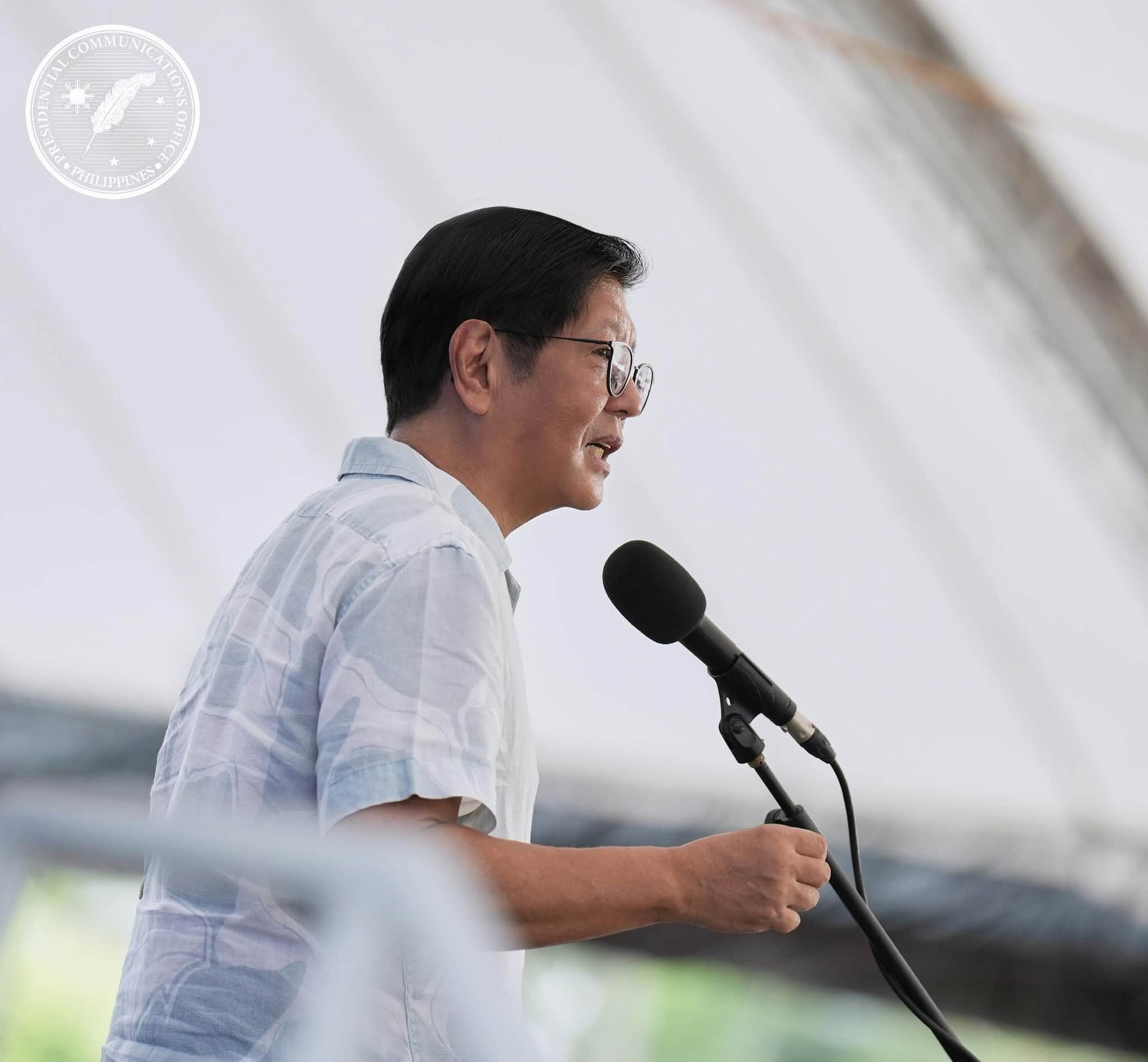
Marcos framed the government’s health agenda around getting ahead of illness rather than reacting to it. “An ounce of prevention is better than a pound of cure,” he said, tying the point to state-backed childhood immunization, routine checkups, nutrition support and early testing designed to catch conditions before they escalate. “Health care is a very big priority in this administration,” he added in Filipino.

The administration is channeling P147.94 million from the Socio-Civic Projects Fund into the hospital’s repair and continued buildout. Officials have set a target of elevating DDOPH-Montevista from Level 1 to Level 2 status by 2027, a step that would widen the range of services available to residents of Davao de Oro and neighboring provinces and shorten the wait for care.
While at the hospital, the President signed off on discharge papers for patients covered under the Zero Balance Billing Program, which spares qualified patients out-of-pocket charges. He spoke afterward at the launch of the Bawat Bayan Makikinabang program, held at the Provincial Capitol compound in Nabunturan.
Broader plans, Marcos said, run toward modernizing public hospitals nationwide and rolling out schemes that cut the medical bills weighing on ordinary Filipinos. He pressed as well on the machinery of delivery itself, arguing that national programs only reach communities when local governments carry their share of the work.
