



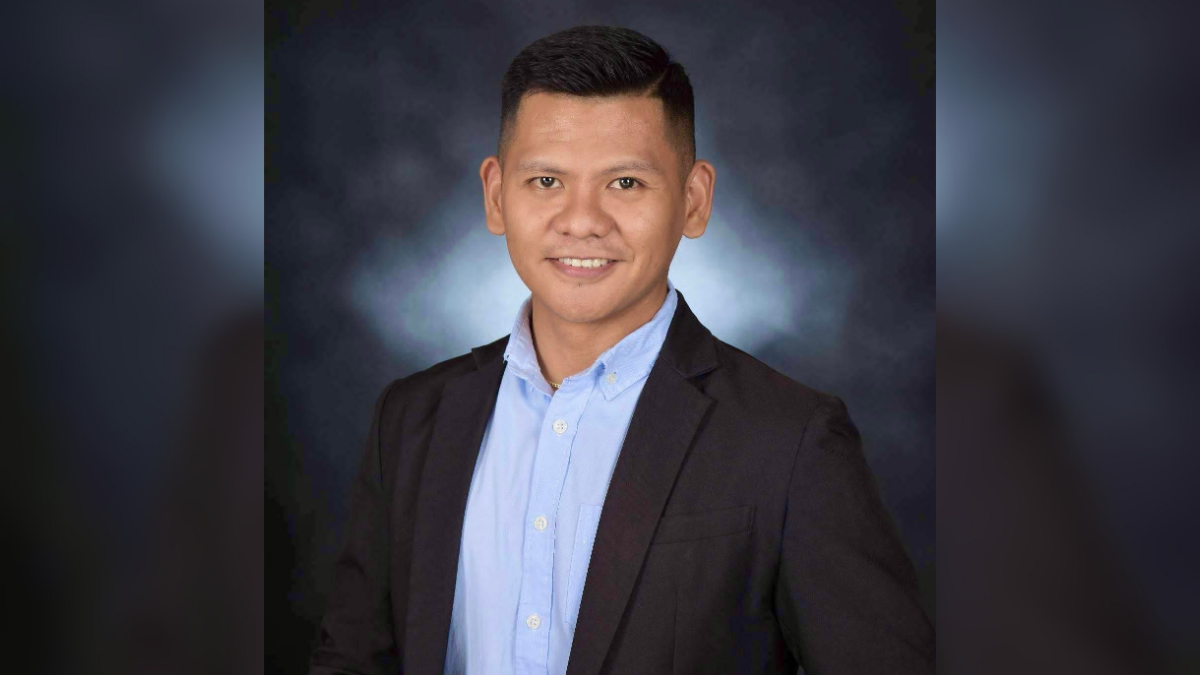

The first time a class of California teenagers held a book with their own names printed inside it, their teacher watched from the back of the room and said nothing. He had spent months on this — the drafts, the revisions, the quiet convincing of kids who did not believe they were writers. Now the proof was in their hands, and the man who made it happen had, until recently, been a decorated professor an ocean away, starting his own life over from scratch.

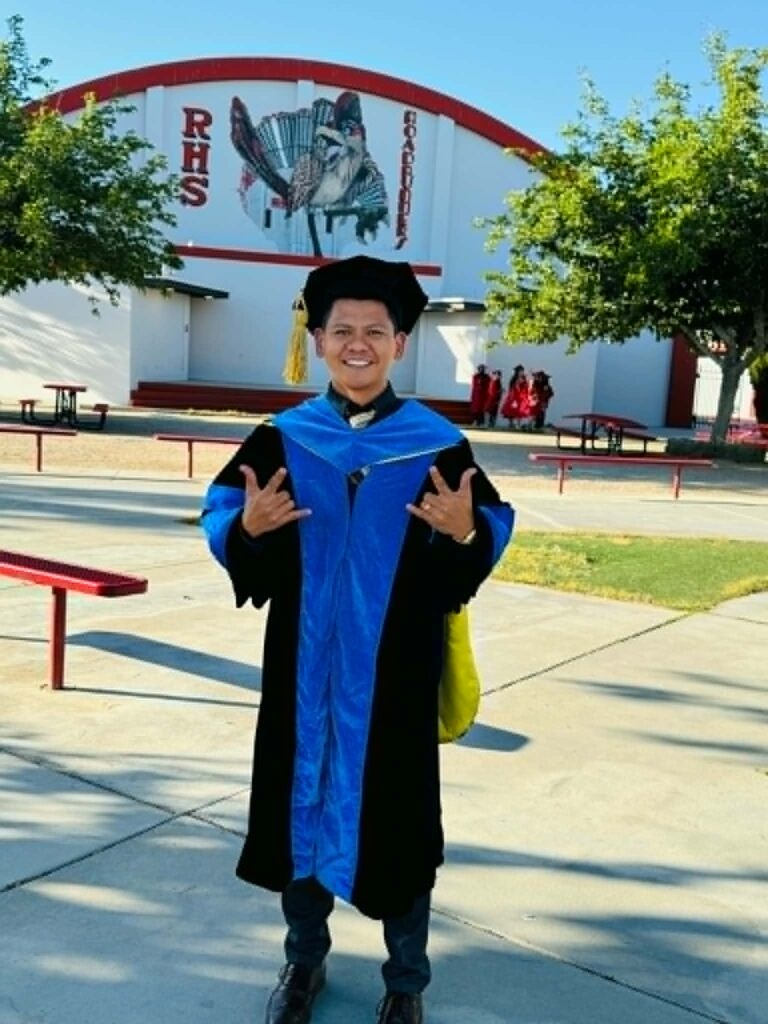
Jovan Baldonado Alitagtag left a decorated teaching career in the Philippines in late 2023 — high school classrooms, college lecture halls, graduate seminars, research awards — and arrived in California on an H-1B visa to begin again. He is now an English Language Arts and AP Literature and Composition teacher at Rosamond High Early College Campus, roughly two and a half years into a chapter he calls the most transformative of his life. But the version of the American Dream he arrived with is not the one he holds today, and the difference is the whole story.
What he thought he was chasing
Like a lot of Filipino kids, he grew up on a myth. Make it to America, the story went, and life gets easier, doors swing open, and poverty stays behind you for good.
“Like many young Filipinos, I dreamed of experiencing that life someday,” he shares with TGFM. But he is quick to correct the record about what actually pulled him across the Pacific. “My dream was never just about earning more or achieving financial stability. It became about growth, purpose, and becoming the best educator I could possibly be.”
He wanted a different educational system to test himself against. He wanted to teach inside another culture and see what it did to his own thinking. And, not incidentally, he wanted to represent Filipino educators on a stage most of them never get to stand on. The financial calculus that drives so many overseas Filipino workers was there, but it was never the point.
What he did not fully anticipate was the cost of admission. Leaving meant stepping away from everything familiar — family, language, the quiet authority of being known and respected in your own field. “God often calls us to places where our faith and character are refined before our success is revealed,” he says now, describing the early stretch of the move in the language of someone who has clearly reread it many times.
The résumé he left at the door
It would be easy to read his arrival in California as a fresh start by a newcomer. It was closer to the opposite — an accomplished educator choosing, deliberately, to become a beginner again.
Back home he had taught across nearly every level of the system: Green Fields Integrated School, Saint Michael’s College of Laguna, and Cavite State University, where he led undergraduate and graduate courses. Beyond teaching, he took on leadership roles in research, faculty development, public information, and administration. The work he describes most fondly, though, is the quieter kind — mentoring pre-service teachers and graduate students through the unglamorous grind of turning a rough study into a conference paper, and a conference paper into a published contribution to the field.
Watching those students climb was, in his telling, one of the genuine highlights of his career — seeing them grow from nervous student-researchers into confident presenters, published authors, and emerging leaders in education. It is a revealing thing to be proudest of. The former college and graduate instructor measures his success less by what he produced than by what he made possible in other people.
That instinct crossed the ocean with him. In the United States it found a new outlet: helping his high schoolers become published young authors. Through classroom writing projects, many have seen their own poems and short stories in print — and, more to the point, have started to think of themselves as writers whose voices are worth hearing.
He is unusually direct about why this matters more now than it used to. “In an age where artificial intelligence can generate words in seconds, I believe it is more important than ever for students to discover and value their own authentic voice,” he says. Technology is a tool, in his view, and a powerful one — but it should never stand in for the perspectives and stories that only a particular student can tell.
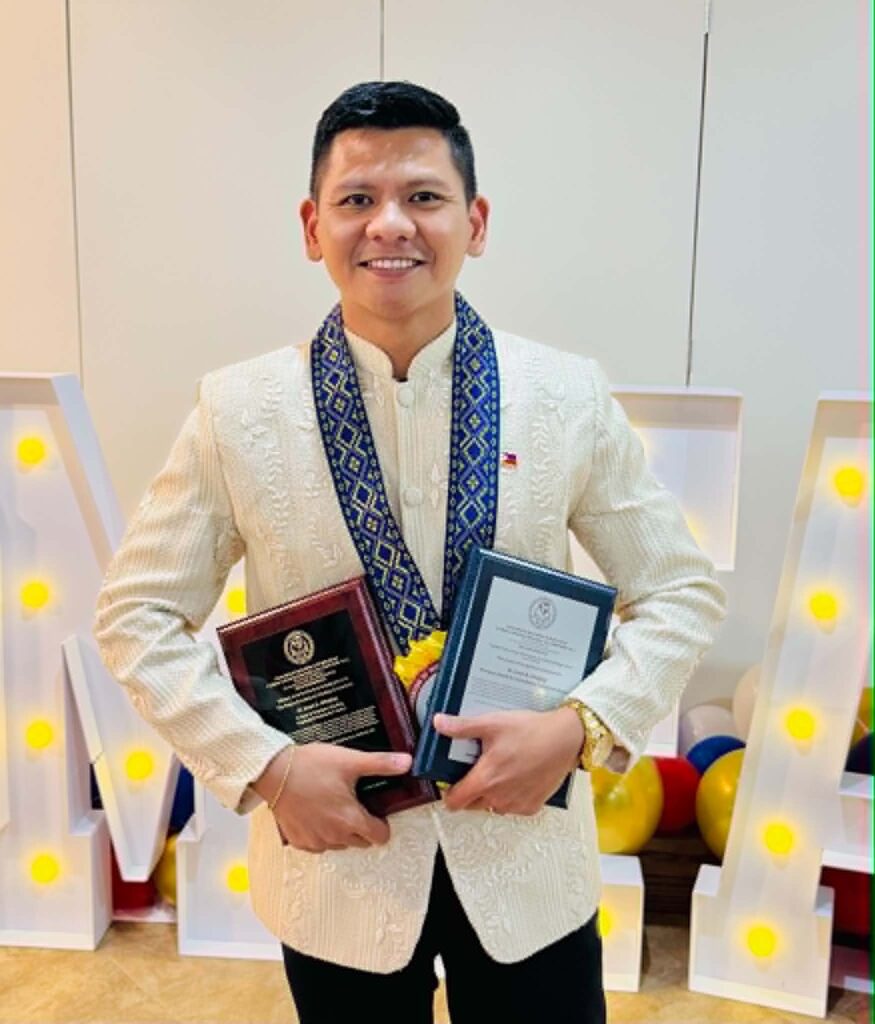
That commitment earned him recognition as a Featured Teacher by Studentreasures Publishing. He accepts the honor gratefully and then, almost immediately, redirects it — what matters to him is not the citation but the fact that his students found the nerve to tell their stories at all.
The part nobody photographs
For all the milestones — the research recognition, the published poetry, the graduation speeches, the conference presentations — the teacher is candid that the move nearly undid him before it steadied him.

“There were moments of loneliness, uncertainty, and self-doubt,” he admits, “and like many overseas Filipinos, I often questioned whether I was truly enough.”
Adjusting to a new culture and a new educational system while carrying the emotional weight of distance from family is, he suggests, the reality that the highlight reel leaves out. He credits two anchors for getting him through: his wife, who became his steadiest source of encouragement, and a faith that reframed every open door as something entrusted rather than earned. It is a worldview that keeps his considerable résumé from going to his head — he treats his abilities as gifts he is meant to steward, not trophies he is meant to display.
In 2025 he channeled some of that interior weather into a book — his debut poetry collection, unspoken feelings of a firefly, a volume that moves through silent emotion, grief, healing, hope, and faith. Writing it, he says, was another way to reach people — proof of his conviction that words can heal, encourage, and remind readers they are not alone.
Excellence has no nationality
Ask him what the whole experiment has taught him and he lands somewhere unexpectedly generous — not on personal advancement, but on a claim about his countrymen.
“Filipino professionals continue to earn respect around the world because of our dedication, compassion, and strong work ethic,” he says. Every opportunity, he adds, reminds him that he is representing not just himself but the countless Filipino educators serving wherever they are called. Excellence, in his phrasing, has no nationality.
His advice to kababayans weighing the same leap is bracingly unromantic. Prepare professionally, yes — but prepare emotionally, mentally, and spiritually, too, because behind the glossy photographs are seasons of homesickness, sacrifice, and cultural adjustment. And to those arriving with impressive titles, he offers a warning dressed as encouragement: carry your experience with confidence, never with pride.
“Humility will open more doors than titles ever will,” he says — a line that reads less like advice and more like a note he once wrote to himself. Be willing to learn again. Listen more than you speak. Keep a teachable heart no matter how accomplished you think you are.
Above all, he warns against the quiet trade so many make abroad without noticing — letting a career quietly cost you your peace, your family, your character. Financial stability matters, he allows. It is simply not what he wants the ledger of a life measured by.
The mentor he needed
For someone still early in his American chapter, he talks a great deal about going back — or at least about giving back. Whether he stays abroad for years or eventually returns home, he says his purpose does not change: to serve through education, keep researching and writing, and mentor the teachers coming up behind him.
One ambition sits closest to the surface. He wants to teach pre-service teachers in the Philippines again — not only the theory, but the parts no syllabus covers. What classrooms abroad are actually like. Which challenges to brace for. How to stay grounded while chasing an opportunity halfway around the world. When he started, he had to learn all of it alone, and he clearly wishes someone had walked him through it.
So he intends to be that someone. He wants to become the mentor he needed when he was starting out — preparing the next generation of Filipino teachers to be competent in the classroom and resilient outside it, carrying their values and faith wherever they go. After everything, he insists there is no greater privilege than teaching Filipino learners and helping shape the country’s future from the inside.
If he has his way, the thing people remember will not be the awards or the titles or the American zip code.
“I hope they remember that an ordinary boy from the Philippines was given extraordinary opportunities because of God’s grace,” he says. The verse he returns to is John 15:5 — “Apart from Me you can do nothing.” It is, in the end, the same lesson the American Dream taught him, only he learned to say it a different way: the paycheck was never the point, and the man he became on the way to it was.
