



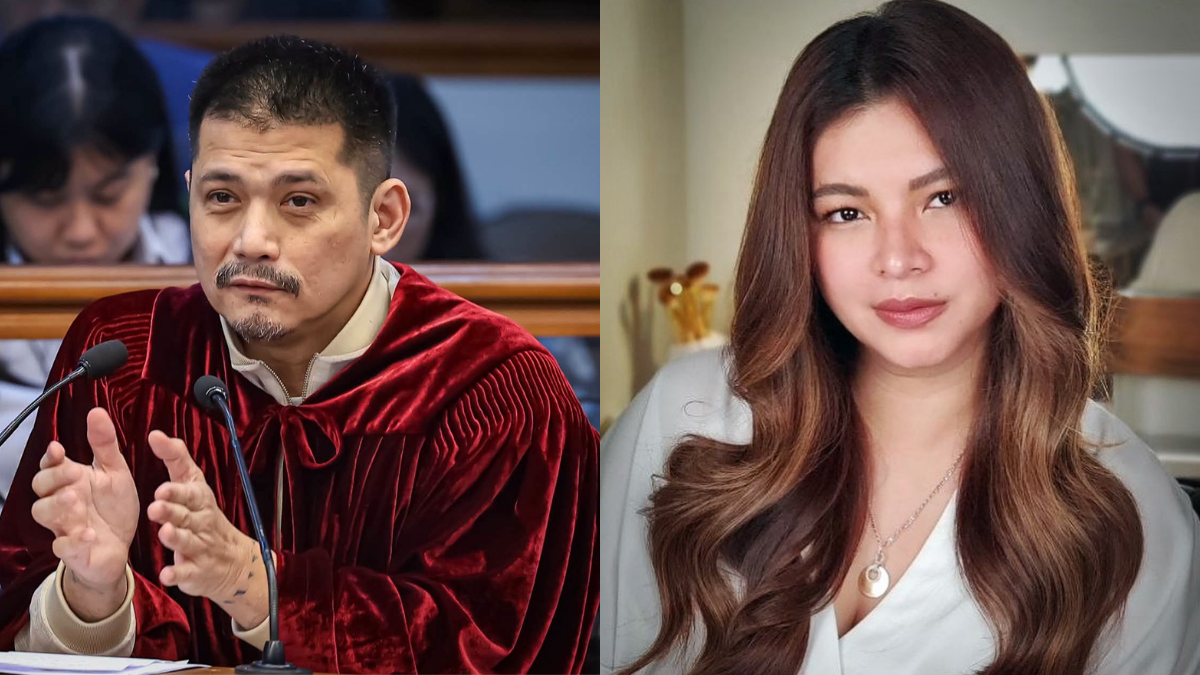

Senator Robin Padilla has chosen not to issue a public rebuttal to Angel Locsin, explaining that a private line of communication remains open should the actress wish to talk.

The decision, he said, came out of a conversation with his wife Mariel after the couple first heard about Locsin’s message. Both concluded that the actress might be going through personal difficulties that warranted restraint rather than confrontation.
“Si Angel Locsin, kaibigan ko ‘yan. Ang katotohanan ay saming dalawang mag-asawa [ni Mariel Padilla], nung nabalitaan namin ‘yun, isa lang ang sinabi namin dalawa. ‘Baka may pinagdadaanan si Angel. Kami naman wala, so siguro intindihin na lang natin,” Padilla said during an interview on Sonshine Media Network International. “‘Wag na kaming sumagot o magsalita.”
He added, “Kung gusto niya kaming makausap, bukas naman ang linya.”
Locsin’s letter had pressed the actor-turned-legislator over what she described as a shift in his convictions, calling on him to “wake up.” Part of her message touched on his past association with the New People’s Army and his exposure to communist thought.
Padilla did not distance himself from that ideology. “Hindi ko iniiwan ang ideology,” he stated, tracing his familiarity with leftist ideas to his earlier friendship with Locsin herself, whom he met through their shared background in martial arts.
“Naging very close kami ni Angel kasi martial artist siya. Syempre, nagku-kwentuhan kami at noong panahon na ‘yon ay Gabriela siya. So, sinasabi ko sa kanya na leftist ako — kasi wala namang masama kung leftist ka. Ang masama ay kung ikaw ay may dalang baril,” he recalled.

The senator’s remarks drew a response from Defense Secretary Gilberto Teodoro Jr., who suggested the Armed Forces of the Philippines examine Padilla’s standing as a reservist in light of his self-described communist leanings.
The public dispute has split support among entertainment figures. Locsin found backing from Anne Curtis, Enchong Dee, Bea Binene, and Marina Summers, while Padilla’s brother, actor Rommel Padilla, came to his defense.
A separate open letter surfaced as well, this one from journalist Lourd de Veyra, who directed his commentary not at the senator but at those who work for him. Speaking on his program “Political Beat,” de Veyra framed the senator’s staff as gatekeepers with a responsibility beyond logistics.
“You occupy a role more important than merely arranging schedules and carrying folders. You are the last line of defense between an impulsive thought and the congressional record,” he told them. He likened the ideal safeguard to a customs inspection or quarantine station, “somewhere in your team, a brave soul should be, in must be empowered to whisper, ‘Sir, wait.'”
De Veyra warned that repeated verbal missteps could harden into a reputation that is “unfair to the office, unfair to the institution, and ultimately unfair even to the man himself.” He urged the staff to steer their principal toward preparation, briefing papers, and the discipline of asking questions before answering them.
The columnist reserved his sharpest image for the senator’s self-assurance. “Your principal is a man of remarkable confidence, but confidence is like methane gas. It requires careful management. Left unattended, it escapes into microphones and seeps into the national conversation in the most unflattering of ways,” he said.
