



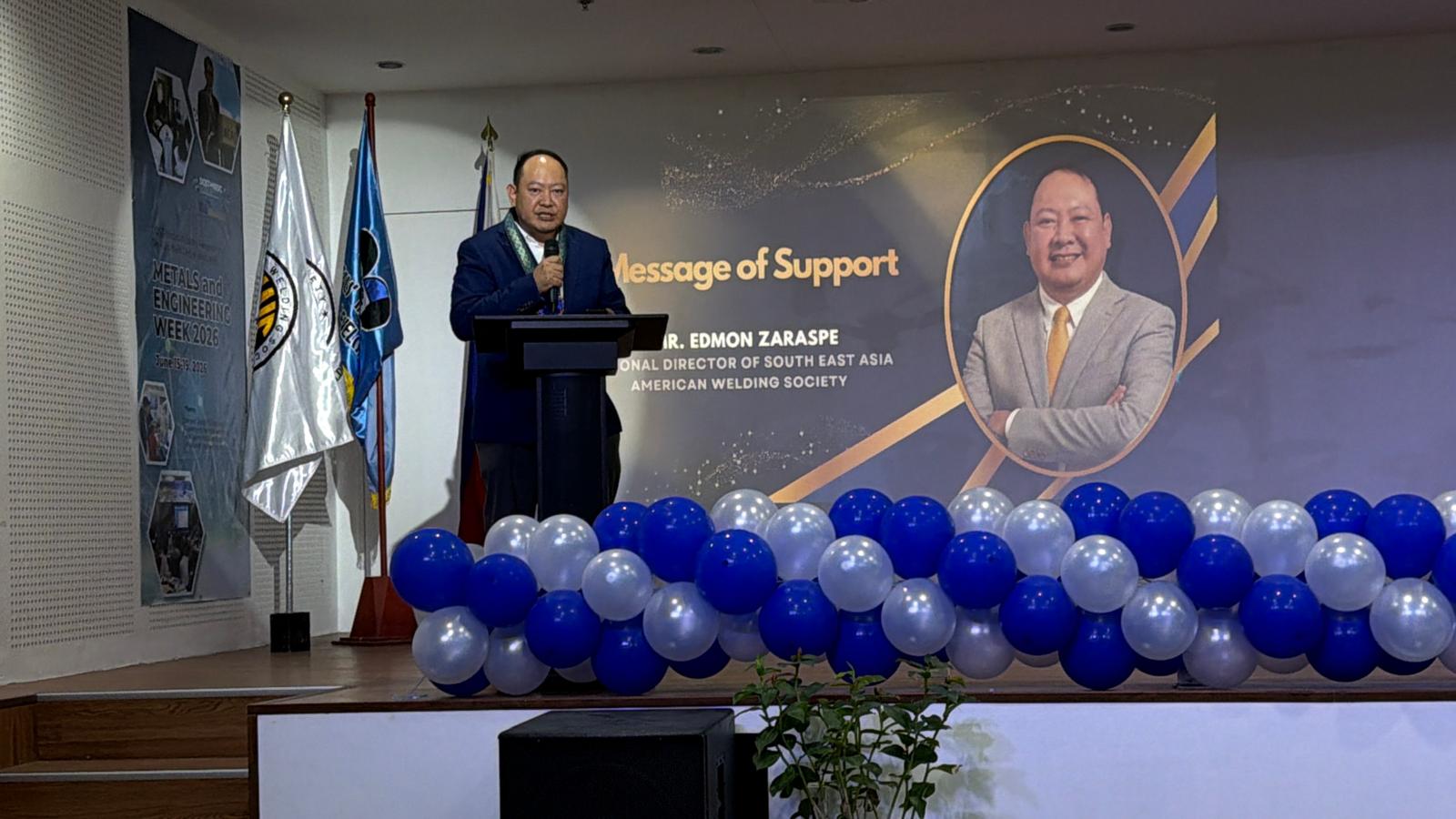

For someone who has spent 23 years crossing borders — from Houston to Moscow, from Tokyo to the Gulf — walking into a conference hall in Muntinlupa City carried a different kind of weight. Edmon Alvarez Zaraspe, the first Filipino to serve as Regional Director of the American Welding Society (AWS) for Southeast Asia, was back on home soil. This time, not as a delegate or an observer, but as a Guest of Honor.

On June 18, 2026, the Department of Science and Technology–Metals Industry Research and Development Center (DOST-MIRDC) opened the International Metals and Engineering Conference (IMEC) 2026 at Acacia Hotel Alabang in Muntinlupa City, as part of the Metals and Engineering Week 2026 celebration. The event brought together researchers, engineers, industry leaders, government representatives, and academics to discuss technologies shaping the metals and engineering sector, under the theme “Beyond Digital Transformation: Convergent Technologies for Intelligent and Sustainable Metals and Engineering Industries.”
Zaraspe was among those invited to deliver a message of support to competitors at the Metals and Engineering (M&E) Competition held alongside the conference. It was his first time being recognized in that capacity on Philippine soil — and by his own account, it was not a moment he took lightly.
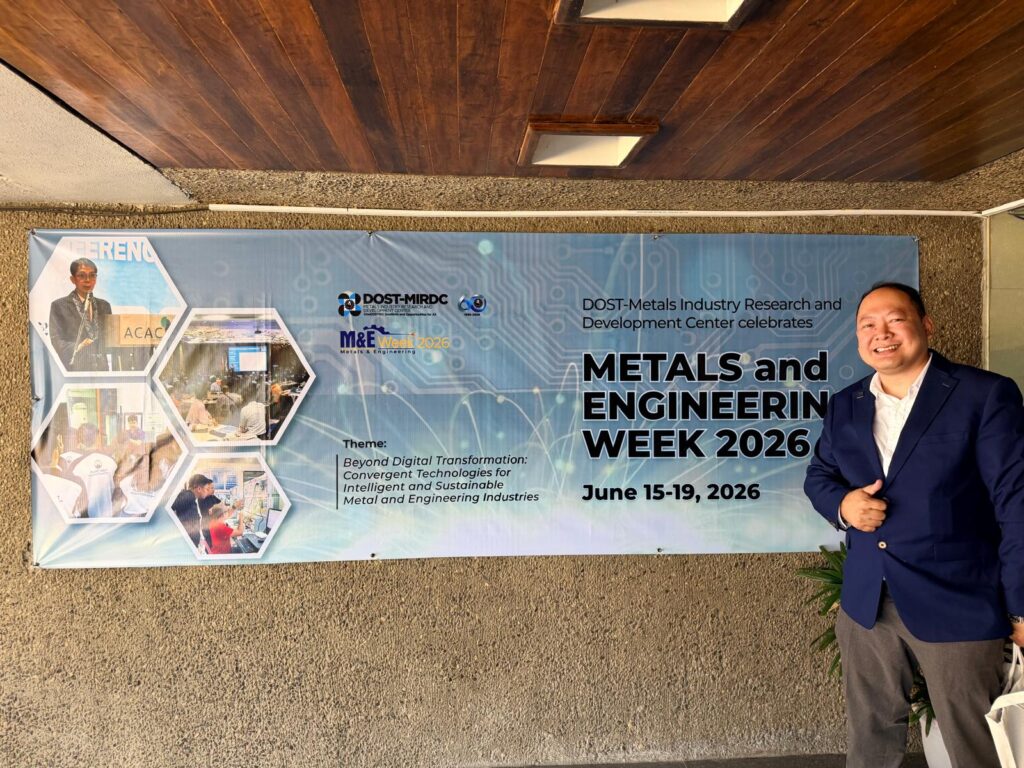
“It was truly a humbling and unforgettable experience,” he says. “Being invited as a Guest of Honor by DOST-MIRDC was a privilege that I will always treasure. It reminded me that no matter where our careers take us, there is always an opportunity to give back to our country.”
A message built from experience, not ceremony
Zaraspe’s address to the competitors was not a rehearsed string of pleasantries. It was the kind of message that only someone who has actually done the work can credibly deliver.
“My message was simple: believe in your abilities, never stop learning, and always pursue excellence,” he says. “I reminded the competitors that every successful engineer, welding inspector, technician, or industry leader started exactly where they are today — with the willingness to learn and the courage to improve every single day.”
He was deliberate in reframing what a competition like this actually means. Winning, he told them, was secondary. “I encouraged them to view the competition not merely as a contest to win medals, but as an opportunity to develop discipline, professionalism, teamwork, and confidence. These qualities will define their careers far more than any trophy.”
It is a perspective grounded in his own trajectory. Zaraspe began his career in the Philippines as an entry-level technician before spending more than two decades conducting technical audits and industry engagements across more than 20 countries. His rise to the top of AWS’s Southeast Asian operations — covering nine countries including the Philippines, Singapore, Japan, and South Korea — was not the result of a single opportunity, but of compounded effort over time.
What he saw in the next generation
Beyond delivering his message, Zaraspe took the time to observe the competitors. What he found reassured him.
“The competitors demonstrated technical competence, determination, discipline, and professionalism,” he says. “More importantly, I saw passion in their work. Their attention to detail, eagerness to learn, and commitment to quality clearly showed that the future of Philippine manufacturing and engineering is in capable hands.”
He was careful not to frame the moment as charity or goodwill from someone looking in from the outside. For Zaraspe, the talent was never in question. The infrastructure around it is what needs strengthening. “With continued support from organizations like DOST-MIRDC, schools, industry partners, and international organizations, I firmly believe these young professionals can become future leaders not only in the Philippines but across the global engineering and manufacturing industry.”

A keynote in Hanoi, and the billion-dollar material you’ve never heard of
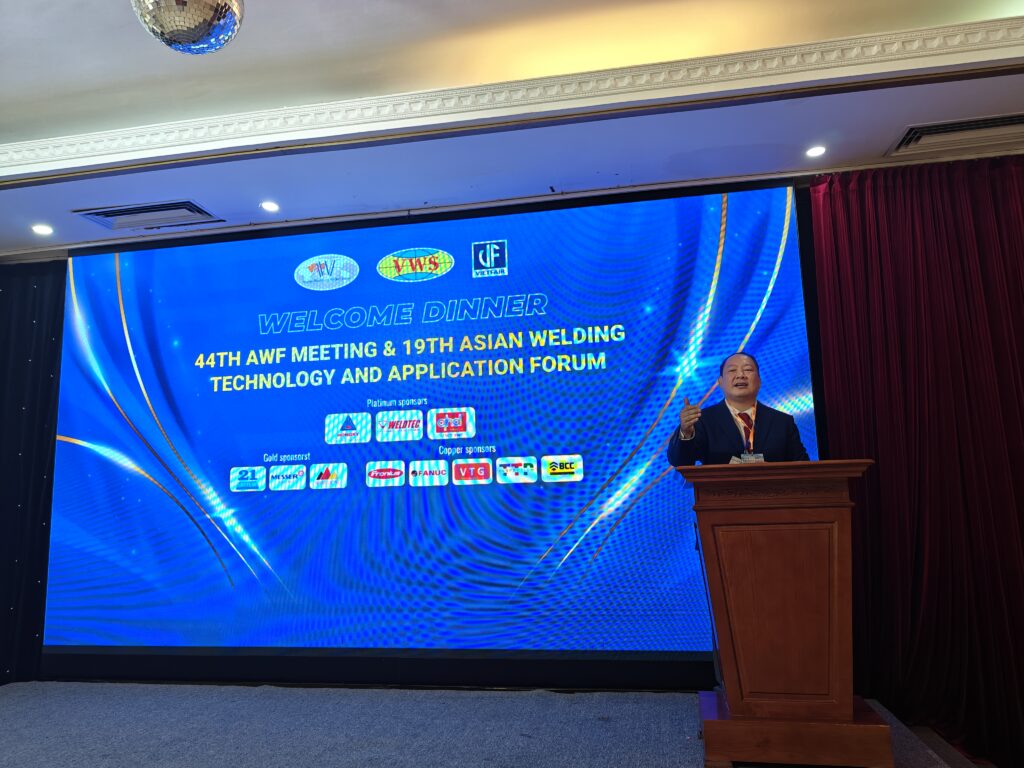
The DOST-MIRDC appearance was not an isolated homecoming. It came on the heels of another significant engagement — a keynote address in Hanoi, Vietnam, where Zaraspe spoke on thermoplastic welding, an area where AWS has developed an internationally recognized standard.
Thermoplastics — materials that can be repeatedly softened and reshaped through heat — are increasingly used across industries including construction, automotive, and infrastructure. The global market for thermoplastic welding has grown into a billion-dollar industry, and Zaraspe’s keynote positioned both him and AWS at the center of that conversation in Southeast Asia.
It underscores a broader aspect of his work that rarely makes headlines: the business of setting standards before industries realize they need them.
The case for collaboration
When asked about the potential for AWS to work more formally with DOST-MIRDC and similar Philippine government bodies, Zaraspe did not hedge.
“Absolutely,” he says. “There is tremendous potential for stronger collaboration between the American Welding Society and organizations such as DOST-MIRDC, educational institutions, and industry partners throughout the Philippines.”
He envisions a framework that goes well beyond occasional conference appearances — one that includes internationally aligned training programs, certification pathways, curriculum development, and technical conferences that connect Philippine institutions with global standards. The goal, as he describes it, is practical: develop Filipino professionals who can compete internationally while contributing to domestic industrial growth.
“By working together, we can help Filipino professionals gain globally recognized competencies while supporting the growth of Philippine industries,” he says.
It is a vision consistent with his stated plans for when his overseas tenure eventually ends — to return home and apply what he has learned to build a more globally competitive local workforce, particularly in welding, manufacturing, and engineering.
Still Filipino, wherever the work takes him
What made the DOST-MIRDC moment particularly resonant was not the title on his name card or the seat he occupied at the front of the room. It was the signal it sent — that a Filipino who started at the bottom of a technical career and worked his way across continents had come back not just as a success story, but as someone with something concrete to offer.
His advice to young Filipino engineers and technicians reflects the same directness he brought to the conference stage. “Never underestimate where your career can take you,” he says. “Your passport does not define your limits. Your skills, character, and determination will open doors around the world.”
