




A clash over photocopied documents on the second day of Vice President Sara Duterte’s impeachment trial has drawn fresh attention to a Supreme Court ruling that already answers the underlying question: a photocopy can be admitted in court to the same extent as the original.

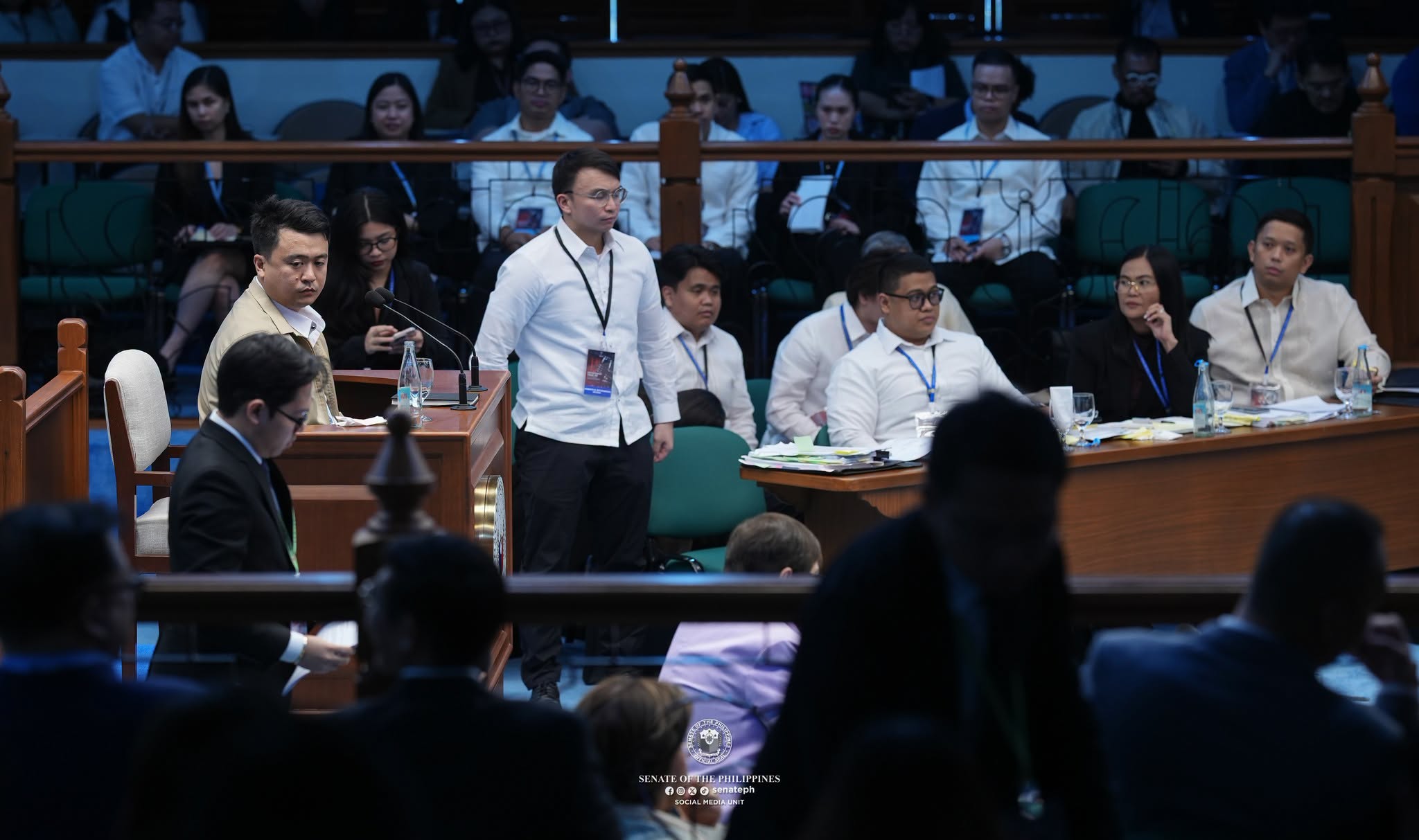
On July 7, 2026, House private prosecutor Amando Virgil Ligutan told the Senate impeachment court that a photocopy or digital copy may, under certain circumstances, be treated as an original — arguing that a screenshot of a letter from Meta could stand as a certified true copy even though it was a photocopy. Defense counsel Carlo Joaquin Narvasa objected, saying the material was neither an original nor a certified true copy and should be excluded. The impeachment court allowed the documents to be identified for the record, noting that accurate printouts of electronic records may be treated as originals, and left any final ruling on admissibility for the point when the evidence is formally offered.
The prosecution’s position tracks a decision the Supreme Court handed down more than a year earlier. Written by Chief Justice Alexander G. Gesmundo, the Court’s First Division held that a duplicate or photocopy — whether on paper or in electronic form — may be admitted to the same extent as the original, so long as no genuine question is raised about the original’s authenticity and admitting the copy would not be unfair. The ruling, publicized by the SC Office of the Spokesperson on 05/09/2025, stems from the case of Ybo Lastimosa, whose conviction for the killing of Ildefonso Vega, Jr. the Court affirmed.
The evidence at the center of the appeal was a photocopy of Vega’s death certificate. Witnesses had testified that Lastimosa shot Vega in the head near a cockpit in Cebu City, and Vega’s wife told the trial court that her husband was already dead when she reached him at the hospital. Prosecutors offered the photocopied certificate to back her account, and it recorded that Vega died of gunshot wounds to the head and neck.
The Regional Trial Court convicted Lastimosa of homicide, resting its verdict on that photocopy and on the eyewitness testimony. The Court of Appeals raised the conviction to murder, finding that the killing was attended by treachery because Vega had no opening to defend himself or flee when the shots were fired.
Lastimosa’s appeal turned on the copy itself. He argued that the prosecution had failed to establish the corpus delicti — the fact that a crime had occurred — because the original death certificate never reached the trial court. A photocopy admitted without being compared against the original, he contended, should have been thrown out.

The Court was unpersuaded. It pointed to Rule 130, Section 4(c) of the 2019 Revised Rules on Evidence, effective in 2020, under which a duplicate is admissible as an original unless a genuine question exists about the original’s authenticity or it would be unjust to rely on the copy. That standard, the Court noted, reaches both paper and electronic records.
“This approach reflects the practical realities of document usage and storage in the modern world, where duplicates are often indistinguishable from originals and can be more accessible,” the decision read.
Under the same rules, a photocopy qualifies as a duplicate. The provision defines the term as “a counterpart produced by the same impression as the original, or from the same matrix, or by means of photography, including enlargements and miniatures, or by mechanical or electronic re-recording, or by chemical reproduction, or by other equivalent techniques which accurately reproduce the original.” Because no party disputed the authenticity of the underlying death certificate, and no one claimed unfairness in using the copy, the Court found the photocopy properly admitted.
The Court drew a line, however, between whether a document may be admitted and how much it ultimately proves. A copy that clears the admissibility threshold still draws its persuasive strength from the other evidence around it. Here, the photocopied certificate did its work in tandem with the testimony of Vega’s wife and other witnesses, which together established that Vega died of gunshot wounds and that Lastimosa fired them.
Lastimosa was sentenced to reclusion perpetua — imprisonment of up to 40 years — and ordered to pay P275,000 in civil indemnity and damages, with interest. The reasoning is laid out in G.R. No. 265758, promulgated 02/03/2025.
That distinction between admissibility and weight is likely to shape the coming weeks in the Senate. The impeachment court has signaled that documents such as the Meta-related printouts can be received and identified now, with their reliability and evidentiary value to be argued later — leaving the defense free to press its objections when the prosecution formally offers its exhibits under Article IV, which covers the alleged grave threats against President Ferdinand Marcos Jr., First Lady Liza Araneta-Marcos and former House Speaker Martin Romualdez.
