



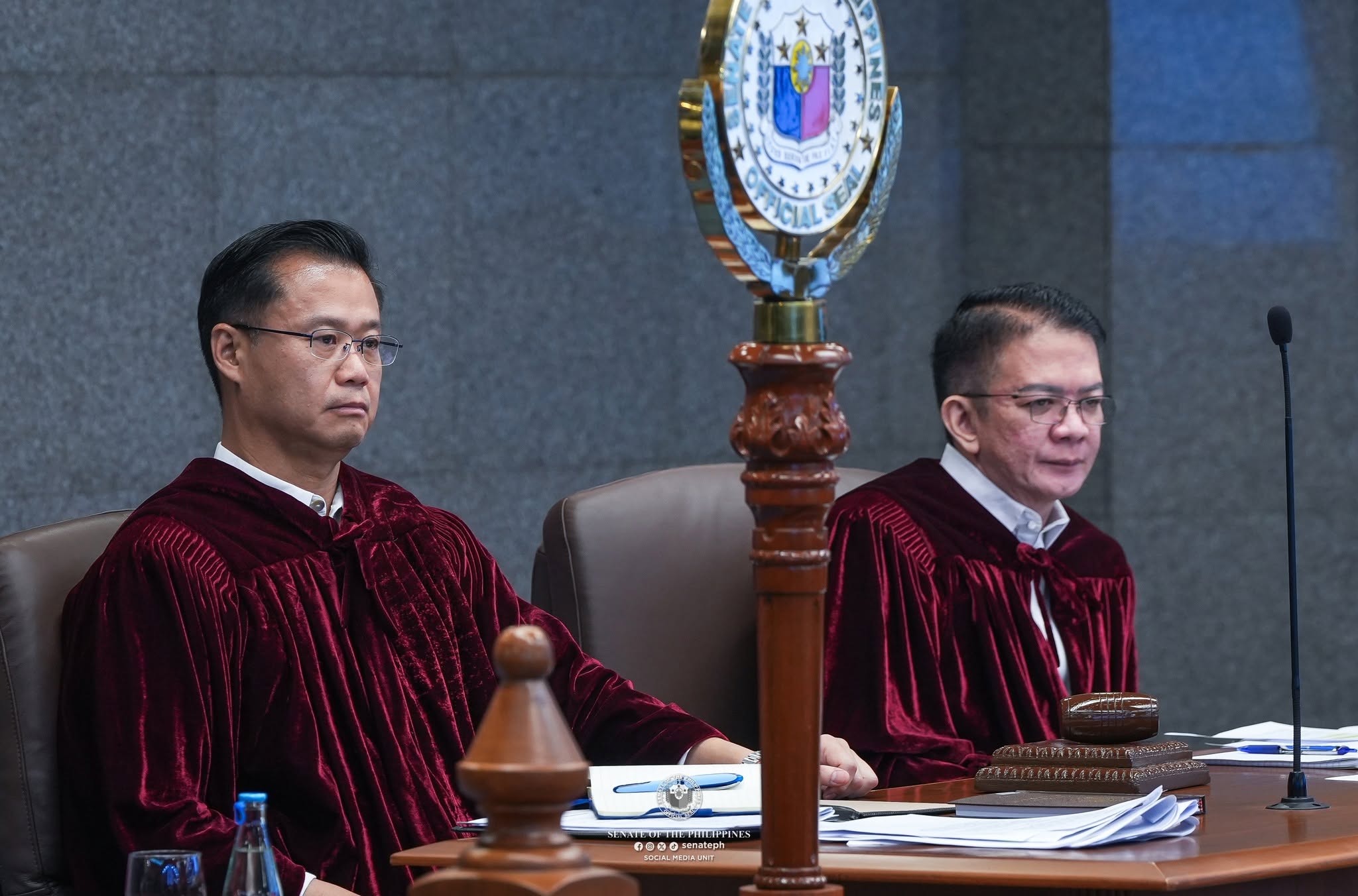

The impeachment trial of Vice President Sara Duterte may be vulnerable to a legal challenge because Sen. Francis Escudero is serving as its presiding officer, a move an international law specialist argued Monday departs from what the country’s Constitution was meant to require.

Melissa Loja, an international law consultant, contended that the 1987 constitutional commission never intended a scenario in which someone other than the Senate president oversees impeachment cases below the level of the presidency—yet, in her reading, the framers meant for the Senate president to handle exactly those proceedings, a distinction she says the charter leaves unwritten but not unclear.
Central to her position is a dialogue recorded on July 28, 1986 between commissioners Christian Monsod and Hilario Davide Jr. Davide had floated adding language stating, “In all other cases, the president of the Senate shall preside.” Monsod questioned whether the addition was needed at all.
“Is it not understood that when the president of the Philippines is on trial, it is the only time when the chief justice of the Supreme Court will preside? Is it necessary to say that the Senate president shall preside during all other times?” Monsod asked. Davide dropped the proposed amendment after that exchange.
For Loja, that withdrawn amendment carries weight precisely because the wording was treated as redundant rather than wrong. She noted that the Supreme Court has a long practice of turning to the commission’s deliberations when the meaning of a constitutional provision is disputed, which in her view makes the 1986 record a legitimate guide to how the presiding-officer question should be resolved.

She drew a firm line around the Senate’s rule-making power. The chamber may craft its own impeachment procedures, Loja acknowledged, but she insisted that authority stops short of altering the Constitution.
“Hence, any rule that the Senate adopted which is contrary to the Constitution is void,” Loja told The Manila Times.
That reasoning, she said, exposes the current trial to serious risk. A presiding officer does not sit passively; the role carries the power to rule on objections and settle procedural disputes as the trial unfolds. Loja argued that if the authority behind those rulings is constitutionally defective, the rulings themselves would be void ab initio—invalid from the outset rather than merely reversible later.
Loja cautioned the Senate majority that pressing forward under what she characterized as a flawed rule could ultimately cost them the entire proceeding, leaving the trial open to being struck down.
