



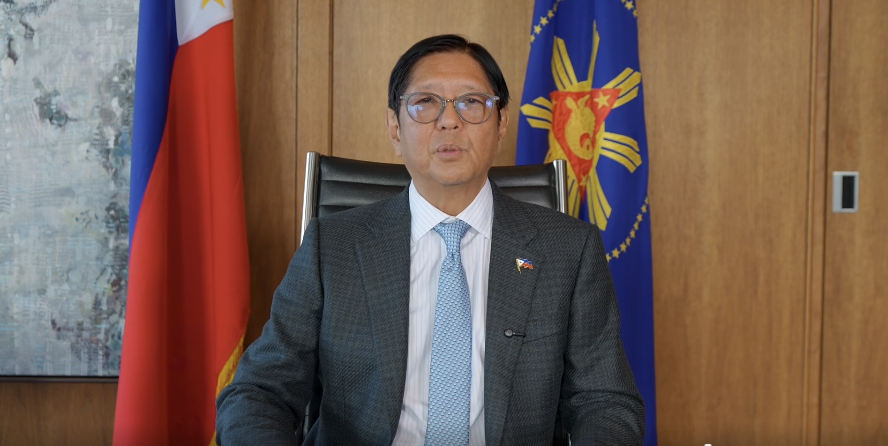

The Philippines’ rise to upper-middle income country status is a “vote of confidence” in the nation’s potential and proof that his administration’s economic direction is working, President Ferdinand Marcos Jr. said Thursday, July 2.

Marcos delivered the message in a video recorded as he began a four-day official visit abroad, casting the World Bank’s reclassification as recognition earned through years of collective effort. “For years, Filipinos have worked hard to build this country. Today, the world has taken notice. The Philippines has officially become an upper-middle income country,” he said.
The President linked the upgrade squarely to his four years in office. “After nearly four decades as a lower-middle income country since 1987, this milestone affirms that the economic policies we have pursued over the past four years have been effective,” he said. He credited steady growth, a broadly stable currency, and long-term reforms with keeping the economy on course despite global uncertainty.
Marcos argued the shift carries weight for investment and jobs, not just national statistics. “It is also a vote of confidence in our country’s future. Greater confidence means more investments. More investments mean more businesses, better quality jobs and more opportunities for Filipino families,” he said. He stressed that the gain was “meant to open doors, put food on the table and give every Filipino the chance to build a better life,” pledging to continue the work “until every family feels the benefits of our country’s progress.”

The World Bank tied the reclassification to broad economic expansion, citing average annual GDP growth of 5.8 percent over five years. Its division director for the Philippines, Zafer Mustafaoğlu, framed the achievement as a beginning rather than a destination. “It is a launchpad. The next phase of development will depend on faster productivity, stronger innovation and better quality jobs – reaching all regions and communities,” he said.
Marcos’ economic team echoed that the classification settles nothing on its own. Executive Secretary Ralph Recto said the true test lies in whether ordinary households feel the difference, vowing continued reforms on ease of doing business, digital connectivity, education, and climate resilience. Department of Economy, Planning and Development Undersecretary Rosemarie Edillon pressed for faster public spending, urging the government to “accelerate capital spending” to expand the country’s capacity to grow, trade, and draw more visitors.
Not everyone accepted the President’s framing. Bangko Sentral ng Pilipinas Governor Eli Remolona Jr. cautioned that the ranking makes preserving macroeconomic stability and structural reforms more urgent. Management Association of the Philippines president Donald Lim called the entry a positive signal to investors but warned it does not reflect the strain on families facing high costs and limited purchasing power.
Sharper objections came from labor and militant groups. ACT Teachers Rep. Antonio Tinio branded the report propaganda, while ACT chairperson Ruby Bernardo questioned its basis outright. “Are we in the same universe? Wages in the country are not even living wages, whether for teachers, civil servants, or ordinary workers. If their basis is whatever growth indicators they set, the average citizen won’t feel it,” she said.
