



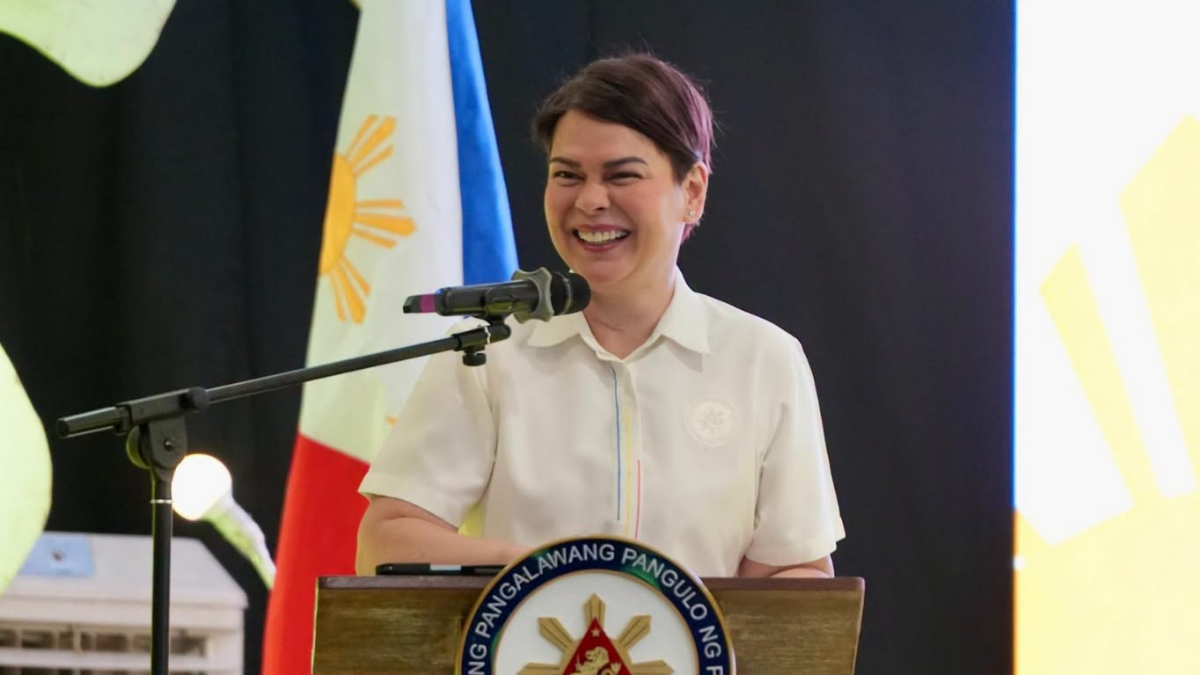

State auditors have concluded that the Office of the Vice President kept its books in line with recognized public-sector accounting rules for 2025, handing the agency headed by Sara Duterte a clean bill on its financial reporting just as she prepares to face a Senate trial.

The Commission on Audit’s Independent Auditor’s Report, addressed to the Vice President at the OVP’s Mandaluyong City headquarters, found that the office’s financial statements “present fairly, in all material respects,” its financial position as of December 31, 2025, along with its financial performance, cash flows, changes in net assets and equity, and the comparison of its budget against actual spending for the year. The audit was carried out under the International Standards of Supreme Audit Institutions, with the commission noting it had gathered “sufficient and appropriate” evidence to back its conclusion.
It marks the OVP’s fourth consecutive unmodified opinion, according to the Manila Times, which reported that the audit letter was sent to the office on May 15. The office logged a 92.32-percent utilization rate on its 2025 budget under the General Appropriations Act, a figure it described as evidence of “prudent fiscal management.”
An unmodified opinion — sometimes called unqualified — is the assessment a government office receives when auditors determine its financial statements were prepared in accordance with the applicable reporting framework. It applies only to the financial audit and, as the commission itself has repeatedly clarified, does not certify that an agency complied with every law and regulation or that funds were spent efficiently.

That distinction carries weight because the timing places the favorable opinion alongside the confidential-funds allegations that form part of the case against Duterte. In August 2024, COA issued a notice of disallowance covering P73.28 million in OVP confidential funds spent in 2022, finding the money went to activities the commission described as governance in nature rather than the surveillance and intelligence work the funds were meant for. On April 10, 2026, the commission affirmed that ruling and denied Duterte’s appeal, having earlier expanded her potential liability to roughly P448 million once the disallowed 2023 expenditures were factored in.
Lawmakers who pushed the impeachment effort have argued in earlier briefings that a favorable audit opinion does not erase those disallowances. Manila Representative Joel Chua has said that the existence of a notice of disallowance itself signals unresolved problems with the OVP’s fund use, while Bicol Saro Representative Terry Ridon has stressed that the disallowed P73 million remains subject to return regardless of the audit result.
The disallowance findings became a foundation of the impeachment complaint that 215 House members transmitted to the Senate in February 2025. That first attempt collapsed after the Supreme Court in July 2025 halted the proceedings for violating the constitutional one-year bar rule, though the Court said it was not absolving Duterte of the charges. Fresh complaints were lodged in February 2026, and the House justice committee began new hearings on March 25.
Beyond the impeachment track, plunder and graft complaints against Duterte and 15 others were filed before the Ombudsman in December 2025, also covering the confidential-funds question. Duterte has declined to identify the recipients named in acknowledgment receipts tied to the spending, arguing that disclosure could compromise intelligence operations.
