



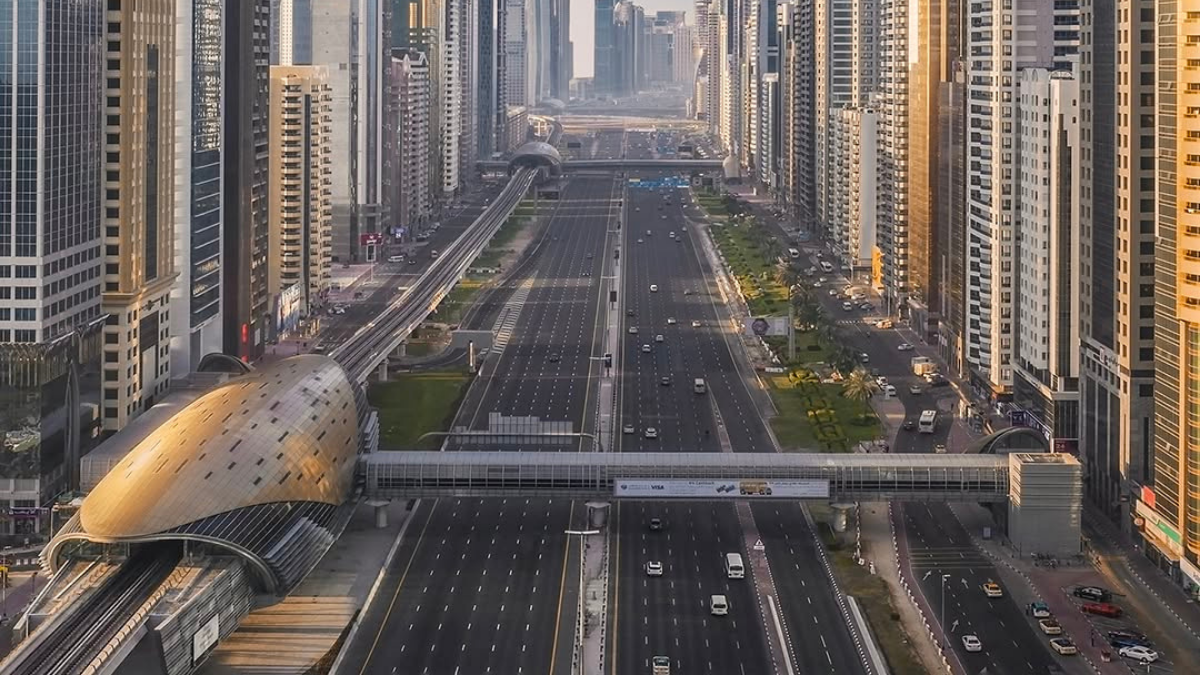

Peak-hour travel on Sheikh Zayed Road could drop by 51 per cent under a new roadway approved this week by Dubai Crown Prince Sheikh Hamdan.
Cleared on Wednesday, July 1, the First Al Khail Street Development Plan sets out a 15-kilometre elevated route with three lanes each way, running parallel to Sheikh Zayed Road. It is built to carry an extra 9,000 vehicles an hour and will link Al Barsha, Al Quoz, Business Bay, and Meydan, benefiting some 2.6 million residents. Construction runs from the third quarter of 2027 to the last quarter of 2030. The project sits within an AED 18-billion package of incentives and works.
The Executive Council session cleared several other measures. The Dubai Cultural Strategy 2033 sets four pillars and 40 initiatives, aiming to develop more than 6,000 local talents, attract over 6,000 international creatives, lift the sector’s GDP share to 5.4 per cent, and grow public-private partnerships to AED 2.75 billion. The Dubai Customs Strategy 2030 targets smoother trade, tighter compliance, and a stronger position as a global trade hub.
The Council also approved ‘Dubai Population Now’, an AI-driven real-time census feeding a live population clock, after the emirate’s population reached 4.58 million at the end of 2025 — up 332,000, or 7.5 per cent, on 2024. The Emirati Talents Strategy in Private Education, meanwhile, aims for 3,000 nationals in the sector by 2033 through schemes such as Bridge to Teach, Flex Emiratisation, and TeachXperience.
Two economic measures followed. The Dubai Investor Register merges all firms and investors into one record, allowing operation across zones without re-registration and meeting Financial Action Task Force standards, in support of the D33 goal of AED 650 billion in foreign direct investment by 2033. The Council also backed a new visual identity for the emirate’s address system, organised by urban sector and set to reach 186 areas by 2029.
The final approval established the Global Centre for Technology and Innovation in Islamic Finance, run by the Dubai International Financial Centre. It targets a market forecast to hit $9.31 trillion by 2030, with plans including the Future Islamic Finance Forum on November 4, 2026, and a DIFC Academy programme training more than 3,000 people by 2031.
