



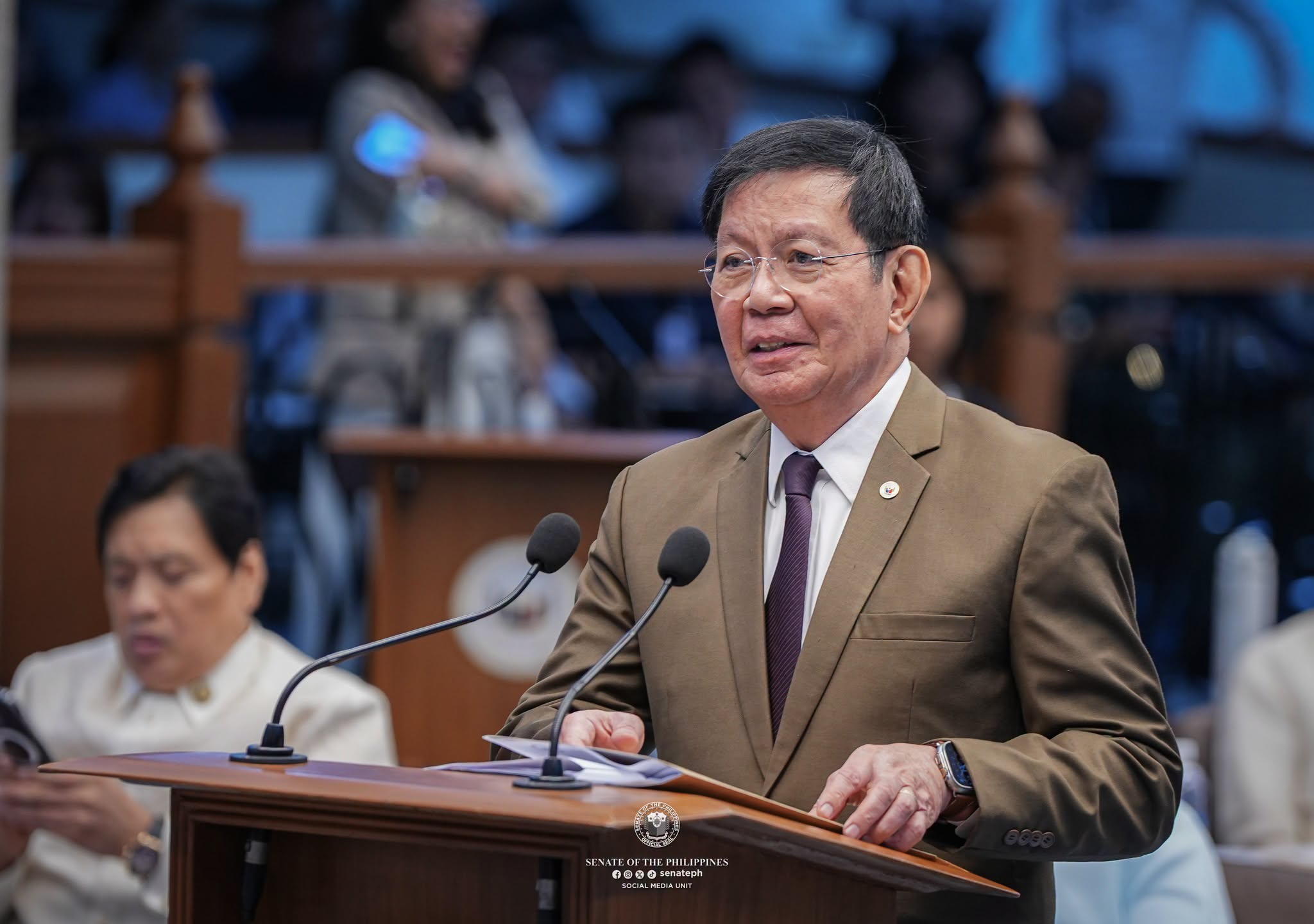

The arithmetic of an impeachment conviction could collapse before a verdict is ever reached, and Senator Panfilo “Ping” Lacson is pointing to the Supreme Court as the only body positioned to resolve what he describes as a looming legal knot.

His argument turns on a threshold: should nine or more of the 24 senator-judges be suspended and detained by the Sandiganbayan, the chamber would be left with too few members to reach the 16 votes required to convict Vice President Sara Duterte. At that point, Lacson contends, the proceedings lose their meaning.
“Ano ang saysay na impeachment trial kung 15 lang yung senator judges na present at pwedeng bumoto? Ano saysay? Sabi ko, formality na ang acquittal, bakit pa tayo mag-trial? So diyan dapat mag-intervene ng Korte Suprema,” he said in a DZBB interview, framing a scenario in which acquittal becomes a foregone conclusion regardless of the evidence presented.
Lacson is careful about where the line sits. The high court, he acknowledges, has no business directing how the Impeachment Court runs its trial. The exception, he says, is grave abuse of authority, which would open a door for judicial review that would otherwise stay shut.
He would prefer the justices, rather than the senators, take on the interpretation. “Mas mainam nang sila na maginterpret yan. Dahil kung kami, maraming question, kasi pulitika yan. Samantalang ang Korte Suprema, they’re beyond politics,” he said, drawing a contrast between a chamber steeped in political calculation and a court he views as standing apart from it.
“Yan na nga ang posibleng absurdity na mangyari, assuming na at least nine senator-judges ang ma-suspend,” Lacson said, characterizing the prospect of a trial that proceeds only to ratify an outcome already settled by absence. “The trial will be a mere formality for acquittal. I’d rather leave it to the wisdom of the Court to come up with a practical necessity to intervene.”

His concern is anchored to a recent development at the anti-graft court, which preventively suspended Senator Jinggoy Estrada — the kind of action that, repeated across enough senator-judges, would produce the shortfall he describes.
Separately, Lacson laid out a procedural idea for keeping the trial orderly. Beyond choosing who presides, the court could name an Impeachment Manager to direct traffic on the floor.
He likened the position to a quarterback. “Titingnan namin kung puwede makapagtalaga rin kami ng isang Impeachment Manager. Yan ang pwede para mag-quarterback kung overwhelmed ang Presiding Officer, pero may nag-assist sa floor. Parang siya ang conductor sa floor, ika nga, parang majority leader,” he said, comparing the function to that of the Senate’s Majority Leader.
For the two roles, the majority bloc has names in mind, both lawyers: Senator Francis Escudero as the presiding officer and Senator Francis Pangilinan as the manager.
Whoever takes the chair, Lacson noted, would not hold outsized sway over the verdict. A presiding officer carries a single vote and can be outvoted by the other senator-judges, leaving the chamber’s collective judgment — not any one member’s — as the deciding force. The election for that post is set for July 6, when the court convenes for trial.
