



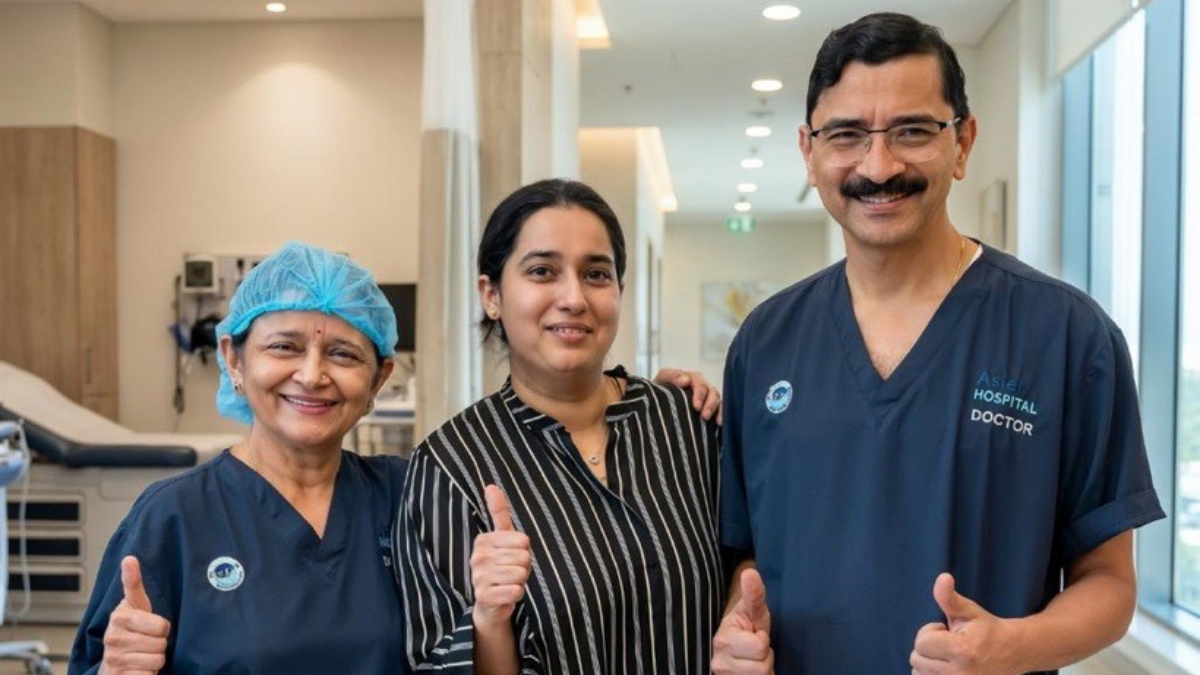

A 32-year-old Pakistani woman is recovering after surgeons at Aster Hospital, Al Qusais carried out an emergency repeat heart bypass on her beating heart, a procedure made all the more unusual by how soon it followed her original operation.

Mahpara Ashraf, a Dubai resident, had her first coronary artery bypass grafting (CABG) done in Pakistan in June 2025, a month after receiving a stent in one of her heart arteries. By the time she sought help at Aster, she was back to enduring intense chest pain and was admitted with unstable angina, a warning sign that a major heart attack could follow without urgent treatment.
Imaging told a troubling story. Fresh angiography found new blockages in her own coronary arteries alongside critical obstructions in the grafts placed during her earlier surgery. Of those grafts, only one was still doing its job. Her diabetes, high blood pressure, elevated cholesterol and severe coronary disease all stacked the odds further against a smooth operation.
Surgeons faced an added obstacle once they decided to operate: the blood vessels harvested for her first bypass were gone, forcing the team to locate suitable replacements for the new grafts. She was also on blood thinners, raising the stakes during an already emergency procedure.
Such repeat bypasses are uncommon, representing roughly 2 percent of these surgeries worldwide. A second operation arriving within half a year, in a patient this young, pushes the case well outside the norm. The picture is rarer still given that women make up only 20 to 30 percent of bypass patients globally, a group that has historically faced steeper postoperative risks and worse outcomes than men, often arriving for surgery older and with more advanced disease.

“This was a highly challenging and rare case. Performing a redo bypass surgery within such a short time frame, and that too on a beating heart, requires a high level of experience & surgical expertise. The second time surgery, presence of prior grafts, and the patient’s unstable condition added to the complexity. Our team carefully planned every step, and complete revascularization with four grafts is expected to provide a long-term durable outcome,” said Dr. Sandeep Shrivastava, Consultant Cardiothoracic Surgeon at the hospital.
For Ashraf, the ordeal ended in relief. “I am truly grateful to the doctors and staff at Aster Hospital, Al Qusais for saving my life. I was very worried when my chest pain came back so soon after my first surgery, but the cardiac surgical team handled my case with great care and confidence. Their support throughout my treatment and recovery means everything to me,” she said.
Her colleague Dr Shipra Srivastava pointed to the combination of factors that set the case apart. “This case is rare for multiple reasons. Our patient was only 32 years old and female, with multiple pre-existing medical conditions. Within just six months, all except one of her grafts were completely blocked. Globally, the prevalence of CABG in females accounts for only 20–30% of cases,” she said.
Dr. Abdul Rauoof Malik, Specialist Cardiology at the hospital, read a broader warning into the outcome. “This case reflects a growing trend where younger patients are developing serious heart disease due to conditions like diabetes, hypertension, and high cholesterol. It also highlights the importance of timely follow-up after previous heart procedures. With proper evaluation and a team-based approach, even high-risk redo surgeries can be performed successfully at Aster Hospital, Al Qusais,” he said.
